View methods side by side.
Choose up to four methods. Add them using the search and share the comparison by copying its link.
| Criterion |  Facilitation 1-2-4-All |  Facilitation Dot Voting |  Innovation Brainstorming | 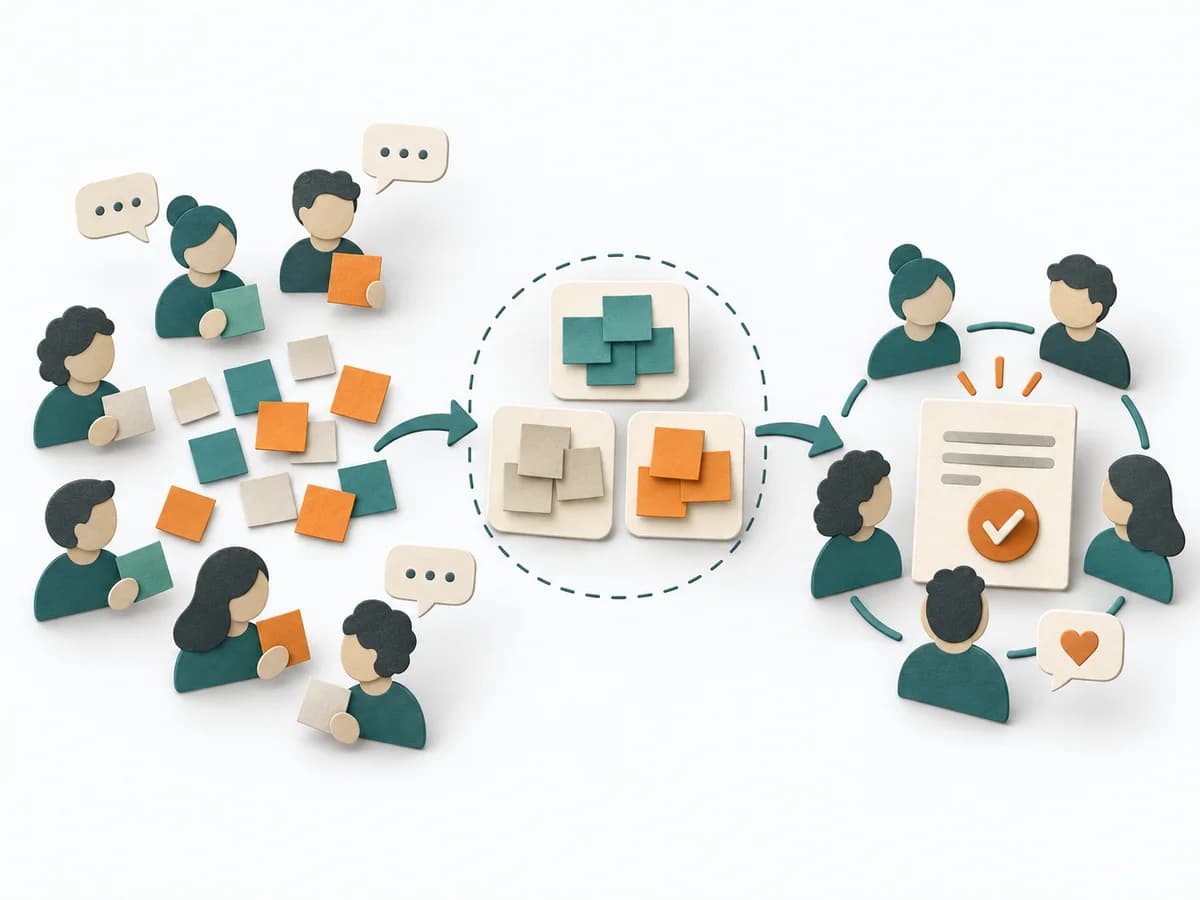 Facilitation Consensus Workshop |
|---|---|---|---|---|
Purposedifferent | When many people in a group too rarely get to speak, 1-2-4-All distributes thinking time more fairly. The format builds participation step by step and makes quiet or still-unformed thoughts usable faster. | When a workshop has produced too many options and the group needs to condense quickly, dot voting makes preferences visible in a short time. It bundles individual votes into a solid signal for the next selection. | When a team faces an open question with many obvious directions, the method first creates breadth instead of premature commitment. It separates idea flow from evaluation and makes lines of thought visible, creating a pool for selection and further development. | When a group needs a solid decision without outvoting individual factions, a Consensus Workshop creates a negotiable common ground. It makes agreement, reservations, and open tensions discussable at the same time. |
Complexitydifferent | Low | Low | Low | Medium |
Timedifferent | 10-20 min | 5-15 min | 30-60 min | 1-3 h |
Participantsdifferent | 4-100+ | 3-20 | 4-12 | 5-30 |
Formatsame | Workshop | Workshop | Workshop | Workshop |
Outputdifferent | Idea List, Shared Insights, Emergent Themes | Ranked list, Consensus signal, Shortlist | Idea pool, Theme clusters, Shortlist | Consensus Clusters, Theme Titles, Priority Areas |
Tagsno overlap | FacilitationInclusionIdeation | FacilitationVotingConsensusPrioritization | BrainstormingIdeationCreativityWorkshopDivergence | FacilitationConsensusWorkshopAlignment |