View methods side by side.
Choose up to four methods. Add them using the search and share the comparison by copying its link.
| Criterion | 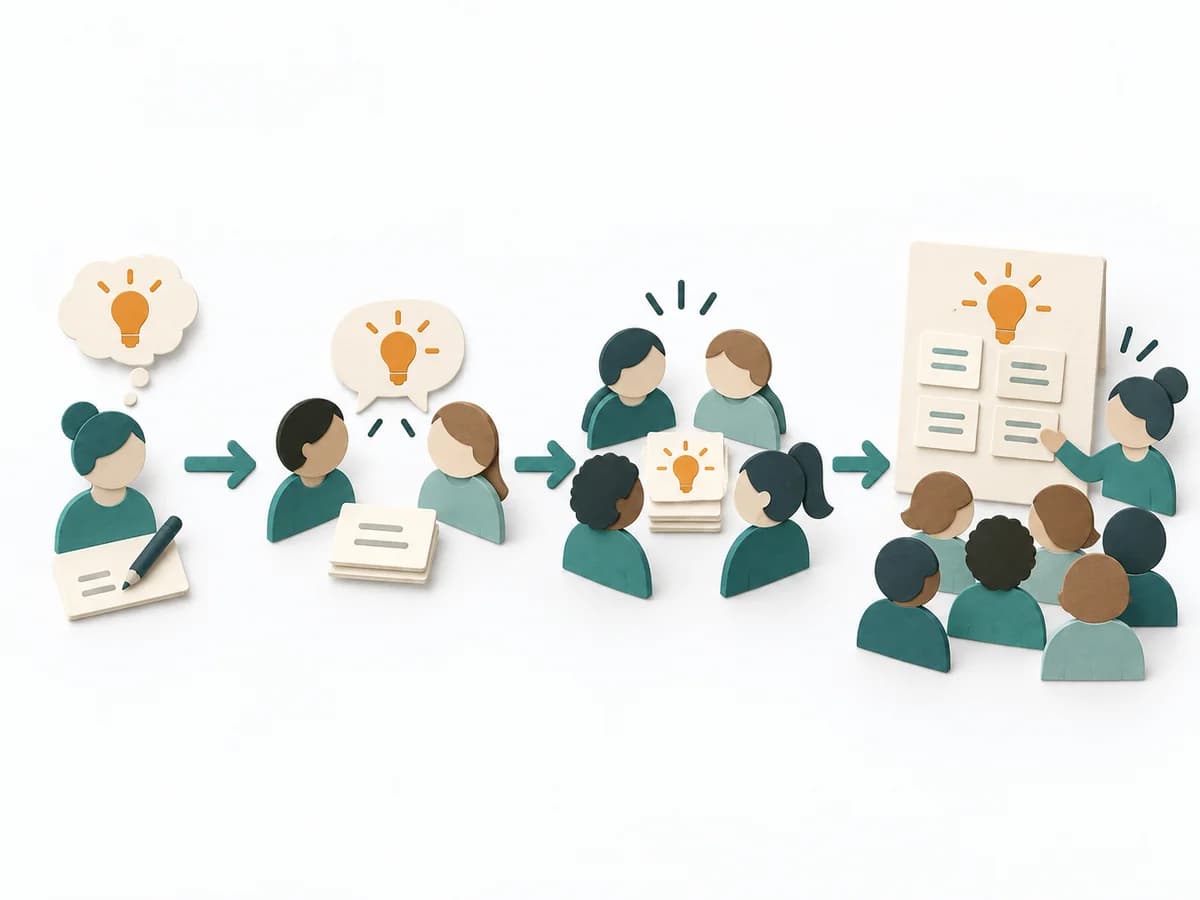 Facilitation 1-2-4-All | 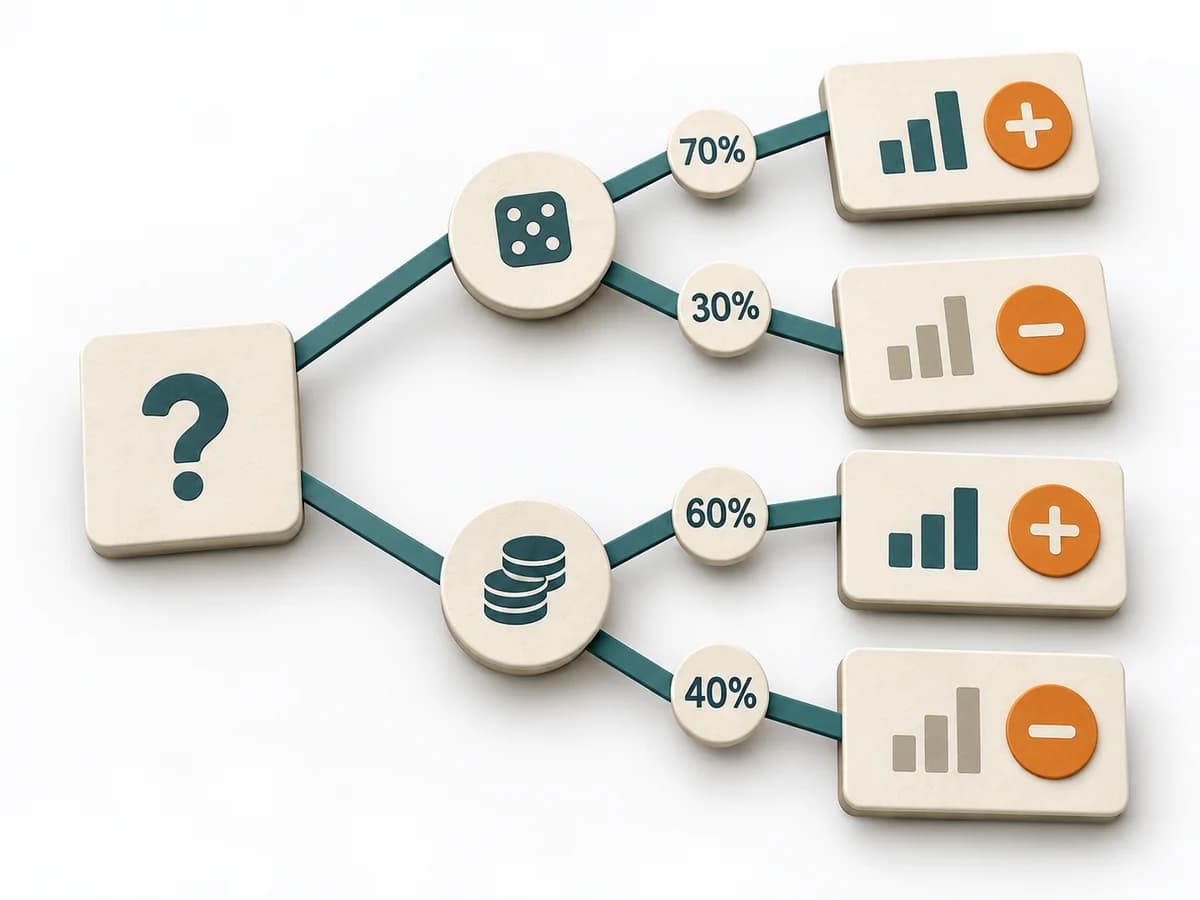 Decision Making Decision Tree |  Decision Making Constraint Analysis | 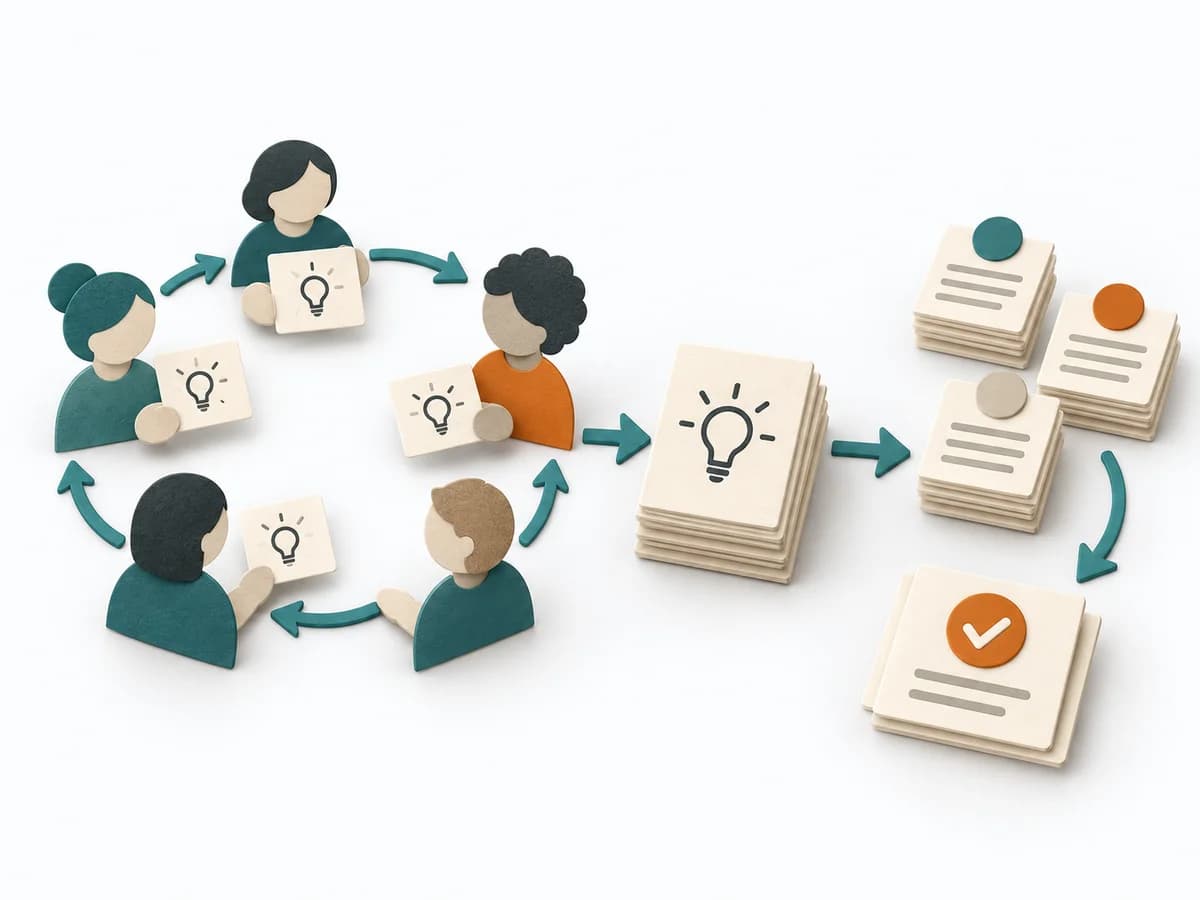 Innovation Round Robin Brainstorming |
|---|---|---|---|---|
Purposedifferent | When many people in a group too rarely get to speak, 1-2-4-All distributes thinking time more fairly. The format builds participation step by step and makes quiet or still-unformed thoughts usable faster. | For decisions with follow-on paths and dependencies, a linear comparison is often not enough. A Decision Tree shows how options branch under conditions and which consequences hang on each branch. | When an initiative stalls, the limit often lies not in the idea but in hard or soft boundary conditions. Constraint Analysis separates these limits and shows which of them can actually be shaped. | With unevenly distributed speaking time, the method brings every person into the contribution one after another. It prevents early voices from setting the direction while still producing a shared idea space. This makes participation plannable and the team's diversity visible. |
Complexitydifferent | Low | Medium | Low | Low |
Timedifferent | 10-20 min | 30-90 min | 30-90 min | 20-45 min |
Participantsdifferent | 4-100+ | 1-6 | 2-8 | 4-10 |
Formatdifferent | Workshop | Workshop + async | Workshop + async | Workshop |
Outputdifferent | Idea List, Shared Insights, Emergent Themes | Decision Tree, Option Map, Assumption List | Constraint List, Hard/Soft Classification, Option Impact Notes, Decision Boundaries | Idea List, Cluster, Shortlist |
Tagsno overlap | FacilitationInclusionIdeation | DecisionTreeOptions | ConstraintsDecisionPlanningOptions | BrainstormingIdeationFacilitationInclusionCreativity |