Complete firstRAID type rules
The team distinguishes possible risks, testable assumptions, occurred issues, and external dependencies.
Without type rules, follow-up becomes wrong or unclear.
A practical method guide: clarify prerequisites and materials, understand the complete process, and look up outputs, pitfalls, and stop criteria.
What needs to be finished first
The team distinguishes possible risks, testable assumptions, occurred issues, and external dependencies.
One person owns maintenance, review cadence, and escalation.
What needs to be ready before start
RAID table with stable IDs, initiative plan, risk register, discovery assumptions, issue list, dependency commitments, and escalation calendar.
Delivery lead · scribe · item owners · escalation decision maker
Consolidate existing lists, mark duplicates, and highlight overdue items before review.
45 minutes initially; 15–30 minutes per review
Display four type definitions and required fields: ID, statement, consequence, owner, action, date, and status.
The one question this method answers
Which open Risks, Assumptions, Issues, and Dependencies threaten the next commitment, and who will do what by when?
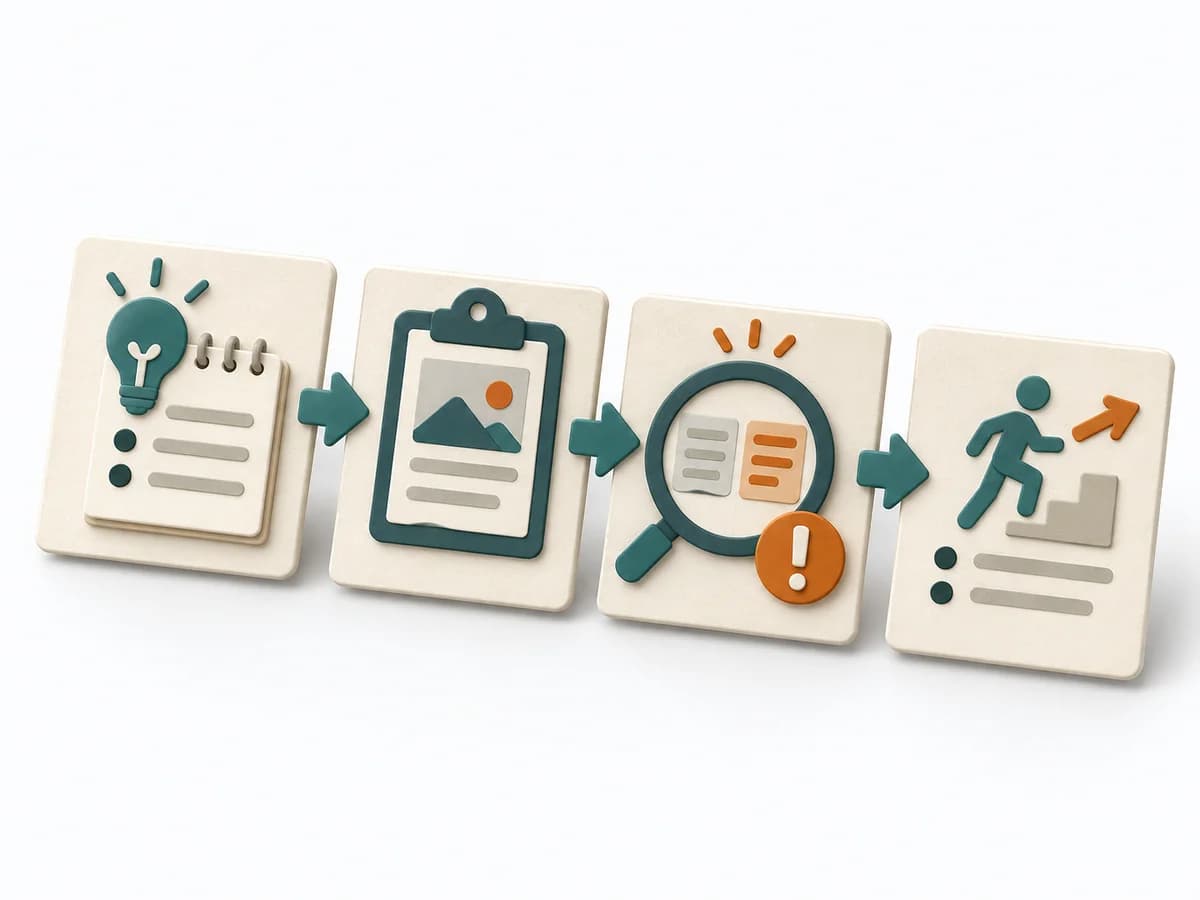
Phases with goal, actions, output and pitfall
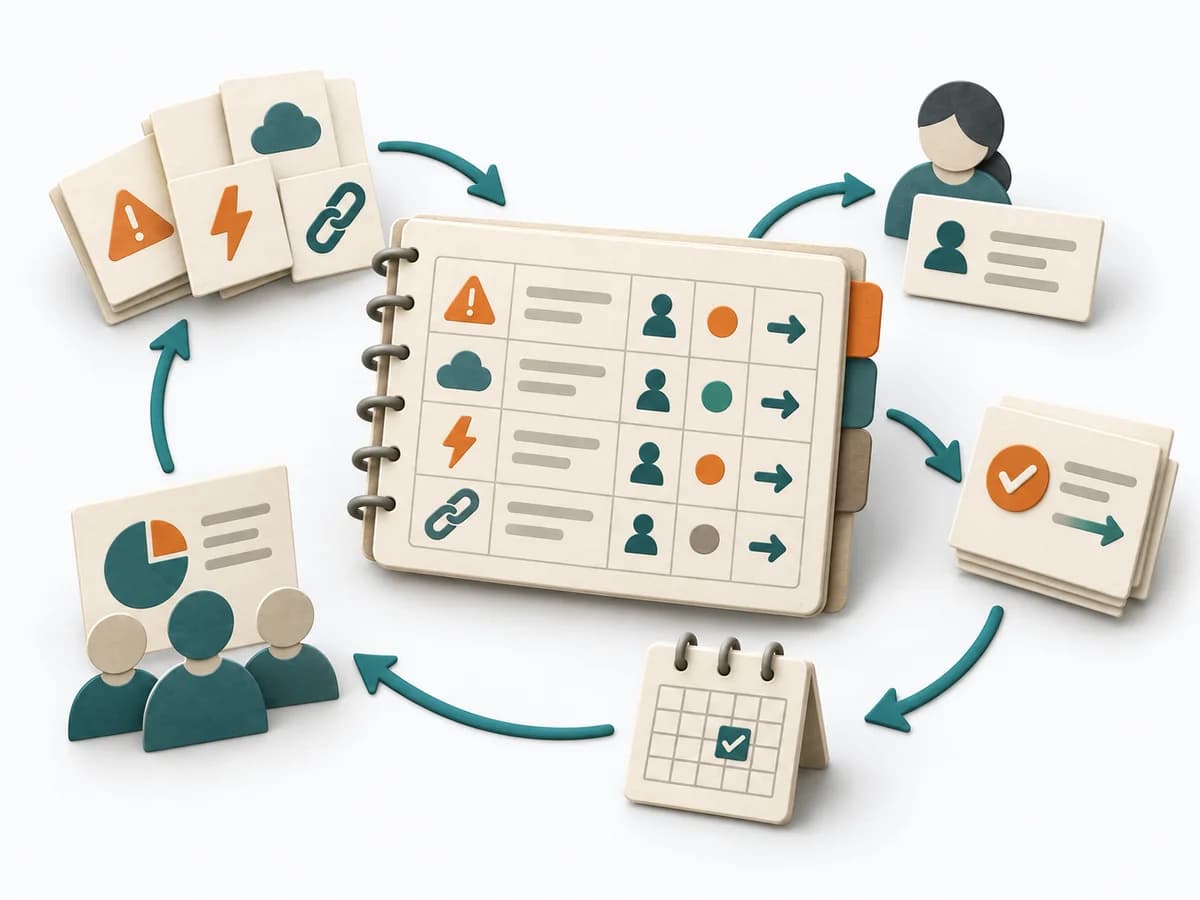
A RAID Log combines four different control objects without confusing them: a risk is a possible event, an assumption is a provisional claim, an issue has already occurred, and a dependency is an external prerequisite. Its value comes from regular review and type-specific follow-up.
Fictional worked example
A living table with type-specific statements and actions.
| RAID ID | Type | Statement and consequence | Owner and date | Next action or evidence | Status and escalation |
|---|---|---|---|---|---|
| D-07External sandbox | Dependency | Payment provider supplies the new sandbox by 24 June; without it, no end-to-end test. | Partner Manager · 24 June | Prove delivery with a successful API health check. | Open; if late, reconsider release scope on 25 June. |
Each type has a different follow-up: treat, validate, resolve, or secure delivery.
Rules
Goal
Create a shared understanding of the four types and their follow-up.
Inputs for this step
Actions
Output
RAID convention
Type rules · required fields · status · cadence
Quality check
Can every item be assigned to exactly one type?
Pitfall
Risks, assumptions, issues, and dependencies are used as interchangeable labels. Apply the type definitions and rewrite every ambiguous item.
Timing: 10–15 minutes
Capture
Goal
Record every item with a type-specific statement, consequence, and source.
Inputs for this step
Actions
Output
Qualified entries
ID · type · statement · consequence · source
Quality check
Do grammar and follow-up fit the type?
Pitfall
Vague entries such as 'API' or 'resources' state neither condition nor consequence. Add subject, condition, date, and affected commitment.
Timing: 15–20 minutes
Control
Goal
Connect every open item to the right action, owner, date, and escalation rule.
Inputs for this step
Actions
Output
Controllable log
Action · owner · date · status · escalation
Quality check
Does each type have the correct follow-up?
Pitfall
Owners are named, but next action or date is missing; the log only records stagnation. Add exactly one verifiable next action and date to each open item.
Timing: 15–20 minutes
Review
Goal
Maintain the log as the current control source and record transitions traceably.
Inputs for this step
Actions
Output
Updated RAID log
Status · transition · decision · closure evidence
Quality check
Is every change dated and justified?
Pitfall
Closed items are deleted or assumptions remain unchanged despite counter-evidence. Retain history and log type or status changes with the trigger.
Timing: 15–30 minutes per review
What comes out at the end
Sketch: what the artifact looks like
Versioned RAID log with status history, transitions, decisions, and closure evidence.
Retain date, author, source state, and decision status for each revision; do not overwrite earlier results.
Plan RAID Log with real scope, suitable roles, and a clear decision objective.
To be confirmed
To be confirmed
Establish and review the practice Time: 45 minutes initially; 15–30 minutes per review
Complete this worksheet on paper or in your own document during the work.
| RAID ID | R/A/I/D | Statement · consequence | Owner · date | Action · evidence | Status · trigger |
|---|---|---|---|---|---|
| D-07 |
Choose exactly one type per item and set a verifiable next step.
UK Government Gate 2 Review: Delivery Strategy
Expected artifact: RAID convention
Type rules · required fields · status · cadence
Entry:
...
Expected artifact: Qualified entries
ID · type · statement · consequence · source
Entry:
...
Expected artifact: Controllable log
Action · owner · date · status · escalation
Entry:
...
Expected artifact: Updated RAID log
Status · transition · decision · closure evidence
Entry:
...
...
Method guide: https://methodatlas.meierhoff-systems.de/en/methods/raid-log/run-sheet
Concrete filled scenario, fictional example
Fictional example for orientation. Counts and timings describe this case and are not universal requirements.
Concrete filled scenario, fictional example
Fictional example: D-07, Dependency. The payment provider supplies the new sandbox by 24 June. Owner: Partner Manager. Evidence is a successful API health check. If late, release scope is reconsidered on 25 June.
Recognize symptoms and steer against them
Quick overview, the full text is in the matching phase in the flow
Risks, assumptions, issues, and dependencies are used as interchangeable labels.
Apply the type definitions and rewrite every ambiguous item.
Vague entries such as 'API' or 'resources' state neither condition nor consequence.
Add subject, condition, date, and affected commitment.
Owners are named, but next action or date is missing; the log only records stagnation.
Add exactly one verifiable next action and date to each open item.
Closed items are deleted or assumptions remain unchanged despite counter-evidence.
Retain history and log type or status changes with the trigger.
When to pause, resolve prerequisites, or choose another approach
Go to the profile for purpose, similar methods, and sources or continue to the next method in the catalog.