Complete firstNamed activities or deliverables
Rows describe relevant, bounded work outcomes or decisions.
Abstract catch-all rows hide handoffs and ownership problems.
A practical method guide: clarify prerequisites and materials, understand the complete process, and look up outputs, pitfalls, and stop criteria.
What needs to be finished first
Rows describe relevant, bounded work outcomes or decisions.
Affected areas know their work and can resolve ambiguities together.
What needs to be ready before start
Process or project scope, key activities, involved roles, and existing ownership or approval rules.
Facilitation keeps the scope small. Role representatives clarify involvement. One owner maintains and communicates the agreed matrix.
Gather deliverables, process steps, responsible roles, existing decision rights, and known handoff conflicts.
45–90 minutes for prepared activities and roles. Organization-wide governance needs additional alignment.
Write activities and roles from the perspective of the work. Assign Responsible to the doer and exactly one Accountable role as ultimately answerable for each row. Consulted contributes before or during the work; Informed receives relevant progress or results. One person may hold multiple roles. Blank cells are fine when no involvement is needed; agree an R and A for each relevant activity.
The one question this method answers
Which role performs each activity, owns the outcome, is consulted, or is informed?
Phases with goal, actions, output and pitfall
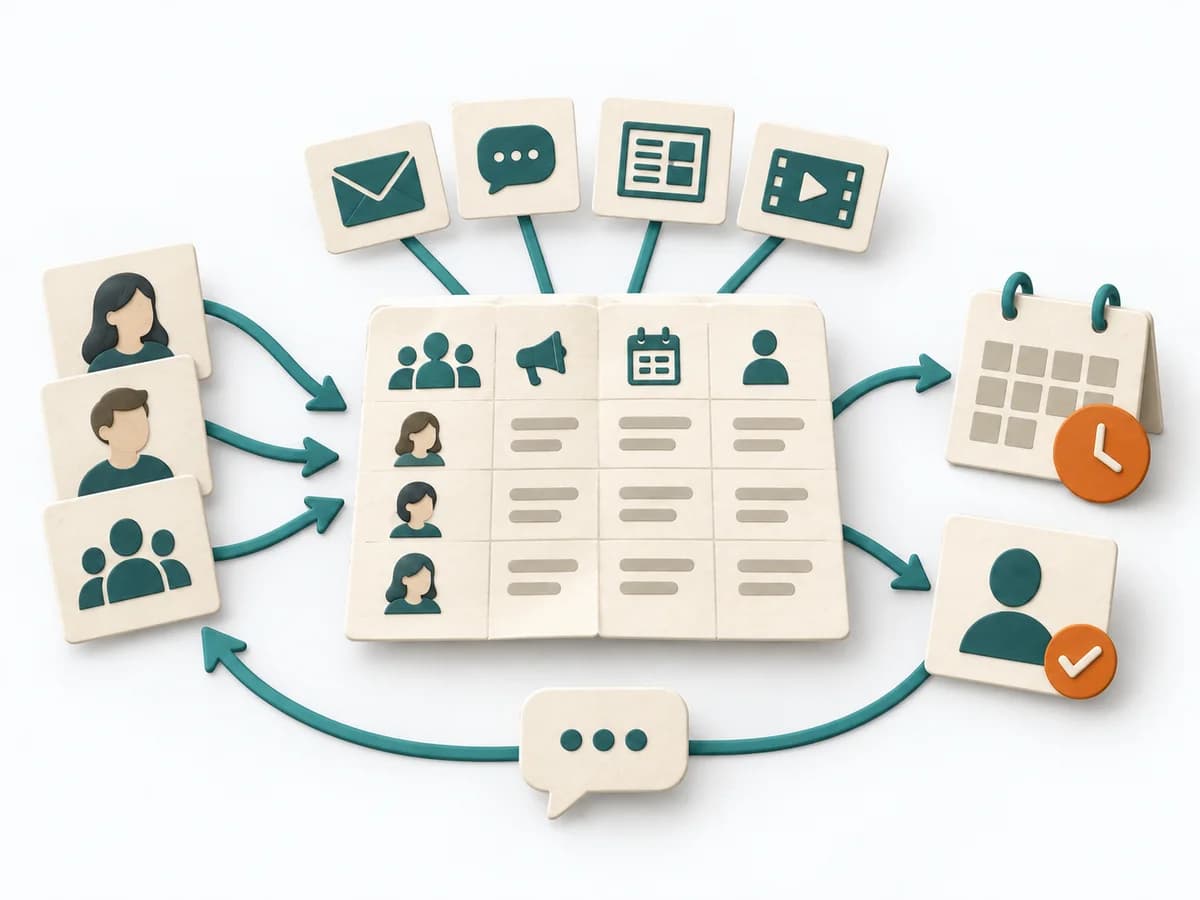
A RACI Matrix puts concrete activities in rows and involved roles in columns. Responsible does the work, Accountable owns the outcome, Consulted contributes before or during the decision, and Informed receives updates. Exactly one Accountable role remains visible per activity. The matrix structures collaboration; it does not replace authority, capacity planning, or decision rights.
Fictional teaching example
Fictional role assignment for a confirmation message in a tool-lending pilot.
| Activity or deliverable | Activity | Product | Design | Engineering | Operations |
|---|---|---|---|---|---|
| Activity 1Which role performs the activity, owns the outcome, advises, or is informed? | Confirm pilot scope | R/A | C | C | I |
| Activity 2Which role performs the activity, owns the outcome, advises, or is informed? | Design confirmation | C | R/A | C | I |
| Activity 3Which role performs the activity, owns the outcome, advises, or is informed? | Implement message | I | C | R/A | C |
| Activity 4Which role performs the activity, owns the outcome, advises, or is informed? | Approve operational readiness | C | I | R | A |
R = performs, A = exactly one accountable role per activity, C = provides input, I = receives information. R/A means the same role performs and owns the outcome. Roles apply only to this fictional pilot.
Scope

Goal
The matrix addresses a clear ownership need.
Inputs for this step
Actions
Output
Bounded activity list
RACI helps with owned work packages, not every microtask.
Quality check
The matrix is expected to show every organizational role.
Pitfall
The task list mixes goals or periods. Limit it to the process or project with a real clarification need.
Timing: 8–12 minutes
Roles
Goal
Columns represent distinct roles in the chosen scope.
Inputs for this step
Actions
Output
Role list with definitions
RACI assigns work; it does not invent decision authority.
Quality check
Job titles are treated as authority.
Pitfall
Roles or decision rights remain unclear. Confirm mandates and leadership approval separately.
Timing: 8–12 minutes
Assign
Goal
Execution and outcome ownership are visible for each deliverable.
Inputs for this step
Actions
Output
Assigned draft
One person may be both R and A; C and I represent different involvement.
Quality check
Everyone receives multiple letters for safety.
Pitfall
An activity lacks clear outcome accountability. Explain each assignment through its contribution to the activity.
Timing: 15–25 minutes
Check
Goal
The assignment is workable for actual collaboration.
Inputs for this step
Actions
Output
Revised matrix and open questions
A formally valid matrix can still be impractical.
Quality check
Every blank cell is filled for completeness.
Pitfall
Blank or overloaded assignments remain unchecked. Include only needed participation and resolve conflicts outside the table.
Timing: 10–15 minutes
Agree
Goal
Everyone understands their work and how the assignment can change.
Inputs for this step
Actions
Output
Shared responsibility matrix
RACI is useful only when people can find and use it.
Quality check
The table is declared binding without alignment.
Pitfall
Affected roles do not know the matrix or its limits. Get confirmation and resolve exceptions with the decision owner.
Timing: 8–12 minutes
What comes out at the end
Sketch: what the artifact looks like
| Task | R· Responsible | A· Accountable | C· Consulted | I· Informed | |
|---|---|---|---|---|---|
| Clarify scope | PM | Sponsor | Lead | Team, Support | |
| Implement | Dev | Lead | PM | Stakeholders | |
| Accept | PO | Sponsor | QA | Customer team |
Agreed, versioned RACI Matrix with scope, role legend, exactly one Accountable role per activity, named doers, and a review date.
Record scope, role legend, date, and approval. Update changes to activity, ownership, or decision authority with the reason.
Prepare activities, roles, and existing decision rights for a joint responsibility assignment.
To be confirmed
To be confirmed
Clarify ownership for a work scope Time: 45–90 minutes with prepared activities and roles
Complete this worksheet on paper or in your own document during the work.
| Activity or deliverable | Activity or deliverable | Role 1 | Role 2 | Role 3 | Role 4 |
|---|---|---|---|---|---|
| Activity 1 | |||||
| Activity 2 | |||||
| Activity 3 | |||||
| Activity 4 |
Blank worksheet: use activities as rows and involved roles as columns. Agree one A and at least one R for each relevant row. Add C and I only for real communication needs.
Microsoft Learn: Define roles and responsibilities
Expected artifact: Bounded activity list
RACI helps with owned work packages, not every microtask.
Entry:
...
Expected artifact: Role list with definitions
RACI assigns work; it does not invent decision authority.
Entry:
...
Expected artifact: Assigned draft
One person may be both R and A; C and I represent different involvement.
Entry:
...
Expected artifact: Revised matrix and open questions
A formally valid matrix can still be impractical.
Entry:
...
Expected artifact: Shared responsibility matrix
RACI is useful only when people can find and use it.
Entry:
...
...
Method guide: https://methodatlas.meierhoff-systems.de/en/methods/raci-matrix/run-sheet
Concrete filled scenario, fictional example
Fictional example for orientation. Counts and timings describe this case and are not universal requirements.
Concrete filled scenario, fictional example
All entries are invented. Roles apply only to this bounded pilot. R/A means one role performs the activity and owns its outcome.
| Activity | Product | Design | Engineering | Operations |
|---|---|---|---|---|
| Confirm pilot scope | R/A | C | C | I |
| Design confirmation text and state | C | R/A | C | I |
| Implement message | I | C | R/A | C |
| Approve operational readiness | C | I | R | A |
Each row has exactly one A and at least one R. The team checks that Consulted roles can contribute in time and that Informed roles have a real need for updates. Unclear approval rights are decided separately, not hidden by adding letters.
Recognize symptoms and steer against them
Quick overview, the full text is in the matching phase in the flow
The task list mixes goals or periods.
Limit it to the process or project with a real clarification need.
Roles or decision rights remain unclear.
Confirm mandates and leadership approval separately.
An activity lacks clear outcome accountability.
Explain each assignment through its contribution to the activity.
Blank or overloaded assignments remain unchecked.
Include only needed participation and resolve conflicts outside the table.
Affected roles do not know the matrix or its limits.
Get confirmation and resolve exceptions with the decision owner.
When to pause, resolve prerequisites, or choose another approach
Go to the profile for purpose, similar methods, and sources or continue to the next method in the catalog.