Complete firstClear boundary
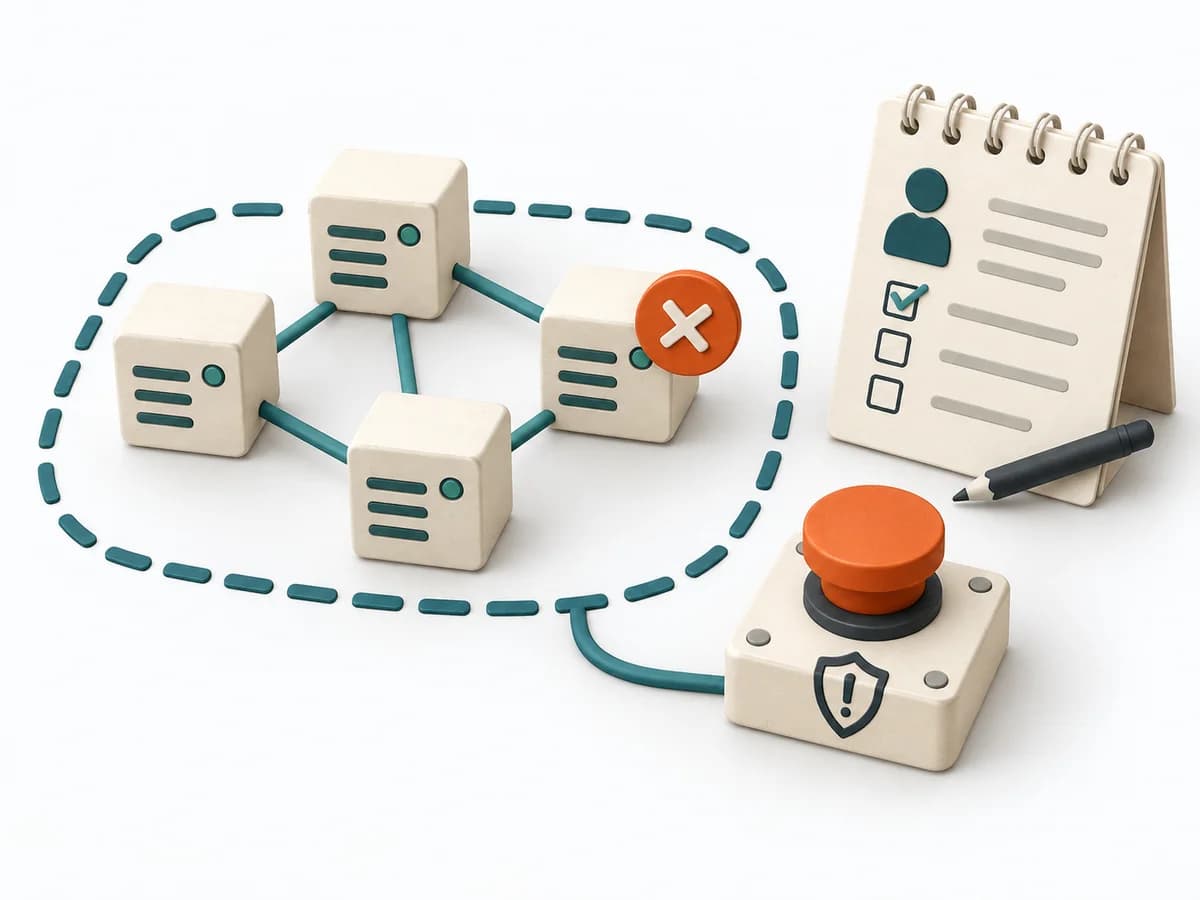
Set critical service, operating state, guardrails, and horizon; prepare incidents and architecture.
Without a boundary, cases, periods, or variables become mixed.
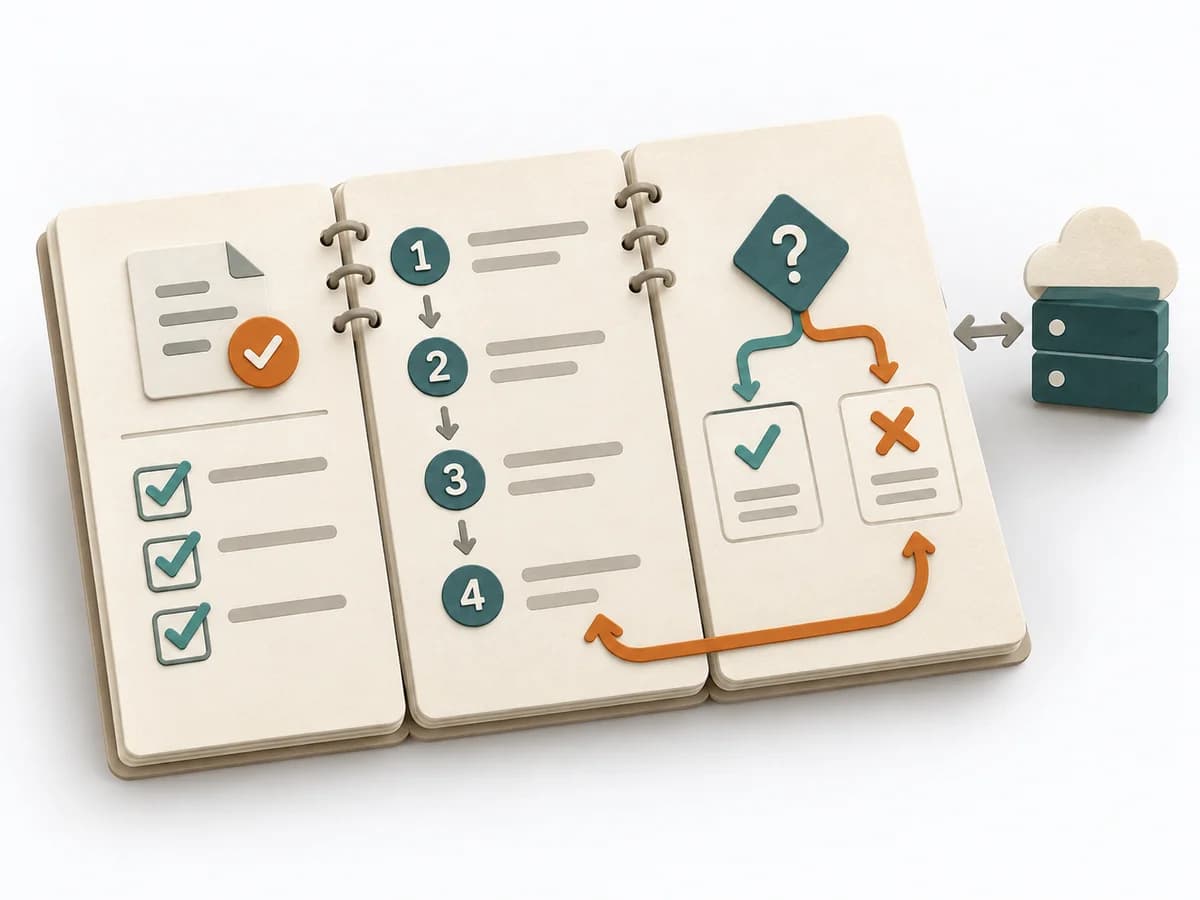
A practical method guide: clarify prerequisites and materials, understand the complete process, and look up outputs, pitfalls, and stop criteria.
What needs to be finished first
Set critical service, operating state, guardrails, and horizon; prepare incidents and architecture.
System boundary, critical services, architecture/dependencies, scenario cards, signals, protections, and drill plan
What needs to be ready before start
System boundary, critical services, architecture/dependencies, scenario cards, signals, protections, and drill plan
Service owner · reliability/safety · architecture · operations · affected domain perspectives · action owners
Set critical service, operating state, guardrails, and horizon; prepare incidents and architecture.
90–180 minutes per system area; add technical validation and drills.
Prepare a workspace with Service · Scenarios · Paths · Protection · Exercise; separate example from live data.
The one question this method answers
Which credible failure paths threaten a critical service, how will we detect and limit them, and which residual uncertainty needs rehearsal?
Phases with goal, actions, output and pitfall
Failure scenario analysis models plausible disruptions as paths through a system and examines triggers, effects, and existing barriers. It highlights where layered protection or resilience work is needed.
Fictional example
Fictional values show the actual method fields.
| Scenario | Trigger | Failure path | Impact | Detection | Protection | Recovery | Exercise |
|---|---|---|---|---|---|---|---|
| Pool exhaustionAdd evidence and rationale. | Batch start | Batch → 72 connections → pool 95% → timeout | Reserved pickup >15 minutes | Pool alert missing | Pool separation and circuit breaker | Pause batch; drain pool | GameDay with 5% stop rule |
| Warehouse network downAdd evidence and rationale. | Switch failure | Scanner offline → inventory unknown → handoff stops | No confirmed handoff | Heartbeat after 2 minutes | Offline list, four-eyes check | Paper process; reconcile later | Network-loss tabletop |
All values are fictional.
Service

Goal
Protected outcome: Define critical service, success criterion, and unacceptable impacts.
Inputs for this step
Actions
Output
Protected outcome
Define critical service, success criterion, and unacceptable impacts.
Quality check
Is it clear what must be preserved under which conditions?
Pitfall
A component rather than user service is protected. Phrase protected outcome as experienced service plus boundary.
Timing: 15–25 minutes
Scenarios
Goal
Scenario space: Collect credible triggers from architecture, history, and environment; include compound cases.
Inputs for this step
Actions
Output
Scenario space
Collect credible triggers from architecture, history, and environment; include compound cases.
Quality check
Are scenarios concrete, plausible, and distinguishable?
Pitfall
Only known single-component failures are considered. Add dependencies, common causes, and human-technical combinations.
Timing: 25–40 minutes
Paths
Goal
Failure paths: Model trigger through intermediate states to impact; mark assumptions and escalation points.
Inputs for this step
Actions
Output
Failure paths
Model trigger through intermediate states to impact; mark assumptions and escalation points.
Quality check
Is each connection mechanistic and time-aware?
Pitfall
Scenario jumps from trigger to harm. Add intermediate states, time, and necessary conditions.
Timing: 25–45 minutes
Protection
Goal
Protection matrix: Check detection, prevention, mitigation, and recovery per path; mark single points and blind spots.
Inputs for this step
Actions
Output
Protection matrix
Check detection, prevention, mitigation, and recovery per path; mark single points and blind spots.
Quality check
Does each control have signal, owner, and known limit?
Pitfall
A runbook existing counts as effective protection. Evidence control via test, last use, and failure mode.
Timing: 25–45 minutes
Exercise
Goal
Drill plan: Run prioritised scenarios as tabletop, GameDay, or technical test with stop rules.
Inputs for this step
Actions
Output
Drill plan
Run prioritised scenarios as tabletop, GameDay, or technical test with stop rules.
Quality check
Does drill test detection, decision, recovery, and communication?
Pitfall
Risks remain only in register. Schedule safe drill, measures, and follow-up.
Timing: 20–30 minutes
What comes out at the end
Sketch: what the artifact looks like
Failure-scenario register with trigger, path, impact, detection, protection, recovery, residual risk, and drill.
Record date, owner, source state, and review date; preserve prior versions.
Set subject, evidence, roles, flow, and review.
To be confirmed
To be confirmed
Complete run Time: 90–180 minutes per system area; add technical validation and drills.
Complete this worksheet on paper or in your own document during the work.
| Scenario | Trigger | Failure path | Impact | Detection | Protection | Recovery | Exercise |
|---|---|---|---|---|---|---|---|
| Pool exhaustion | |||||||
| Warehouse network down |
The blank worksheet contains prompts only.
Reference · original teaching example
Expected artifact: Protected outcome
Define critical service, success criterion, and unacceptable impacts.
Entry:
...
Expected artifact: Scenario space
Collect credible triggers from architecture, history, and environment; include compound cases.
Entry:
...
Expected artifact: Failure paths
Model trigger through intermediate states to impact; mark assumptions and escalation points.
Entry:
...
Expected artifact: Protection matrix
Check detection, prevention, mitigation, and recovery per path; mark single points and blind spots.
Entry:
...
Expected artifact: Drill plan
Run prioritised scenarios as tabletop, GameDay, or technical test with stop rules.
Entry:
...
...
Method guide: https://methodatlas.meierhoff-systems.de/en/methods/failure-scenario-analysis/run-sheet
Concrete filled scenario, fictional example
Fictional example for orientation. Counts and timings describe this case and are not universal requirements.
Concrete filled scenario, fictional example
| Scenario | Trigger | Failure path | Impact | Detection | Protection | Recovery | Exercise |
|---|---|---|---|---|---|---|---|
| Pool exhaustion | Batch start | Batch → 72 connections → pool 95% → timeout | Reserved pickup >15 minutes | Pool alert missing | Pool separation and circuit breaker | Pause batch; drain pool | GameDay with 5% stop rule |
| Warehouse network down | Switch failure | Scanner offline → inventory unknown → handoff stops | No confirmed handoff | Heartbeat after 2 minutes | Offline list, four-eyes check | Paper process; reconcile later | Network-loss tabletop |
Recognize symptoms and steer against them
Quick overview, the full text is in the matching phase in the flow
A component rather than user service is protected.
Phrase protected outcome as experienced service plus boundary.
Only known single-component failures are considered.
Add dependencies, common causes, and human-technical combinations.
Scenario jumps from trigger to harm.
Add intermediate states, time, and necessary conditions.
A runbook existing counts as effective protection.
Evidence control via test, last use, and failure mode.
Risks remain only in register.
Schedule safe drill, measures, and follow-up.
When to pause, resolve prerequisites, or choose another approach
Go to the profile for purpose, similar methods, and sources or continue to the next method in the catalog.