View methods side by side.
Choose up to four methods. Add them using the search and share the comparison by copying its link.
| Criterion | 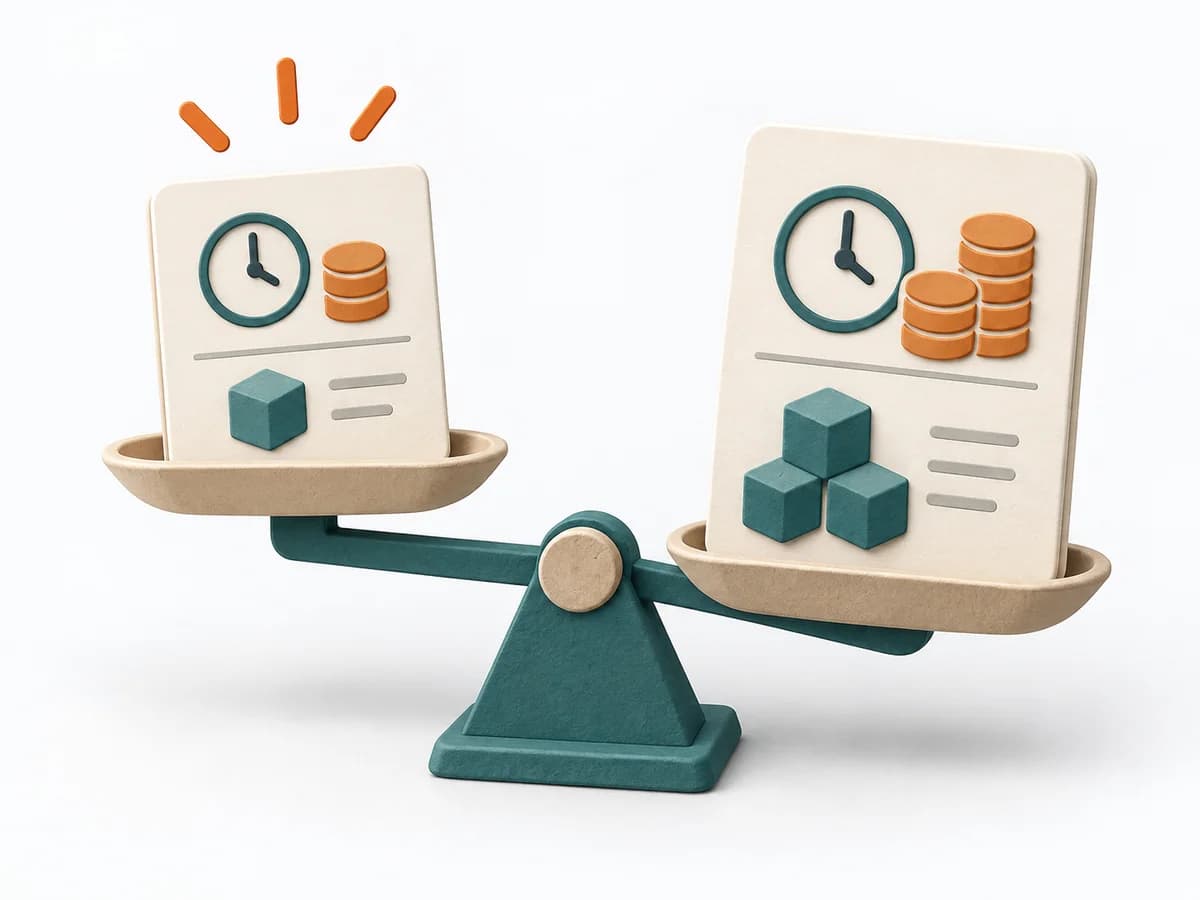 Agile WSJF | 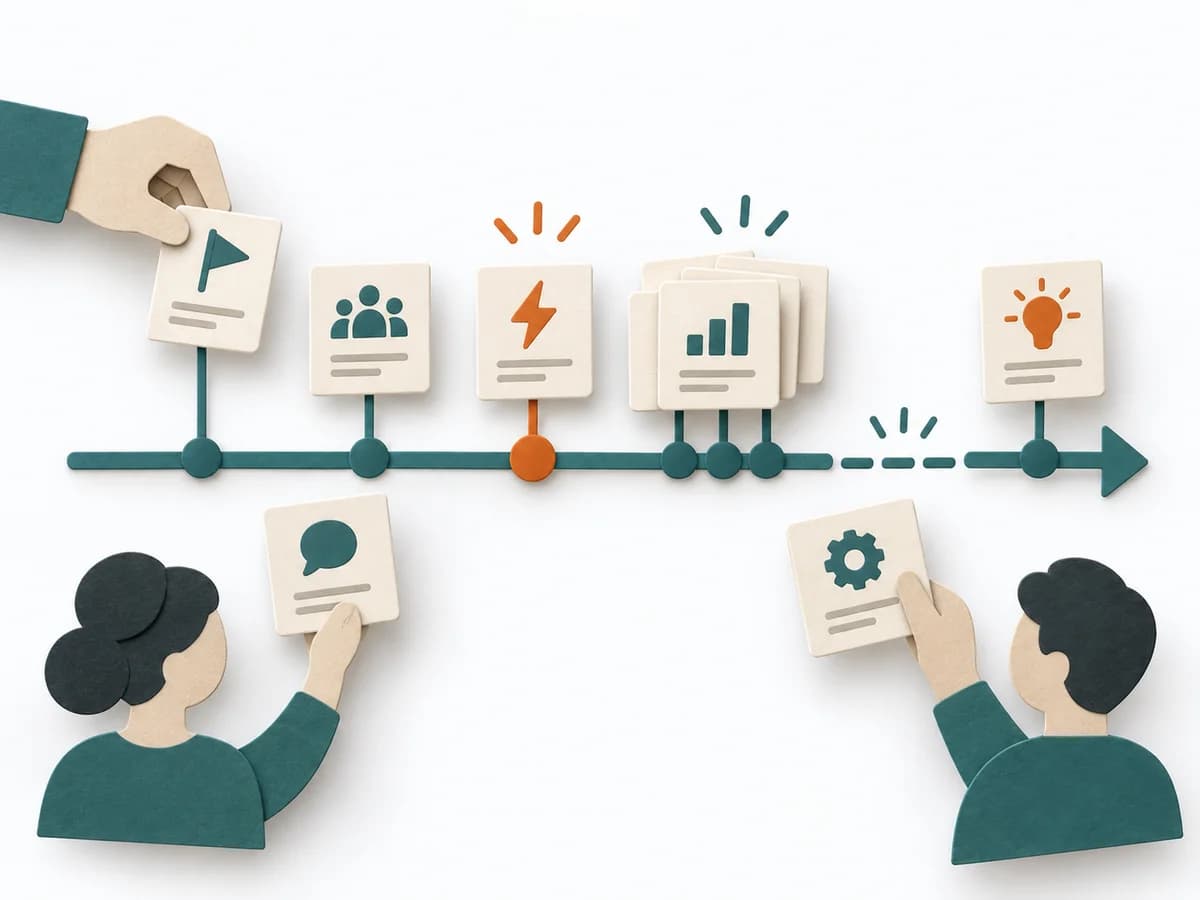 Facilitation Timeline | 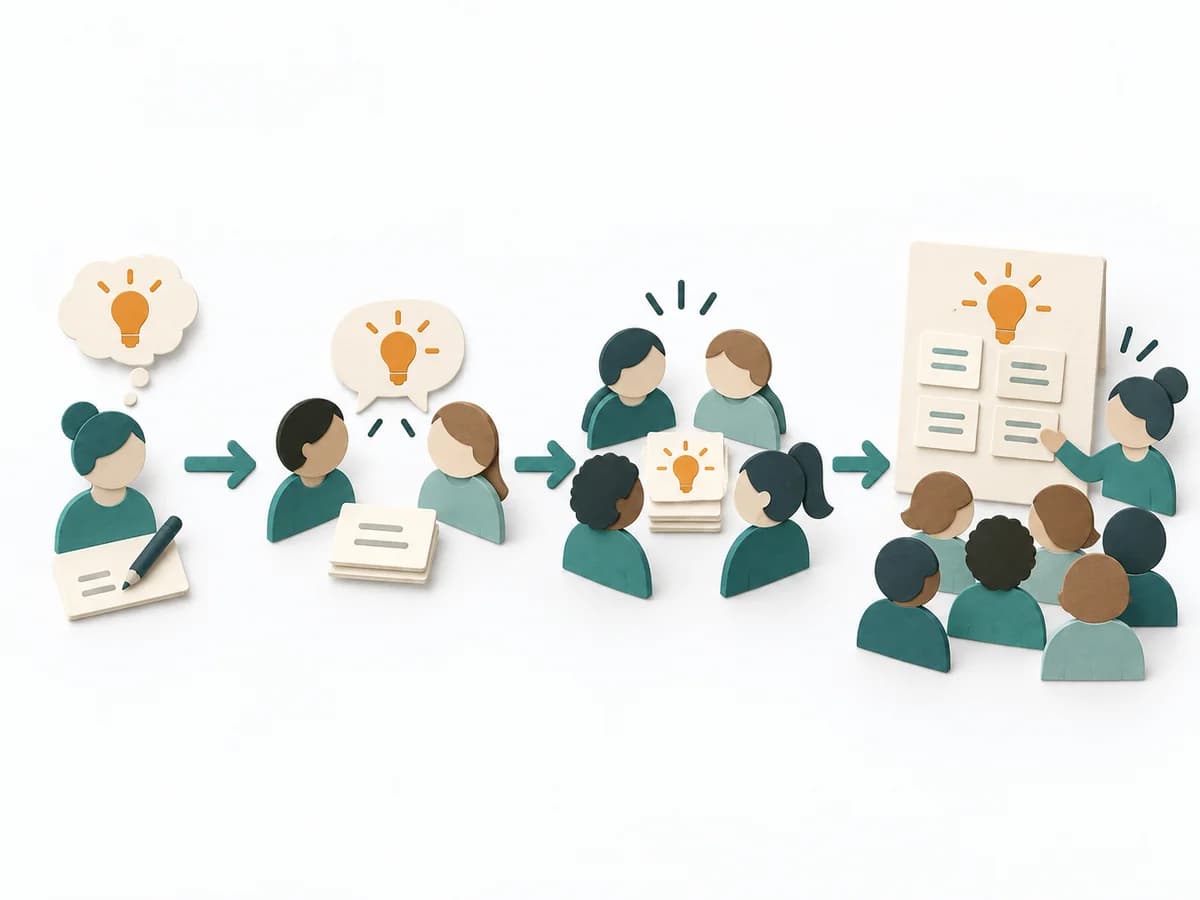 Facilitation 1-2-4-All | 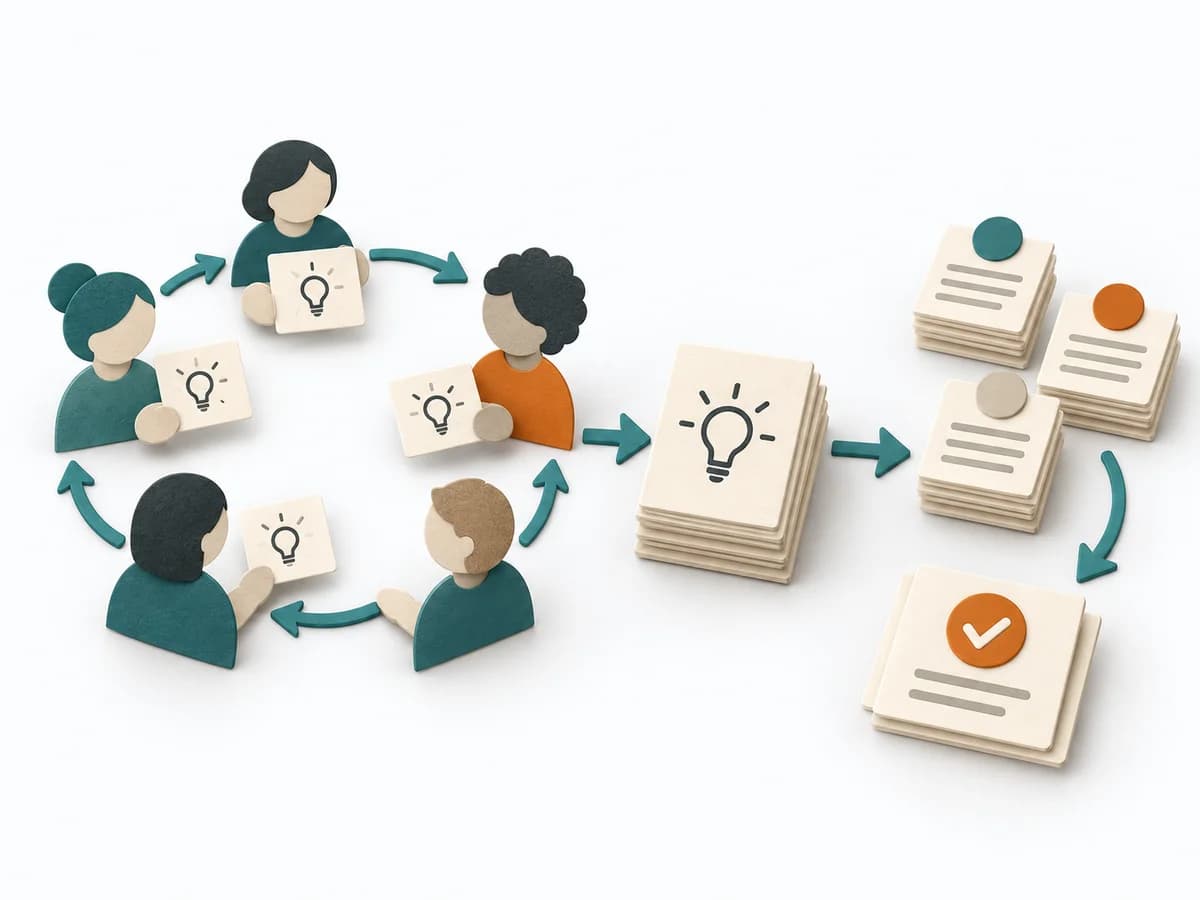 Innovation Round Robin Brainstorming |
|---|---|---|---|---|
Purposedifferent | When many tasks compete for the same capacity, it orders work by economic impact. It makes time lost, benefit, and effort comparable together. | When a project, incident, or change process is only remembered in fragments, Timeline brings the sequence back into a readable form. It makes turning points, precursors, and after-effects recognizable over the course of time. | When many people in a group too rarely get to speak, 1-2-4-All distributes thinking time more fairly. The format builds participation step by step and makes quiet or still-unformed thoughts usable faster. | With unevenly distributed speaking time, the method brings every person into the contribution one after another. It prevents early voices from setting the direction while still producing a shared idea space. This makes participation plannable and the team's diversity visible. |
Complexitydifferent | High | Low | Low | Low |
Timedifferent | 45-90 min | 30-90 min | 10-20 min | 20-45 min |
Participantsdifferent | 3-10 | 2-12 | 4-100+ | 4-10 |
Formatdifferent | Workshop | Workshop + async | Workshop | Workshop |
Outputdifferent | Ranked Backlog, Cost-of-Delay Assumptions | Timeline, Milestones, Insight Notes | Idea List, Shared Insights, Emergent Themes | Idea List, Cluster, Shortlist |
Tagsno overlap | LeanEconomicsSequencePrioritization | TimelineFacilitationSequence | FacilitationInclusionIdeation | BrainstormingIdeationFacilitationInclusionCreativity |