View methods side by side.
Choose up to four methods. Add them using the search and share the comparison by copying its link.
| Criterion |  Agile WSJF |  Delivery MoSCoW | 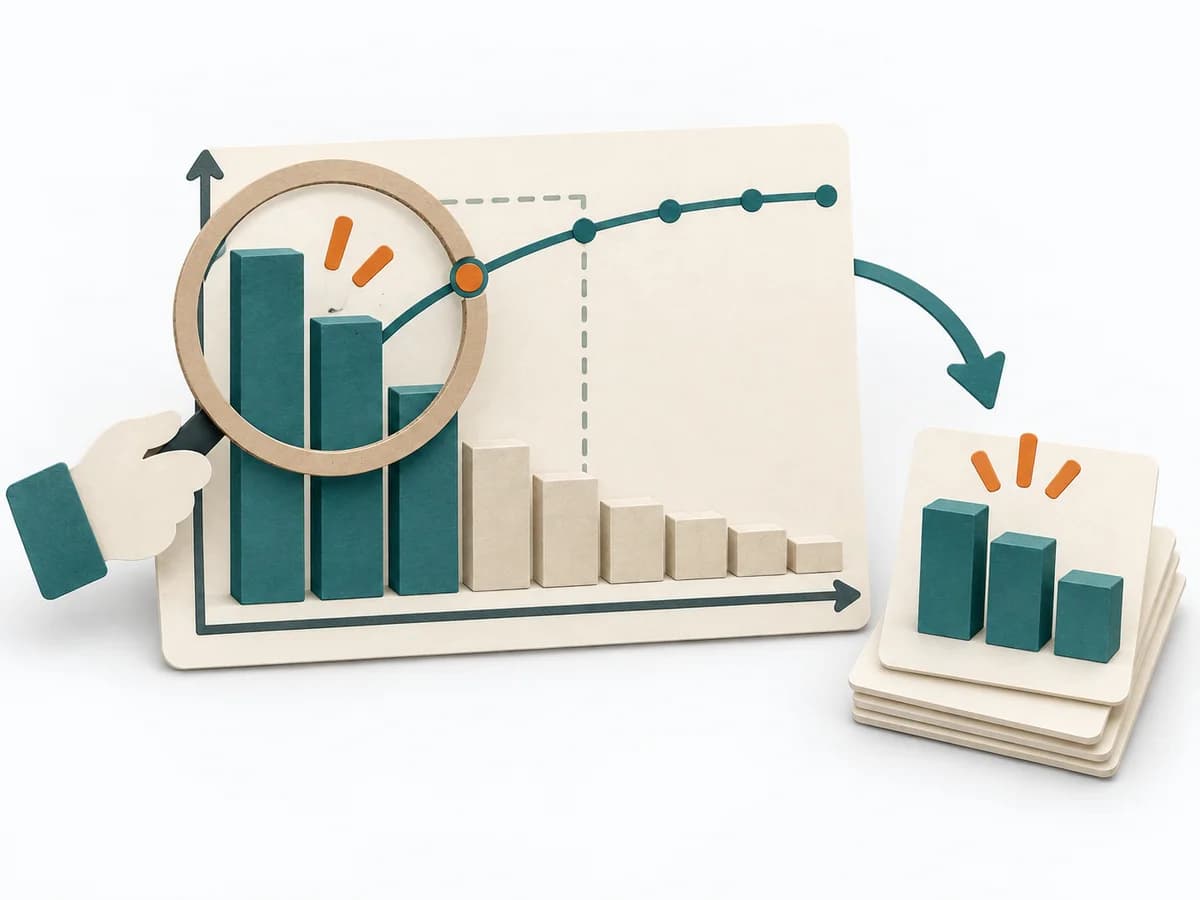 Decision Making Pareto Analysis |  Operations 5 Whys |
|---|---|---|---|---|
Purposedifferent | When many tasks compete for the same capacity, it orders work by economic impact. It makes time lost, benefit, and effort comparable together. | When a release carries too many demands and priorities are only ever negotiated, MoSCoW creates clear boundaries for the next cut. Must, Should, Could, and Won't make commitment, room for maneuver, and trade-off logic visible to everyone involved. | In many problem situations, effect is distributed unequally across many causes. A Pareto Analysis separates the few drivers with high leverage from the long remainder and focuses attention on what measurably moves the needle. | For a single, hard-to-explain deviation, the method exposes the causal chain behind the visible symptom. It keeps the cause open until a controllable condition emerges instead of a mere description. |
Complexitydifferent | High | Low | Low | Low |
Timedifferent | 45-90 min | 30-90 min | 30-60 min | 15-30 min |
Participantsdifferent | 3-10 | 3-12 | 1-6 | 2-6 |
Formatdifferent | Workshop | Workshop + async | Workshop + async | Workshop |
Outputdifferent | Ranked Backlog, Cost-of-Delay Assumptions | Prioritized Backlog, Release Scope, Tradeoff Notes | Pareto Chart, Top Causes, Focus List | Root cause notes, Countermeasures |
Tagsno overlap | LeanEconomicsSequencePrioritization | PrioritizationScopeDecision | PrioritizationQualityFocusRoot cause | Root causeIncidentLeanProblem solving |