View methods side by side.
Choose up to four methods. Add them using the search and share the comparison by copying its link.
| Criterion |  Operations Visual Management | 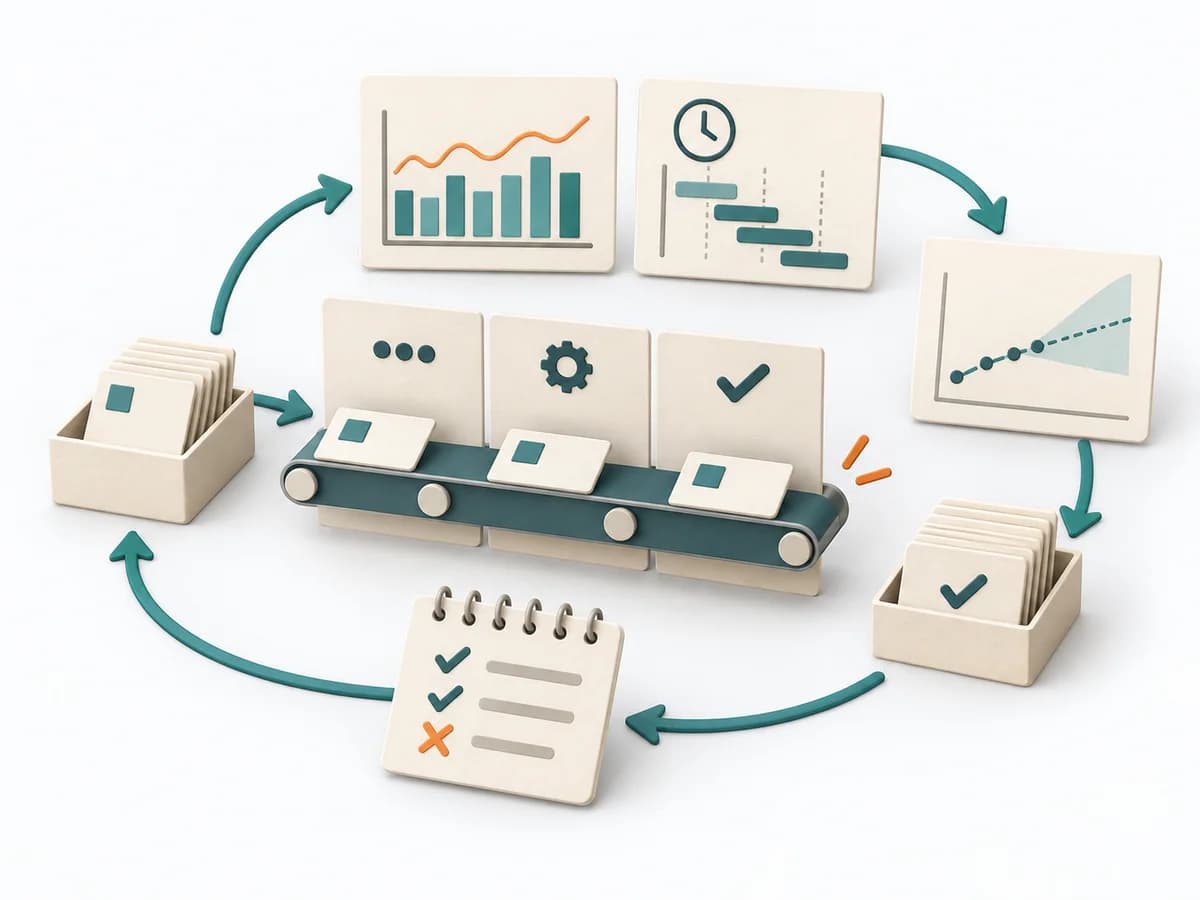 Agile NoEstimates | 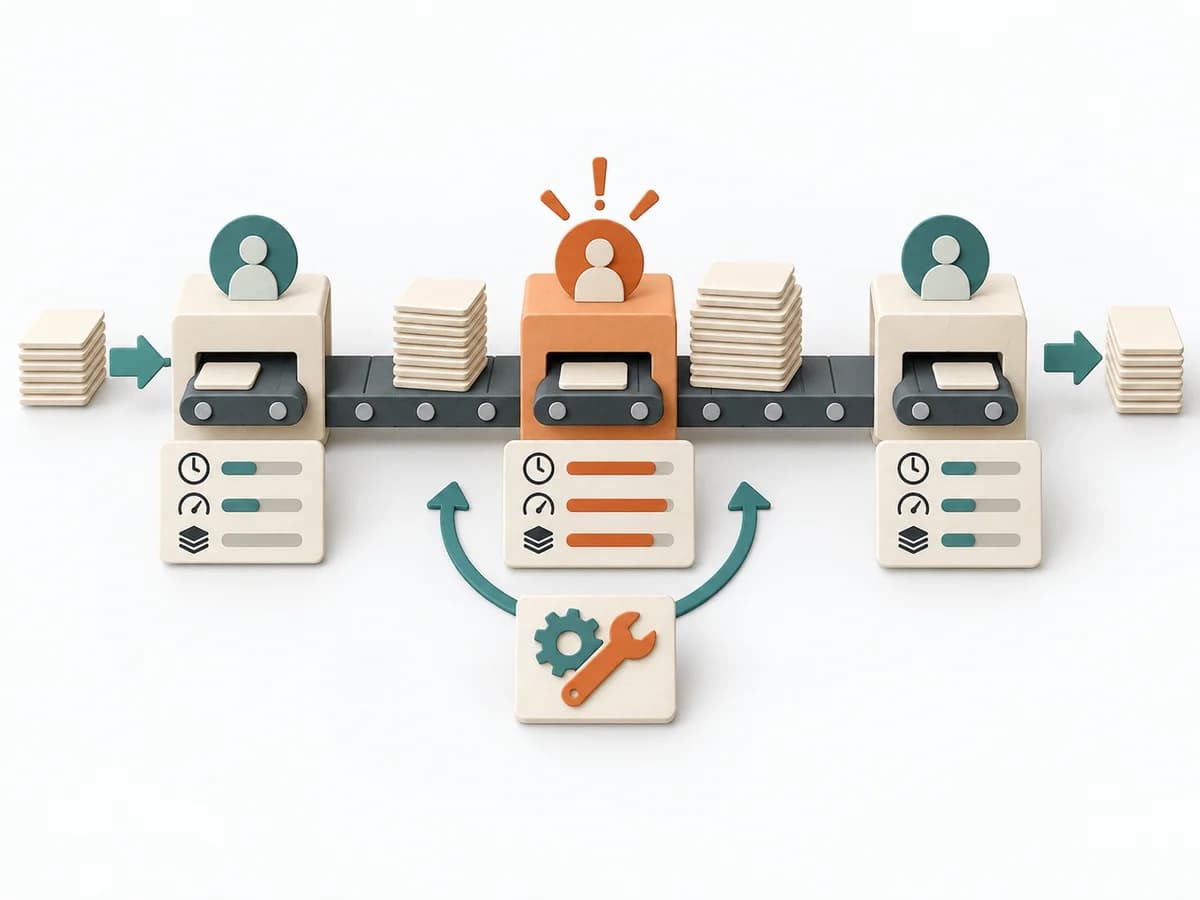 Operations Bottleneck Analysis | 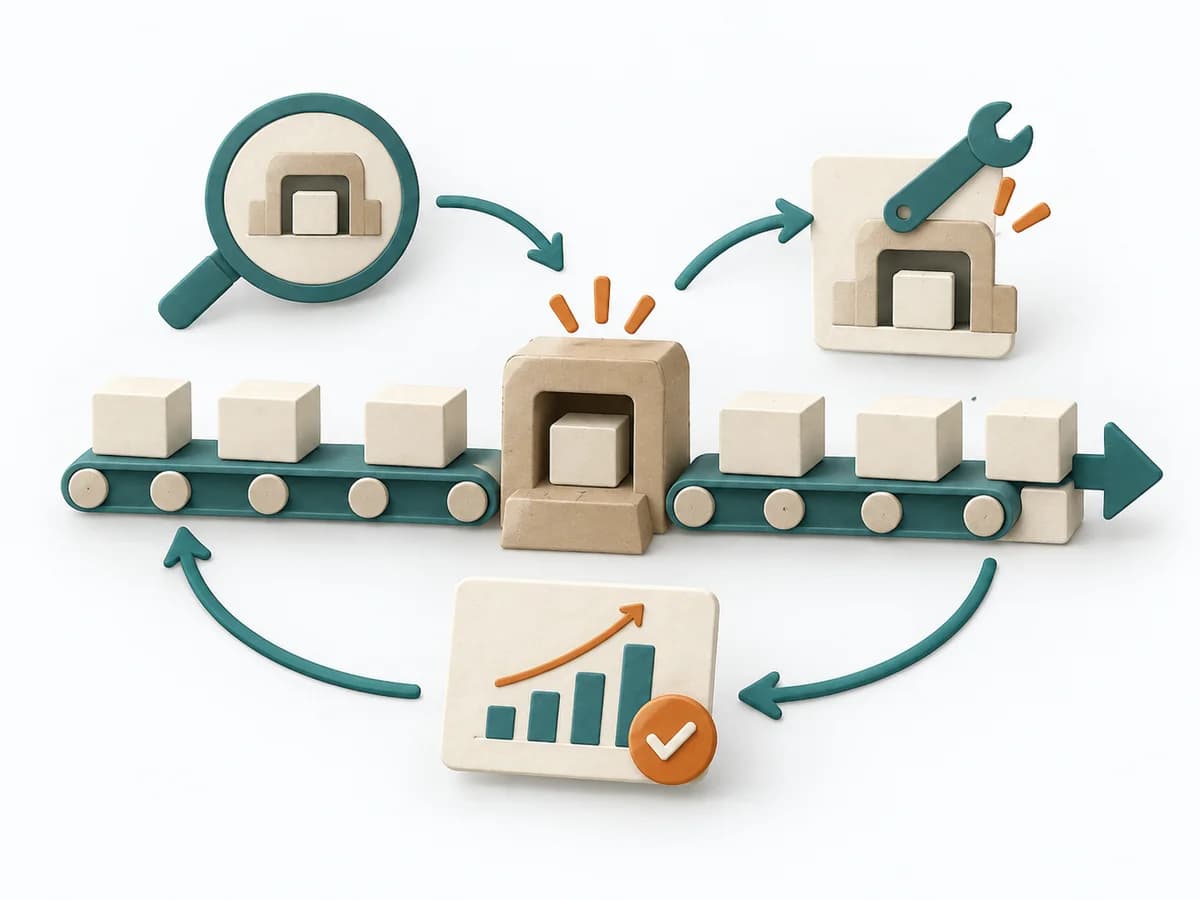 Operations Theory of Constraints |
|---|---|---|---|---|
Purposedifferent | With high tempo and many parallel topics, the method makes status, deviations, and priorities visible at a glance. It reduces search effort and prevents what matters from getting lost in daily work. | When estimating slows a team down more than it helps, it shifts the focus to flow, small slices, and real lead time. It sorts work by value, risk, and delivery ability. The result is captured as Throughput Data, Flow Forecast, and Slicing Rules. | For a flow that backs up at one point, the method looks for the capacity limit with the greatest leverage. It explains why extra effort elsewhere barely improves throughput. | For a system that does not get faster despite effort, the method directs attention to the bottleneck. It concentrates improvement on the point that actually limits throughput. |
Complexitydifferent | Low | Medium | Medium | High |
Timedifferent | Ongoing | laufend | 1-3 h | 2-4 h Analyse, laufend |
Participantsdifferent | 1-20 | 2-12 | 3-8 | 3-12 |
Formatsame | Workshop + async | Workshop + async | Workshop + async | Workshop + async |
Outputdifferent | Visual Board, Status Indicators, Exception Cues | Throughput Data, Flow Forecast, Slicing Rules | Bottleneck Map, Flow Metrics, Improvement Options, Follow-up Measures | Constraint Map, Improvement Plan, Flow Metrics |
Tagsno overlap | SignalsOperationsVisual management | EstimationForecastingFlow | FlowMeasurementConstraints | OperationsConstraintsFlowImprovement |