View methods side by side.
Choose up to four methods. Add them using the search and share the comparison by copying its link.
| Criterion |  UX Research User Interviews | 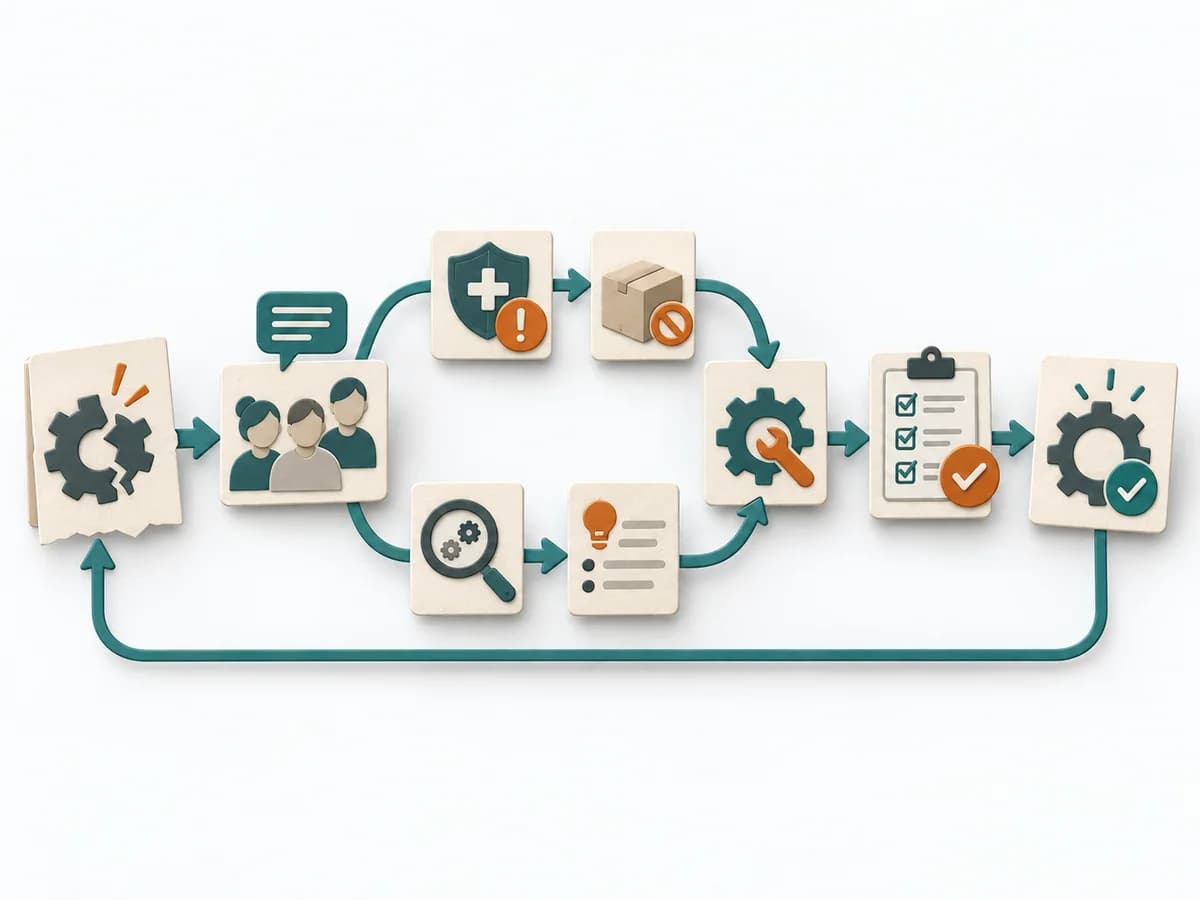 Operations 8D Problem Solving | 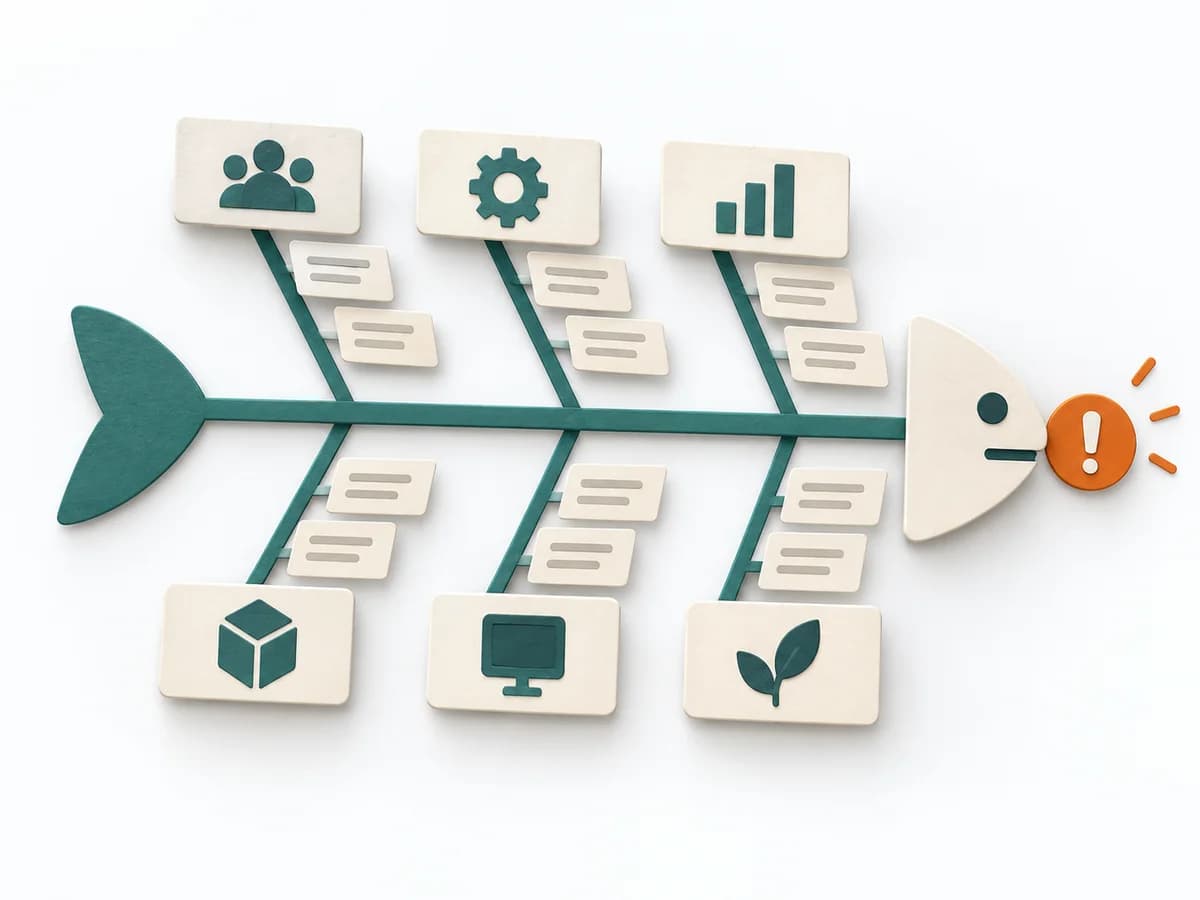 Operations Fishbone Diagram | 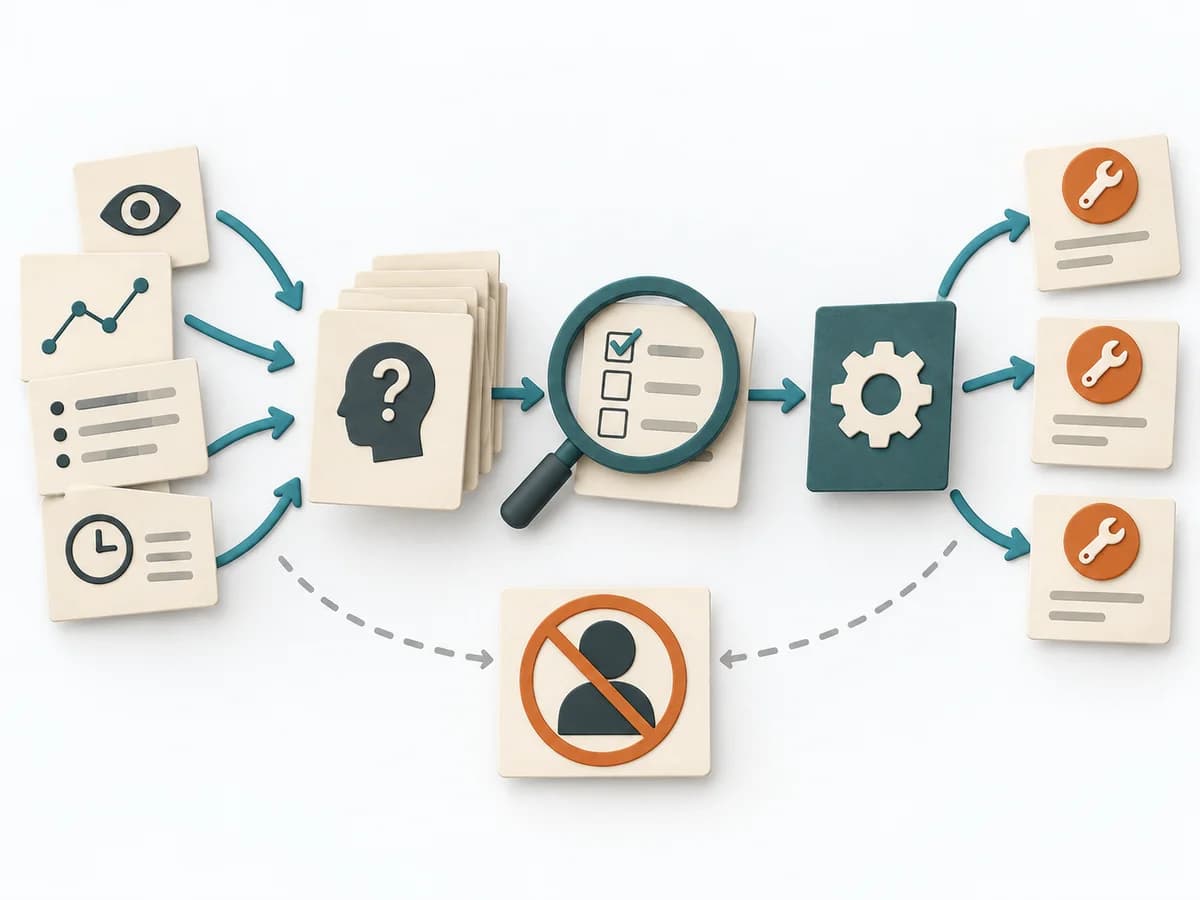 Operations Root Cause Analysis |
|---|---|---|---|---|
Purposedifferent | When teams derive needs only from assumptions and real motives are missing, user interviews give direct access to behavior and meaning. Conversations from the target group's everyday life make patterns, tensions, and open questions solidly visible. | For an acute quality or delivery problem, the method structures immediate protection and root cause work together. It keeps the situation stable while the actual cause is investigated cleanly. | When a problem has several possible contributing factors, the method sorts causes by cause areas. It prevents an initial hunch from blocking the view of other plausible drivers. | When a problem keeps recurring and the cause stays unclear, the method exposes the underlying mechanism. It separates symptom, guess, and robust explanation from one another. |
Complexitydifferent | Low | High | Low | Medium |
Timedifferent | 30–60 min per interview | 1-6 Wochen | 30-60 min | 1-4 h |
Participantsdifferent | 1 participant per interview | 4-10 | 2-8 | 3-8 |
Formatdifferent | Workshop + async | Workshop + async | Workshop | Workshop + async |
Outputdifferent | Interview Notes, Themes, Insight Summary | 8D Report, Containment Plan, Root Cause Evidence, Corrective Action Plan | Fishbone Diagram, Cause Categories, Investigation Backlog | Problem Statement, Cause Hypotheses, Confirmed Causes, Action Plan |
Tagsno overlap | QualitativeResearchCustomerDiscovery | QualityProblem solvingRoot cause | Root causeQualityOperations | Root causeProblem solvingQualityIncident |