View methods side by side.
Choose up to four methods. Add them using the search and share the comparison by copying its link.
Selected:Tree TestingSAAM (Software Architecture Analysis Method)LASR (Lightweight Approach for Software Reviews)Card Sorting
| Criterion | 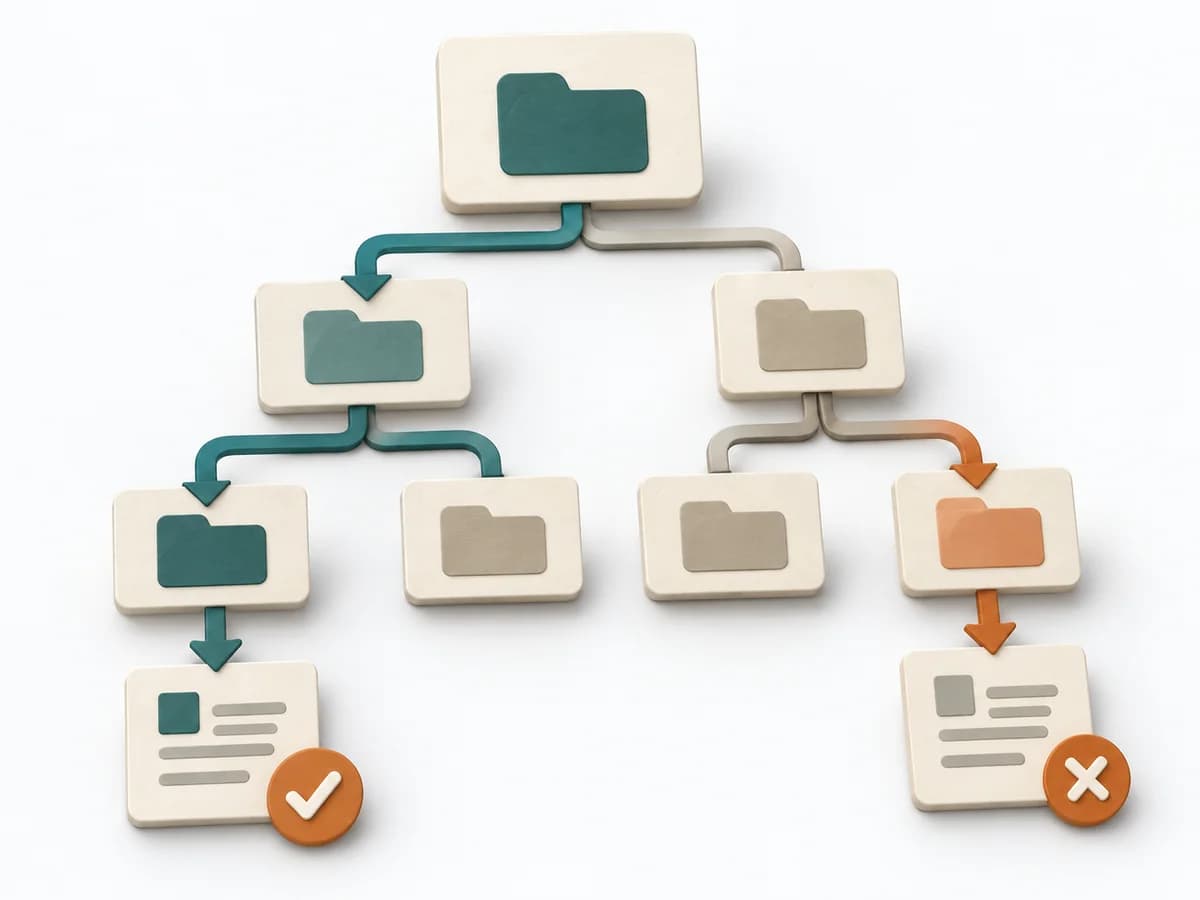 UX Research Tree Testing |  Architecture SAAM (Software Architecture Analysis Method) |  Architecture LASR (Lightweight Approach for Software Reviews) |  UX Research Card Sorting |
|---|---|---|---|---|
Purposedifferent | When a navigation exists but search paths still fail, tree testing checks findability without visual distraction. The method shows whether labels, levels, and paths really lead to the intended destination. | SAAM helps teams judge an architecture’s suitability for selected tasks and changes. It is particularly useful for examining modifiability and comparing architecture alternatives with clear reasoning. | LASR helps development teams identify where their software falls short of important quality goals and which improvements to consider. A small group with existing system knowledge can make an initial assessment and investigate open questions in more detail. | When content only makes sense internally and users can't find the structure again, card sorting exposes their mental order. Terms, groups, and naming are then aligned with the target group's expectations. |
Complexitydifferent | Medium | High | Medium | Low |
Timedifferent | 1-2 Tage | Preparation, scenario analysis, and findings review; effort depends on scope | 3–4 h for initial assessment; preparation and deeper analysis additional | 20-45 min |
Participantsdifferent | Based on research question | Architecture experts and stakeholders for scenarios and weighting | 1 or a small team; particularly suitable for 3–4 people | Based on research question |
Formatdifferent | Async | Workshop + async | Workshop + async | Workshop + async |
Outputdifferent | Findability Metrics, Path Analysis, Revised IA | Domain functions mapped to components and connections, Quality attributes and evaluation criteria, Typical tasks and their effects on the architecture, Reasoned evaluation or comparison of alternatives | Lean Mission Statement describing the software’s purpose, Prioritized quality goals and evaluation criteria, Risks and estimated gaps against quality goals, More closely examined findings and open checks | Content groups, Label set, IA hypotheses |
Tagsno overlap | Information architectureNavigationFindability | ArchitectureChangeAnalysisComparisonQuality | ArchitectureQualityRiskAssessmentLean | Information architectureNavigationStructure |