View methods side by side.
Choose up to four methods. Add them using the search and share the comparison by copying its link.
| Criterion | 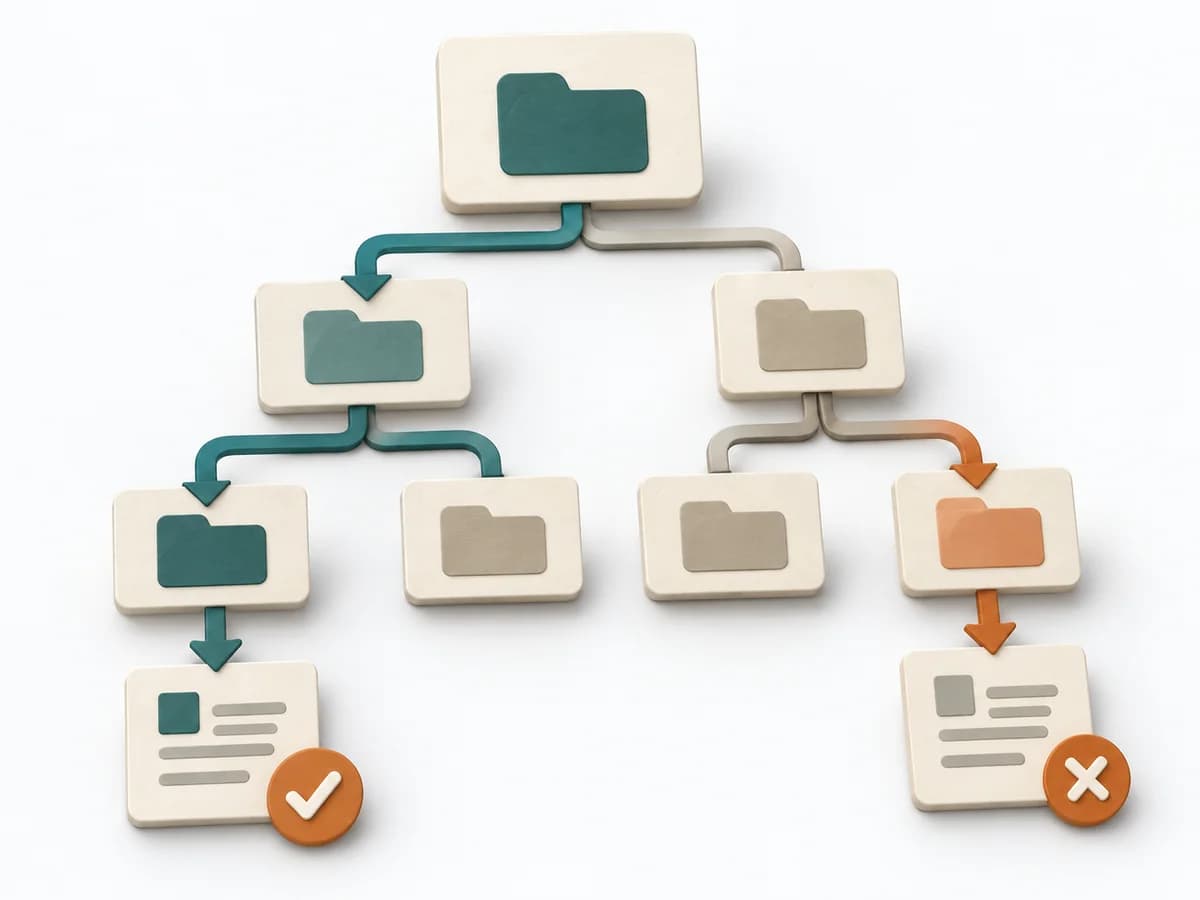 UX Research Tree Testing |  Architecture Request for Comments | 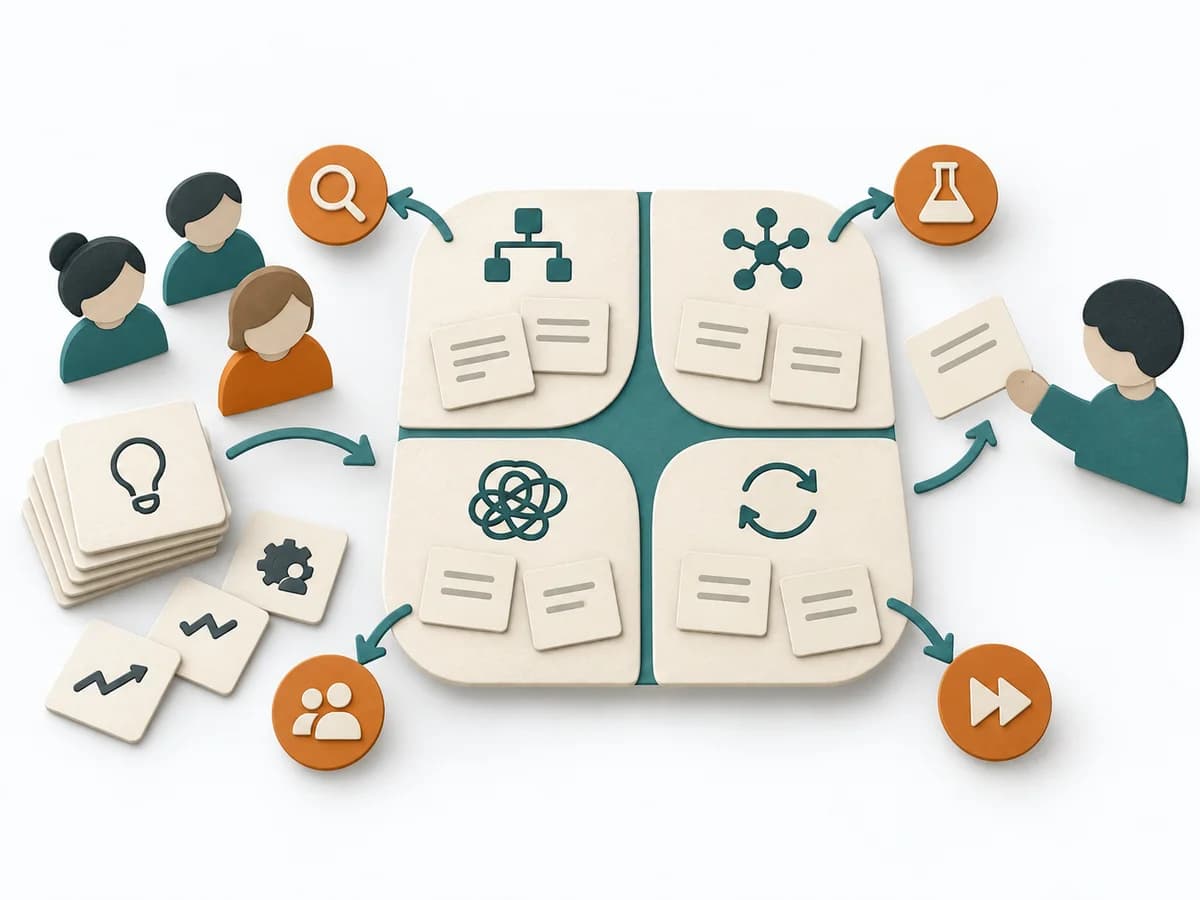 Decision Making Cynefin Workshop |  UX Research Card Sorting |
|---|---|---|---|---|
Purposedifferent | When a navigation exists but search paths still fail, tree testing checks findability without visual distraction. The method shows whether labels, levels, and paths really lead to the intended destination. | An RFC clarifies architecture context, options, and consequences. It structures technical context, alternatives, tradeoffs, open questions, and review feedback, and captures the result as an RFC document, reviewer comments, and a decision rationale. | When problems are unclear, chaotic, or only seemingly familiar, standard recipes fall short. A Cynefin Workshop sorts situations by the nature of their problem and connects them with matching action logic. | When content only makes sense internally and users can't find the structure again, card sorting exposes their mental order. Terms, groups, and naming are then aligned with the target group's expectations. |
Complexitydifferent | Medium | Medium | Medium | Low |
Timedifferent | 1-2 Tage | 1-3 Wochen vom Draft bis zur Entscheidung | 60-180 min | 20-45 min |
Participantsdifferent | Based on research question | 3-20 Reviewer | 4-20 | Based on research question |
Formatdifferent | Async | Async | Workshop | Workshop + async |
Outputdifferent | Findability Metrics, Path Analysis, Revised IA | RFC document, Reviewer comments, Decision rationale, Follow-up ADR or tickets | Cynefin Map, Domain-specific Actions, Sensemaking Notes | Content groups, Label set, IA hypotheses |
Tagsno overlap | Information architectureNavigationFindability | ArchitectureDecisionAsyncGovernance | ComplexitySensemakingDecision | Information architectureNavigationStructure |