View methods side by side.
Choose up to four methods. Add them using the search and share the comparison by copying its link.
| Criterion | 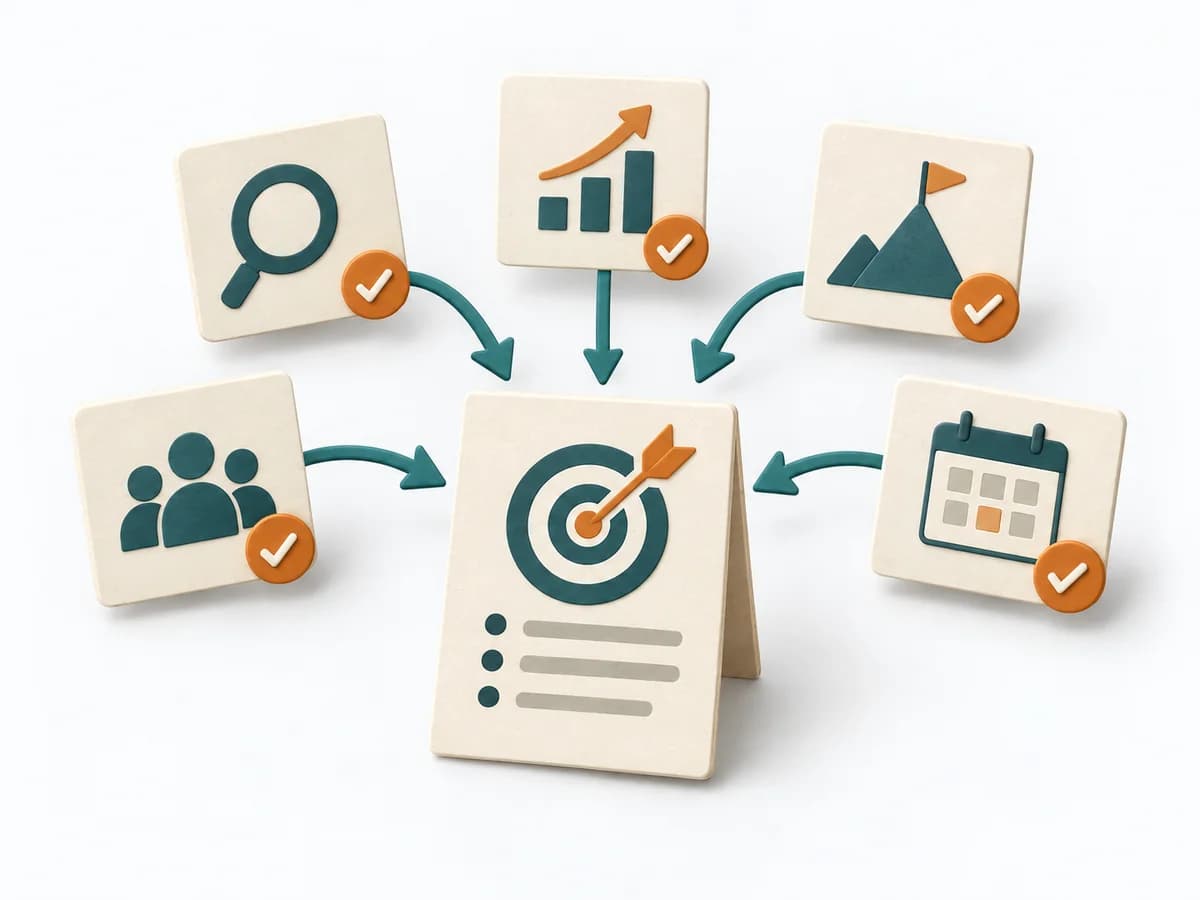 Product Strategy SMART Goals |  Knowledge Modeling Concept Mapping | 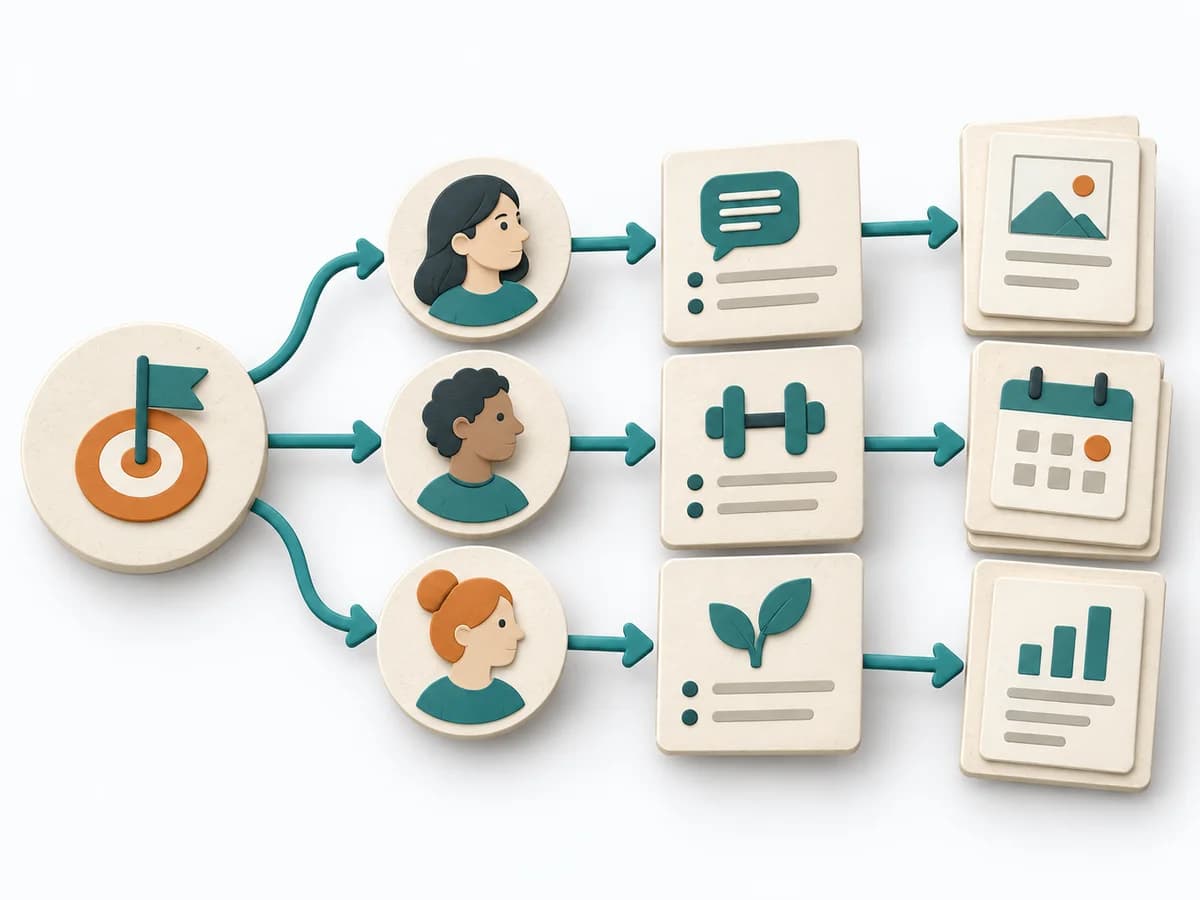 Product Strategy Impact Mapping | 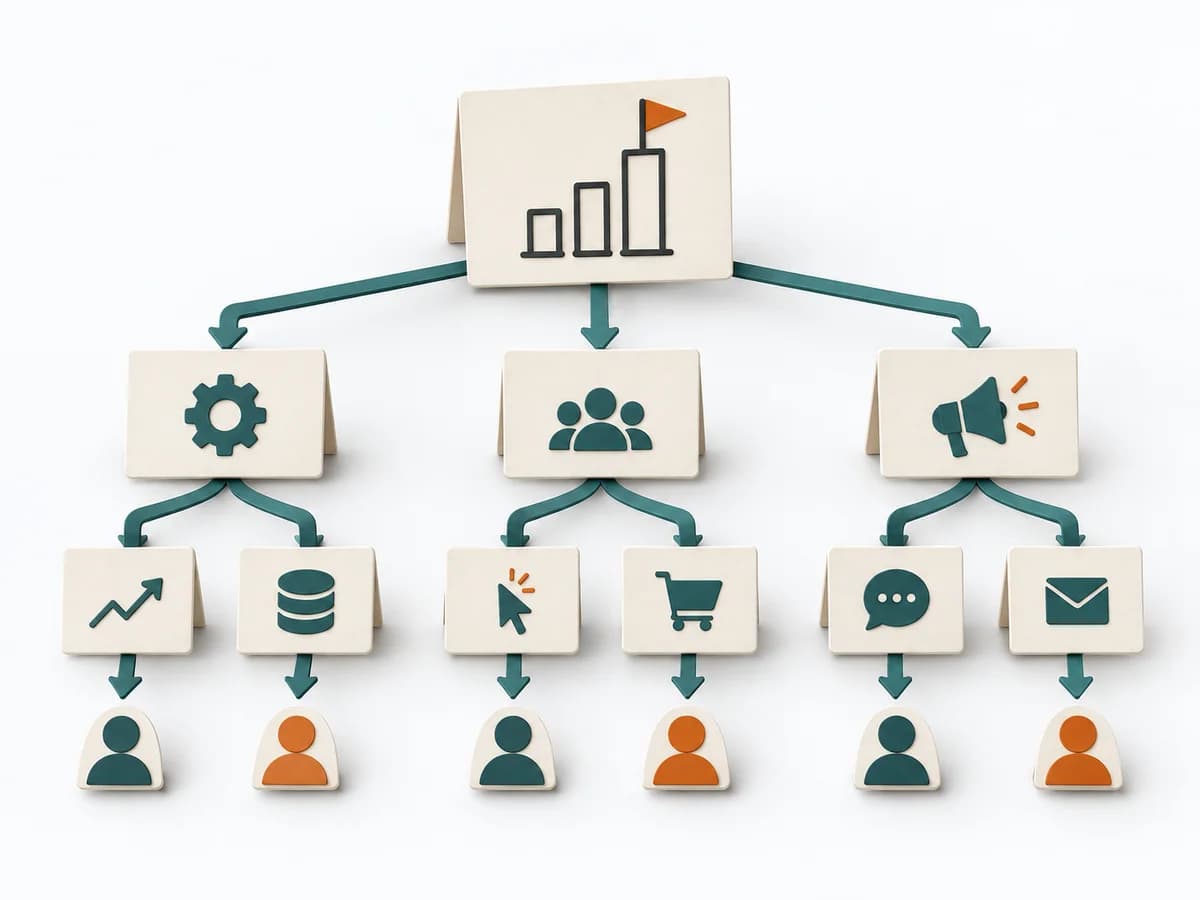 Product Strategy KPI Tree |
|---|---|---|---|---|
Purposedifferent | When goals are formulated too generally, it brings measurability, direction, and timing into shape. It prevents intentions from staying without clear verification. | Concept Mapping arranges terms and relationships in a network that makes subject-matter connections tangible. It fits when a topic needs to be understood structurally rather than linearly. | When a goal needs to be connected to several possible paths, it shows chains of impact instead of feature lists. It connects business goal, behavior change, and measures. | When metrics across the organization drift apart, it arranges drivers and effects under one shared logic. It connects customer value, product logic, and decision priorities. The result is captured as a KPI tree and owner list. |
Complexitydifferent | Low | Medium | Medium | Medium |
Timedifferent | 15-30 min | 1-2 h | 45-90 min | 90-180 min initial, dann laufend |
Participantsdifferent | 1-8 | 1-8 | 3-8 | 3-8 |
Formatdifferent | Workshop + async | Workshop + async | Workshop | Workshop + async |
Outputdifferent | SMART Goal, Measurement Note, Deadline | Concept Map, Relationship Labels, Knowledge Gaps | Impact Map, Outcome Hypotheses, Delivery Options | KPI Tree, Owner List |
Tagsno overlap | GoalsPlanningMeasurementAlignment | KnowledgeConceptsMappingSensemaking | OutcomesStrategyBehaviorPlanning | MetricsStrategyAlignmentMeasurement |