View methods side by side.
Choose up to four methods. Add them using the search and share the comparison by copying its link.
| Criterion | 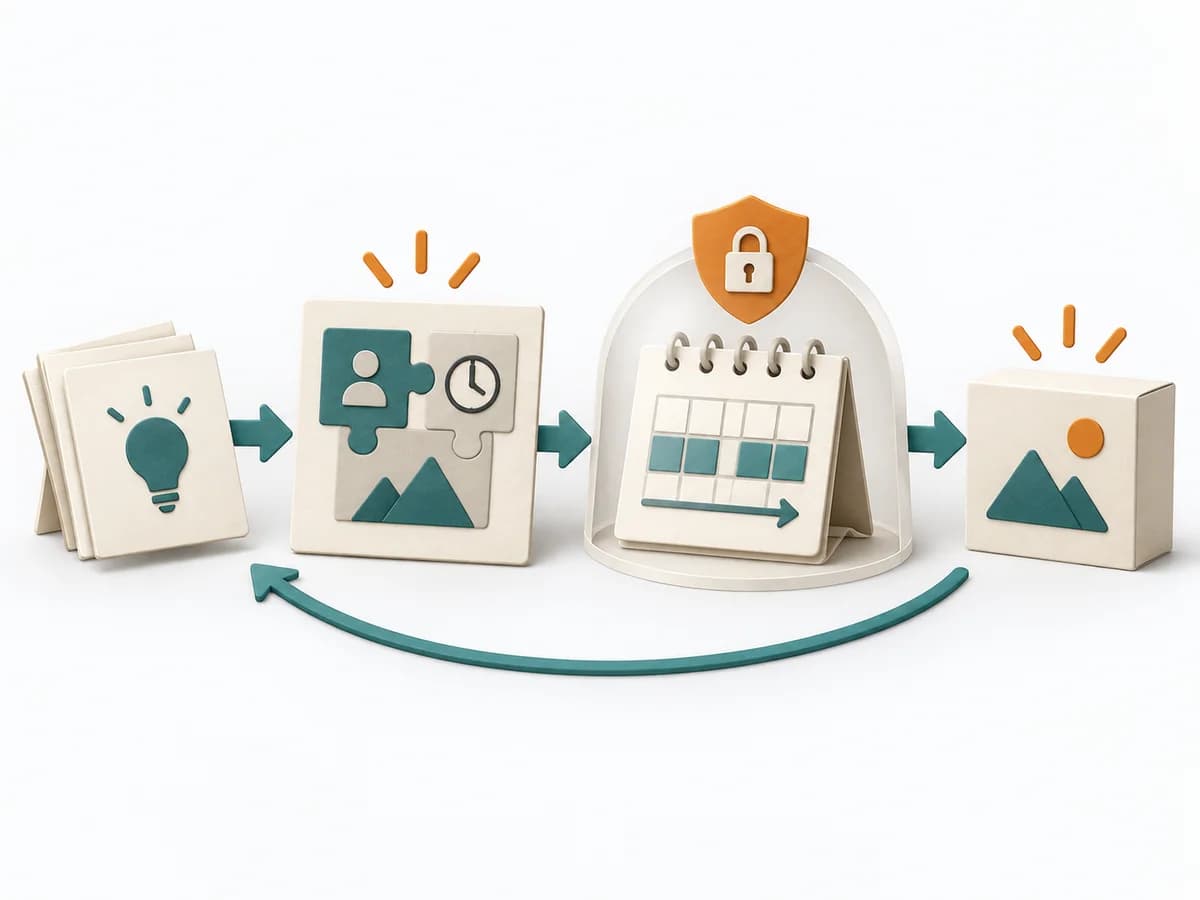 Delivery Shape Up |  UX Research Affinity Diagramming |  Facilitation Alignment Mapping |  Facilitation Stakeholder Salience Model |
|---|---|---|---|---|
Purposedifferent | Shape Up helps clarify scope, sequence, and delivery flow. It makes work boundaries and decisions explicit and captures results as pitches, bet-table decisions, and hill charts. | When research notes, feedback, or observations sit unconnected side by side, affinity diagramming sorts the raw material into solid themes. Many individual points turn into patterns that make decisions and opportunities clearer. | When several people work toward one goal but hold different mental maps, Alignment Mapping makes the discrepancies visible. It arranges goals, assumptions, and priorities so shared direction becomes verifiable. | When stakeholders appear to matter very differently, the Stakeholder Salience Model rates their actual priority through power, legitimacy, and urgency. It turns individual contributions into a visible selection. The result is captured as a Salience diagram and a class-based strategy. |
Complexitydifferent | Medium | Low | Medium | Medium |
Timedifferent | 6 Wochen Cycle + 2 Wochen Cool-Down | 45–90 min | 1-2 h | 60-90 min |
Participantsdifferent | 2-4 pro Pitch | 3-10 | 4-12 | 3-6 |
Formatdifferent | Workshop + async | Workshop | Workshop | Workshop |
Outputdifferent | Pitches, Bet-table decisions, Hill charts, Cooldown outcomes | Theme clusters, Insight statements, Opportunity areas | Alignment Map, Open Issues, Decision Questions | Salience Diagram, Strategy per Class |
Tagsno overlap | PlanningDeliveryAutonomy | SynthesisQualitativeRoot cause | AlignmentStakeholdersStrategyFacilitation | StakeholdersFacilitationAlignmentGovernance |