View methods side by side.
Choose up to four methods. Add them using the search and share the comparison by copying its link.
| Criterion |  Knowledge Modeling Shape-First Modeling | 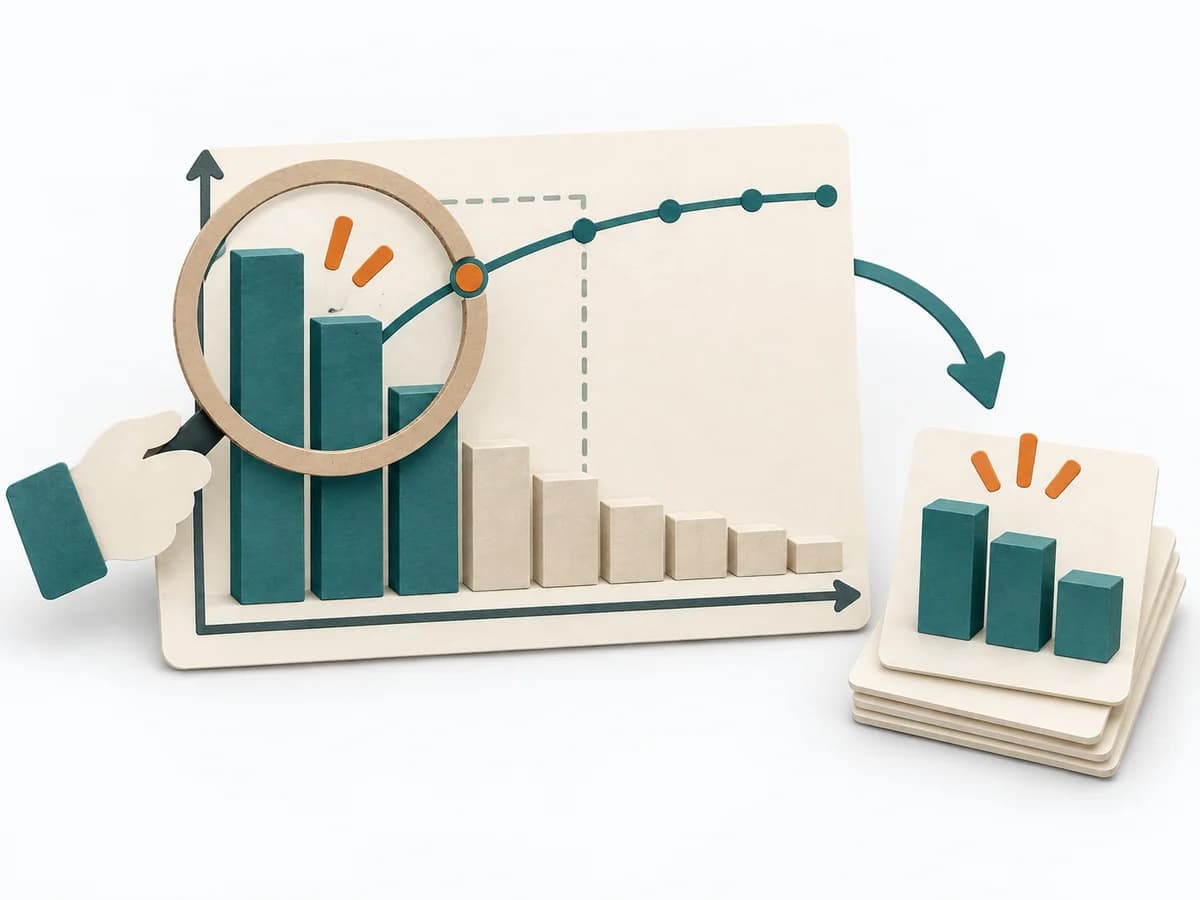 Decision Making Pareto Analysis |  Operations A3 Problem Solving |  Operations Failure Mode and Effects Analysis |
|---|---|---|---|---|
Purposedifferent | Shape-First Modeling defines data quality through shapes before implementation or integration frays at the edges. The approach fits when validation and data contracts should be part of the design from the start. | In many problem situations, effect is distributed unequally across many causes. A Pareto Analysis separates the few drivers with high leverage from the long remainder and focuses attention on what measurably moves the needle. | For a complex deviation with several people involved, the method bundles problem, analysis, and decision onto one page. It creates a shared working space where causes, countermeasures, and follow-up fit together. | For a process, product, or service with noticeable failure risks, the method assesses possible failure modes in advance. It directs attention to combinations of occurrence, effect, and detectability. |
Complexitydifferent | Medium | Low | Medium | High |
Timedifferent | Halber Tag pro Domain Slice | 30-60 min | 45-90 min | 2-6 h |
Participantsdifferent | 1-4 | 1-6 | 2-5 | 3-10 |
Formatdifferent | Workshop + async | Workshop + async | Workshop + async | Workshop |
Outputdifferent | SHACL or ShEx Shapes, Validation Reports, Data Contracts, Shape Documentation | Pareto Chart, Top Causes, Focus List | A3 Report, Action Plan, Root Cause Analysis | FMEA Table, Risk Priority, Mitigation Actions |
Tagsno overlap | Knowledge graphValidationSemantic | PrioritizationQualityFocusRoot cause | LeanProblem solvingCoachingOperations | RiskQualityOperationsRoot cause |