View methods side by side.
Choose up to four methods. Add them using the search and share the comparison by copying its link.
| Criterion | 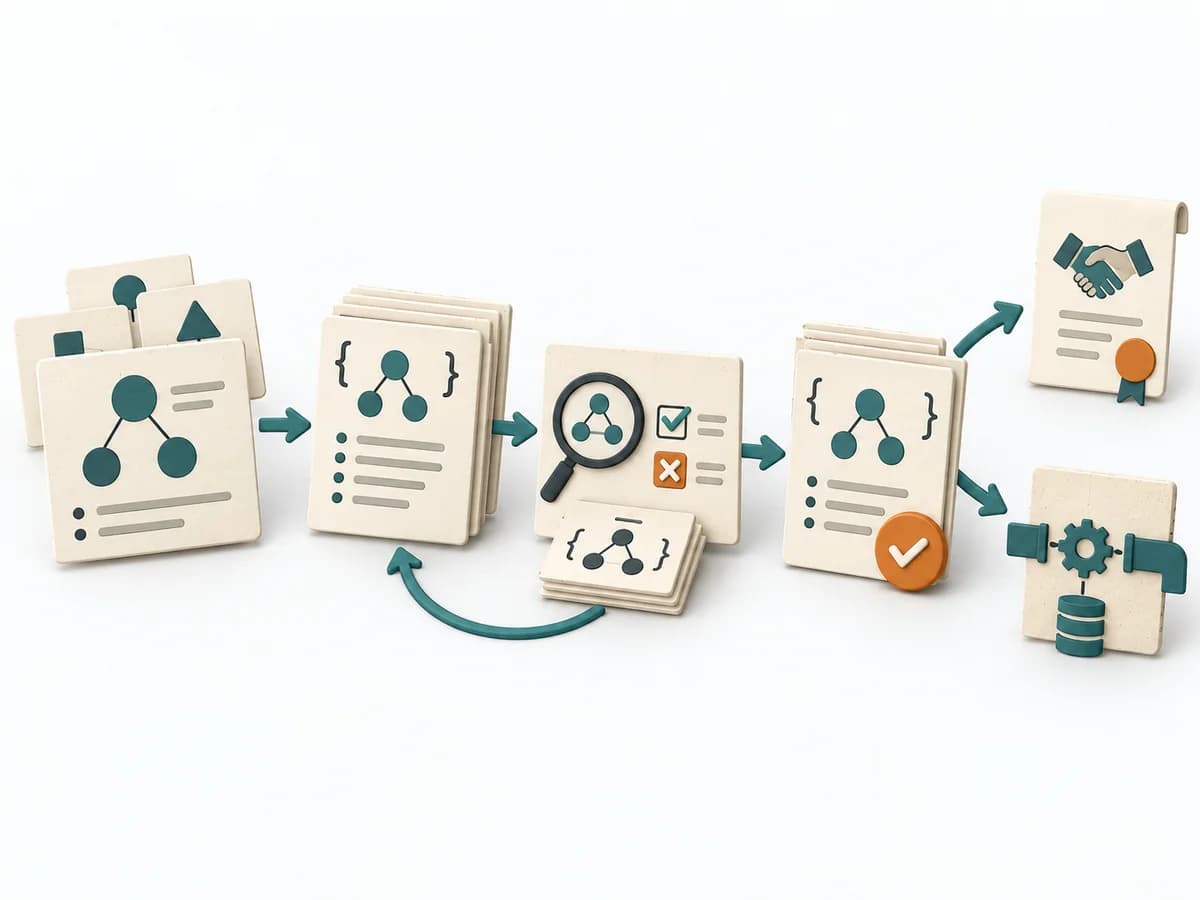 Knowledge Modeling Shape-First Modeling |  Architecture Architecture Inception Canvas |  Growth A/B Testing |  Architecture Software Architecture Canvas |
|---|---|---|---|---|
Purposedifferent | Shape-First Modeling defines data quality through shapes before implementation or integration frays at the edges. The approach fits when validation and data contracts should be part of the design from the start. | The Architecture Inception Canvas bundles the first architecture questions into a compact decision picture. It fits when an initiative is still in motion but still needs clear guardrails. | When two variants compete, discussions quickly decide by taste rather than effect. A/B Testing checks behavior under controlled conditions and separates real improvement from chance or expectation effects. | The Software Architecture Canvas reduces a system to the most important architecture decisions, constraints, and interfaces. It is useful when teams need a resilient overall picture quickly. |
Complexitydifferent | Medium | Low | High | Low |
Timedifferent | Halber Tag pro Domain Slice | 1-2 h | 1-4 Wochen | 1-2 h |
Participantsdifferent | 1-4 | 3-8 | 1-6 | 3-10 |
Formatdifferent | Workshop + async | Workshop | Async | Workshop |
Outputdifferent | SHACL or ShEx Shapes, Validation Reports, Data Contracts, Shape Documentation | Inception Canvas, Risks, Goal List, Open Questions | Experiment results, Decision log, Learning summary | Architecture Canvas, Goals, Constraints, Quality Attributes |
Tagsno overlap | Knowledge graphValidationSemantic | AlignmentArchitectureCanvas | ExperimentsGrowthAnalyticsValidation | CanvasArchitectureAlignmentWorkshop |