View methods side by side.
Choose up to four methods. Add them using the search and share the comparison by copying its link.
| Criterion | 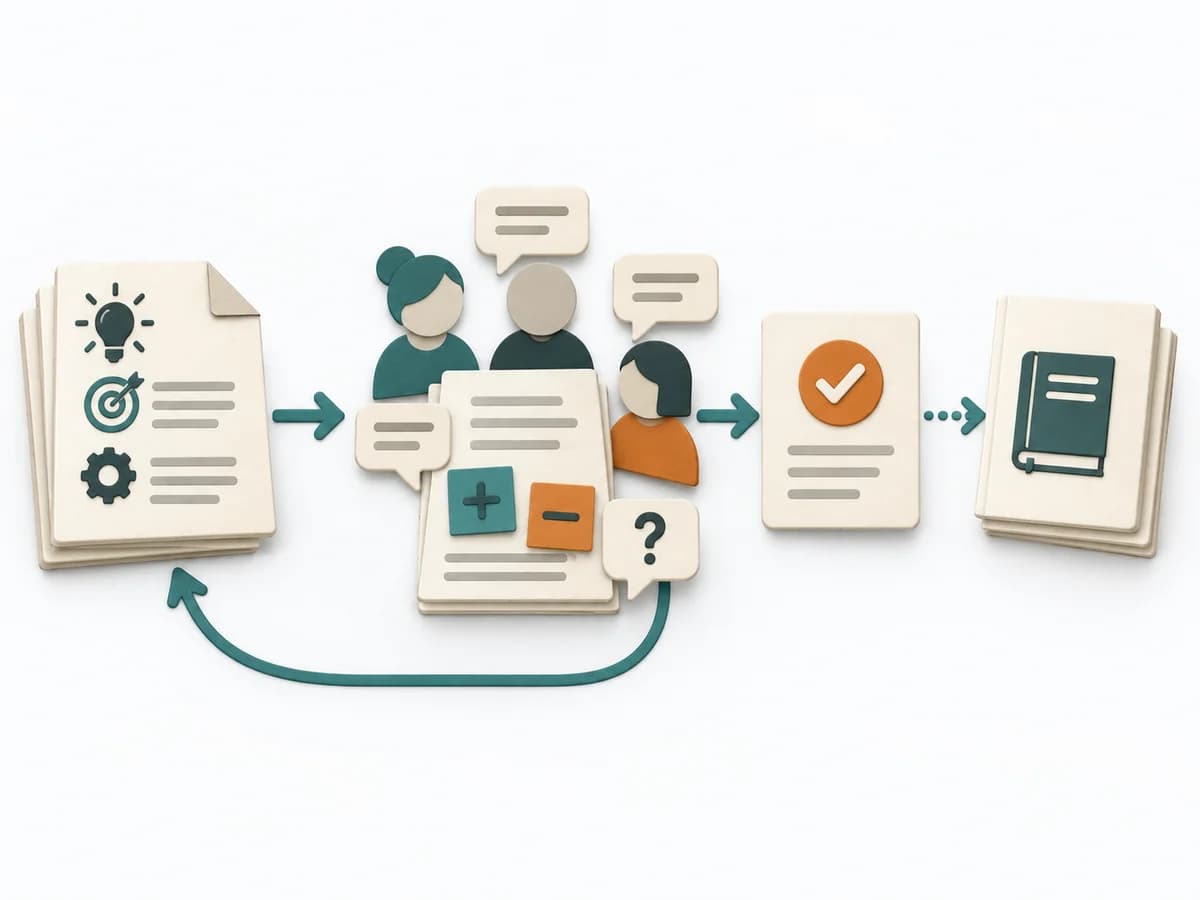 Architecture Request for Comments |  UX Research Empathy Mapping |  UX Research Affinity Diagramming |  Architecture Architecture Decision Record |
|---|---|---|---|---|
Purposedifferent | An RFC clarifies architecture context, options, and consequences. It structures technical context, alternatives, tradeoffs, open questions, and review feedback, and captures the result as an RFC document, reviewer comments, and a decision rationale. | When a lot is assumed about a target group but little is seen jointly, empathy mapping makes knowledge and gaps directly comparable. The picture also shows which assumptions hold up and where evidence is missing. | When research notes, feedback, or observations sit unconnected side by side, affinity diagramming sorts the raw material into solid themes. Many individual points turn into patterns that make decisions and opportunities clearer. | An ADR permanently records an architecture decision with context, trade-offs, and consequence. It creates continuity for later changes because the decision path stays traceable. |
Complexitydifferent | Medium | Low | Low | Low |
Timedifferent | 1-3 Wochen vom Draft bis zur Entscheidung | 30–60 min | 45–90 min | 15-45 min |
Participantsdifferent | 3-20 Reviewer | 4-8 | 3-10 | 1-3 |
Formatdifferent | Async | Workshop | Workshop | Async |
Outputdifferent | RFC document, Reviewer comments, Decision rationale, Follow-up ADR or tickets | Empathy Map, Assumptions List, Research Gaps | Theme clusters, Insight statements, Opportunity areas | ADR File, Decision Log, Rationale |
Tagsno overlap | ArchitectureDecisionAsyncGovernance | SynthesisQualitativeWorkshop | SynthesisQualitativeRoot cause | ArchitectureRationaleDocumentationGovernance |