View methods side by side.
Choose up to four methods. Add them using the search and share the comparison by copying its link.
| Criterion |  Architecture Request for Comments |  Decision Making Argument Mapping | 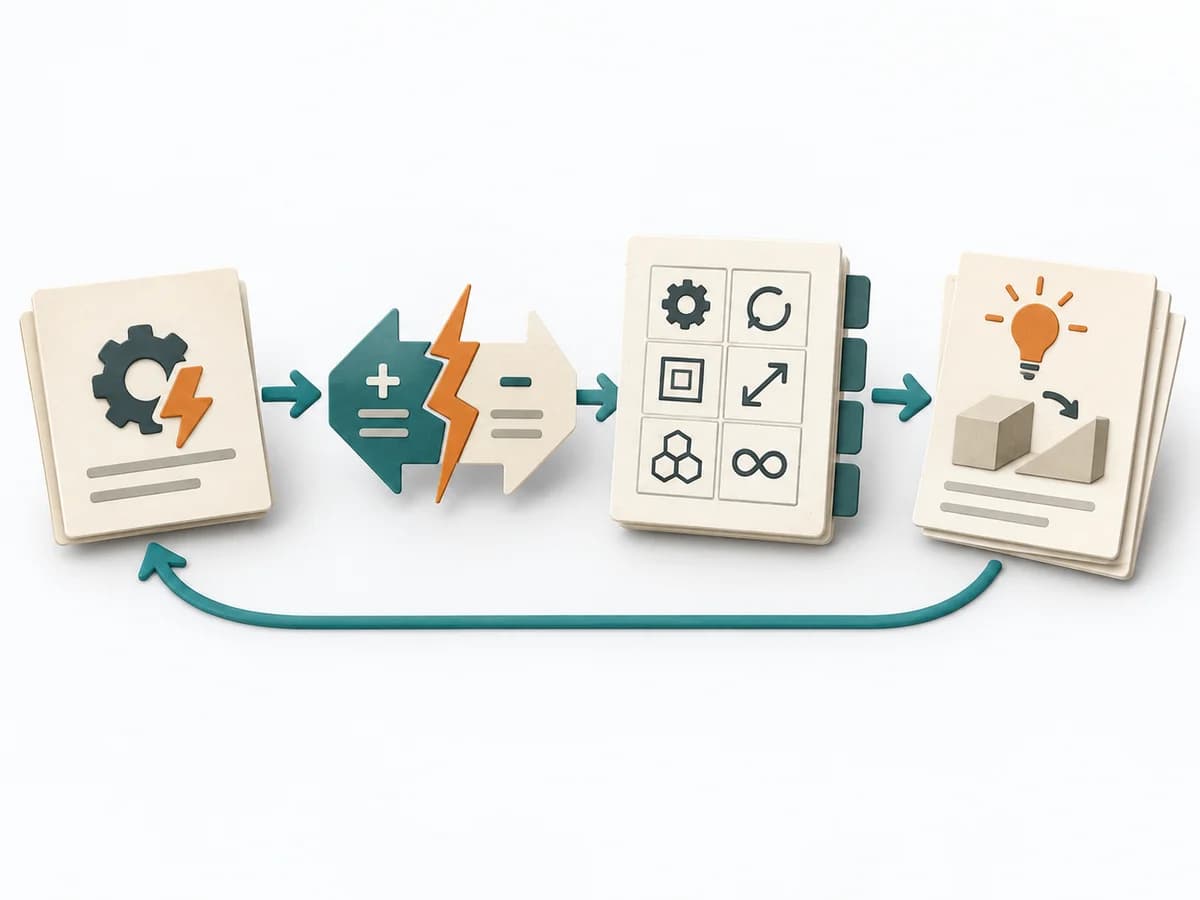 Innovation TRIZ |  Architecture Architecture Decision Record |
|---|---|---|---|---|
Purposedifferent | An RFC clarifies architecture context, options, and consequences. It structures technical context, alternatives, tradeoffs, open questions, and review feedback, and captures the result as an RFC document, reviewer comments, and a decision rationale. | When statements, evidence, and counterarguments get mixed up, a debate quickly loses its structure. Argument Mapping breaks a thesis down into its reasoning and makes visible what it really rests on. | For technical contradictions or trade-offs, the method looks for solutions that resolve opposing requirements at the same time. It translates limits into an explicit picture of conflict that becomes workable. This produces not just compromises but more elegant principles. | An ADR permanently records an architecture decision with context, trade-offs, and consequence. It creates continuity for later changes because the decision path stays traceable. |
Complexitydifferent | Medium | Medium | High | Low |
Timedifferent | 1-3 Wochen vom Draft bis zur Entscheidung | 1-3 h | 1-4 h | 15-45 min |
Participantsdifferent | 3-20 Reviewer | 1-8 | 2-8 | 1-3 |
Formatdifferent | Async | Workshop + async | Workshop + async | Async |
Outputdifferent | RFC document, Reviewer comments, Decision rationale, Follow-up ADR or tickets | Argument Map, Evidence Gaps, Decision Rationale | Contradiction Statement, Inventive Principles, Solution Concepts | ADR File, Decision Log, Rationale |
Tagsno overlap | ArchitectureDecisionAsyncGovernance | SensemakingDecisionRationale | InnovationProblem solvingContradictionsCreativity | ArchitectureRationaleDocumentationGovernance |