View methods side by side.
Choose up to four methods. Add them using the search and share the comparison by copying its link.
Selected:Request for CommentsArgument MappingLASR (Lightweight Approach for Software Reviews)Red Teaming
| Criterion |  Architecture Request for Comments |  Decision Making Argument Mapping |  Architecture LASR (Lightweight Approach for Software Reviews) | 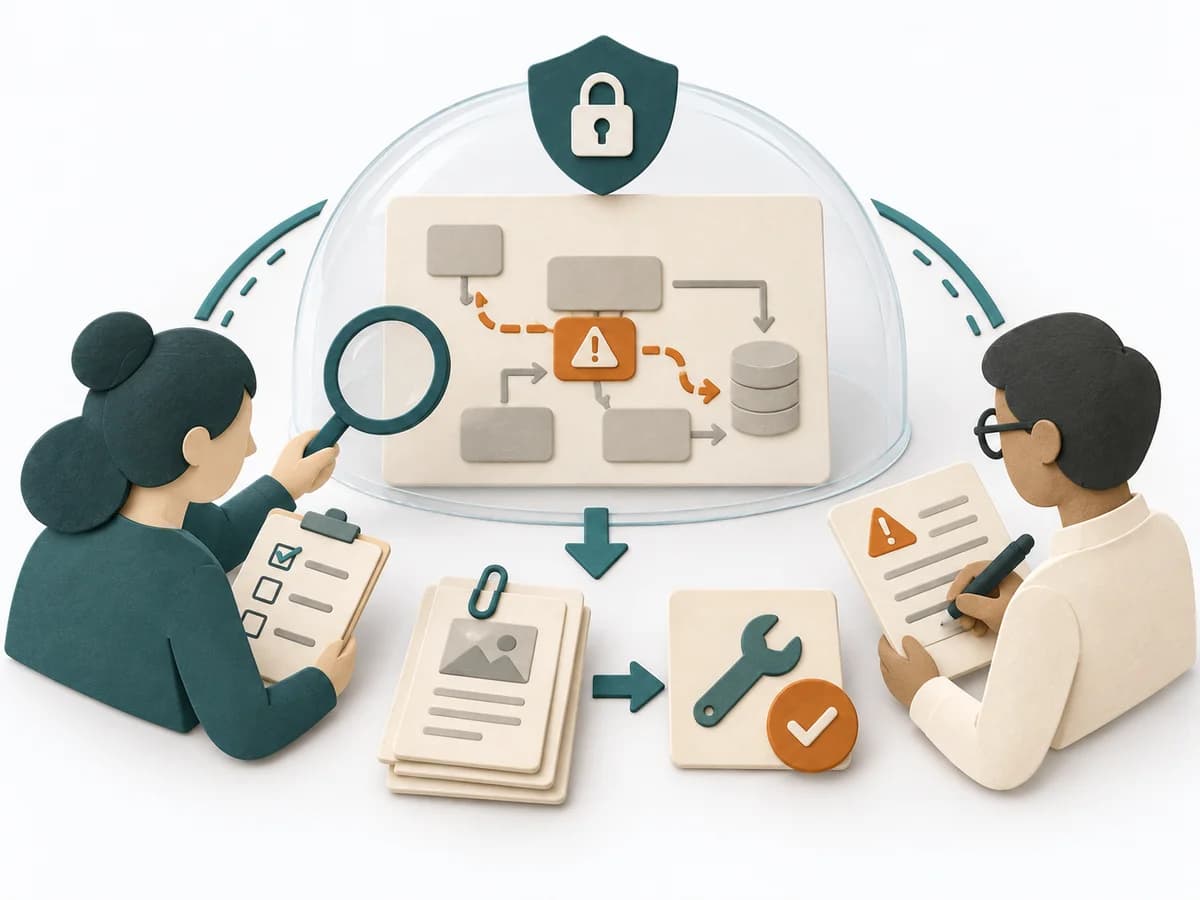 Decision Making Red Teaming |
|---|---|---|---|---|
Purposedifferent | An RFC clarifies architecture context, options, and consequences. It structures technical context, alternatives, tradeoffs, open questions, and review feedback, and captures the result as an RFC document, reviewer comments, and a decision rationale. | When statements, evidence, and counterarguments get mixed up, a debate quickly loses its structure. Argument Mapping breaks a thesis down into its reasoning and makes visible what it really rests on. | LASR helps development teams identify where their software falls short of important quality goals and which improvements to consider. A small group with existing system knowledge can make an initial assessment and investigate open questions in more detail. | For strategic decisions with high reach, agreement and gut feeling are often not enough. Red teaming brings deliberate opposition into the situation and tests where a plan breaks under real counterarguments. |
Complexitydifferent | Medium | Medium | Medium | High |
Timedifferent | 1-3 Wochen vom Draft bis zur Entscheidung | 1-3 h | 3–4 h for initial assessment; preparation and deeper analysis additional | 1-4 h |
Participantsdifferent | 3-20 Reviewer | 1-8 | 1 or a small team; particularly suitable for 3–4 people | 3-8 |
Formatdifferent | Async | Workshop + async | Workshop + async | Workshop |
Outputdifferent | RFC document, Reviewer comments, Decision rationale, Follow-up ADR or tickets | Argument Map, Evidence Gaps, Decision Rationale | Lean Mission Statement describing the software’s purpose, Prioritized quality goals and evaluation criteria, Risks and estimated gaps against quality goals, More closely examined findings and open checks | Challenge Findings, Risk Register, Mitigation Plan |
Tagsno overlap | ArchitectureDecisionAsyncGovernance | SensemakingDecisionRationale | ArchitectureQualityRiskAssessmentLean | RiskDecisionSensemaking |