View methods side by side.
Choose up to four methods. Add them using the search and share the comparison by copying its link.
| Criterion |  Architecture Request for Comments |  Architecture Architecture Decision Record | 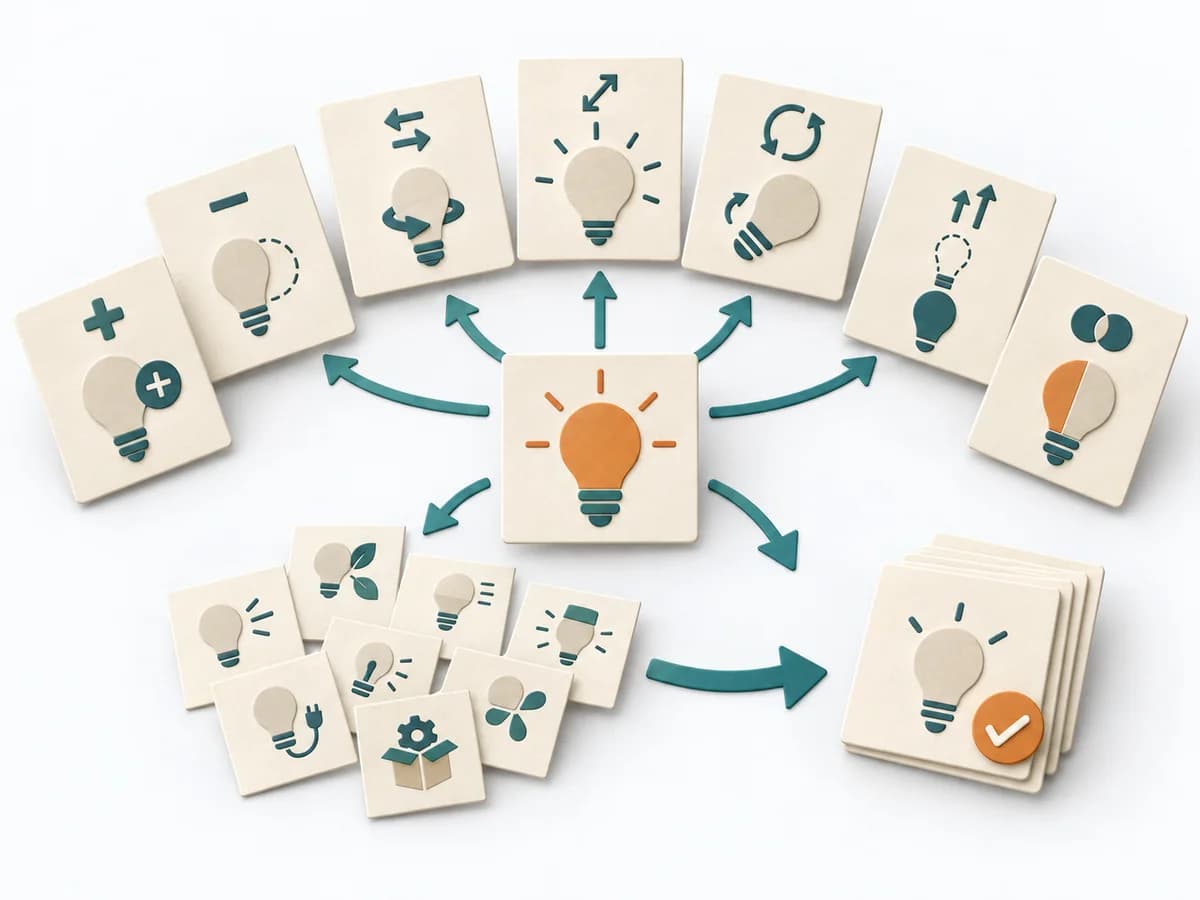 Innovation SCAMPER |  Innovation Reverse Brainstorming |
|---|---|---|---|---|
Purposedifferent | An RFC clarifies architecture context, options, and consequences. It structures technical context, alternatives, tradeoffs, open questions, and review feedback, and captures the result as an RFC document, reviewer comments, and a decision rationale. | An ADR permanently records an architecture decision with context, trade-offs, and consequence. It creates continuity for later changes because the decision path stays traceable. | For an existing solution under pressure to change, the method deliberately opens space for systematic variants. It directs attention to rebuilding, combining, and repurposing rather than only new basic ideas. This produces concrete evolution paths for products, offerings, or workflows. | For persistent errors or blockages, the method shifts the view to the opposite of the desired effect. It exposes the mechanics of failure and makes hidden causes easier to grasp. This makes improvement more concrete and the problem clearer. |
Complexitydifferent | Medium | Low | Low | Low |
Timedifferent | 1-3 Wochen vom Draft bis zur Entscheidung | 15-45 min | 30-60 min | 30-60 min |
Participantsdifferent | 3-20 Reviewer | 1-3 | 2-10 | 3-12 |
Formatdifferent | Async | Async | Workshop | Workshop |
Outputdifferent | RFC document, Reviewer comments, Decision rationale, Follow-up ADR or tickets | ADR File, Decision Log, Rationale | SCAMPER Idea List, Concept Shortlist, Variation Notes | Reverse Ideas, Risk Themes, Solution Ideas |
Tagsno overlap | ArchitectureDecisionAsyncGovernance | ArchitectureRationaleDocumentationGovernance | BrainstormingIdeationCreativityReframingInnovation | BrainstormingIdeationCreativityRisk |