View methods side by side.
Choose up to four methods. Add them using the search and share the comparison by copying its link.
| Criterion |  Business Strategy Porter Five Forces |  Product Strategy DIBB | 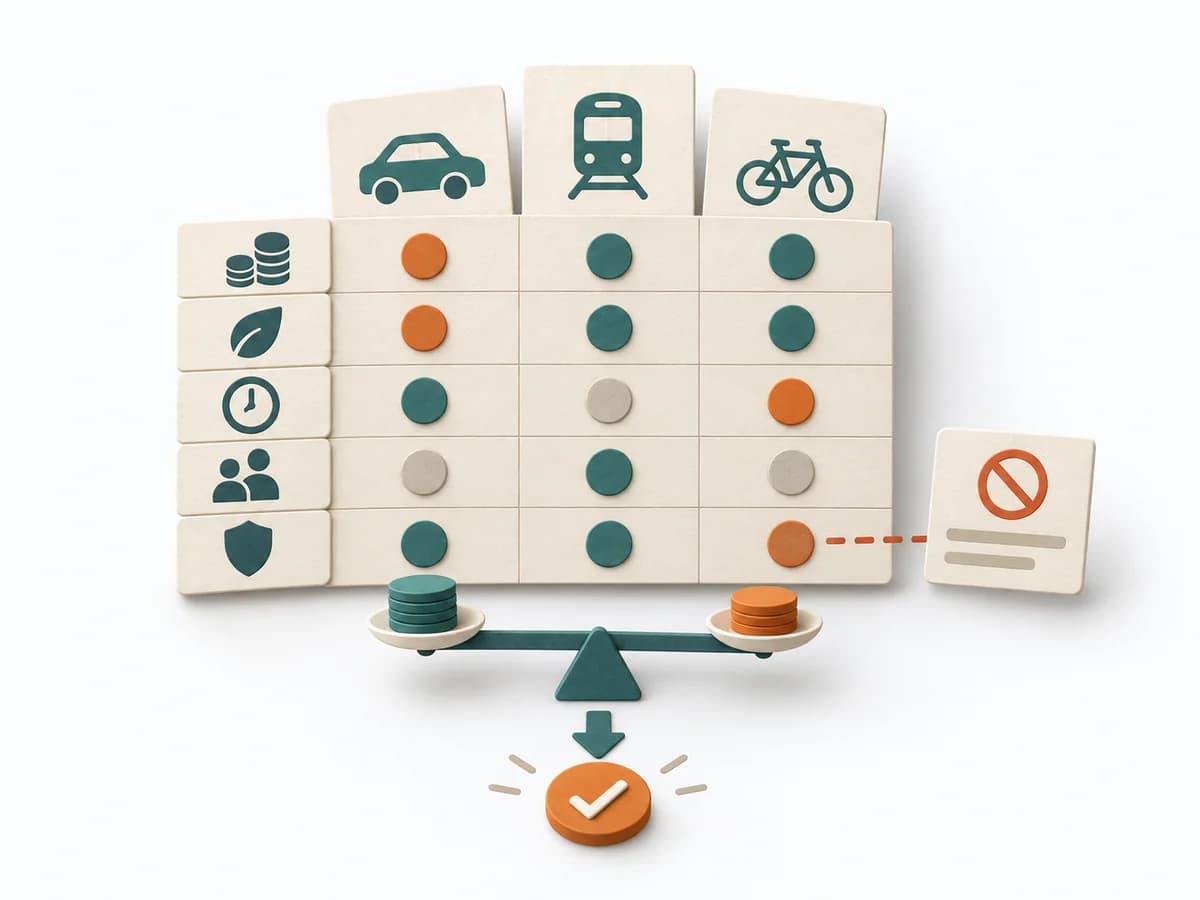 Decision Making Trade-off Analysis |  Business Strategy Ansoff Matrix |
|---|---|---|---|---|
Purposedifferent | Porter Five Forces analyzes the forces that shape competitive pressure and profitability in a market. The view of market structure goes beyond individual competitors and reveals systemic pressure points. | DIBB helps clarify target groups, value, goals, and priorities by making the logic behind a decision explicit. It captures results as a DIBB document, belief list, bet list, and learning report. | With limited resources, quality, speed, cost, and risk almost always compete with each other. Trade-off Analysis makes these tensions explicit and prevents decisions from producing hidden side effects. | The Ansoff Matrix organizes growth options by market and product relation. It helps weigh expansion, diversification, and adaptation cleanly against each other. |
Complexitydifferent | Medium | Low | Medium | Low |
Timedifferent | 1-3 h | 1-2 h | 45-120 min | 45-90 min |
Participantssame | 2-8 | 2-8 | 2-8 | 2-8 |
Formatsame | Workshop + async | Workshop + async | Workshop + async | Workshop + async |
Outputdifferent | Five Forces Analysis, Competitive Risks, Strategic Options | DIBB document, Belief list, Bet list, Learning report | Trade-off Matrix, Criteria List, Decision Rationale, Accepted Downsides | Ansoff Matrix, Growth Options, Risk Notes |
Tagsno overlap | StrategyCompetitionMarket | StrategyDecisionAssumptionsHypothesis | TradeoffsDecisionCriteriaOptions | GrowthStrategyMarketPortfolio |