View methods side by side.
Choose up to four methods. Add them using the search and share the comparison by copying its link.
| Criterion | 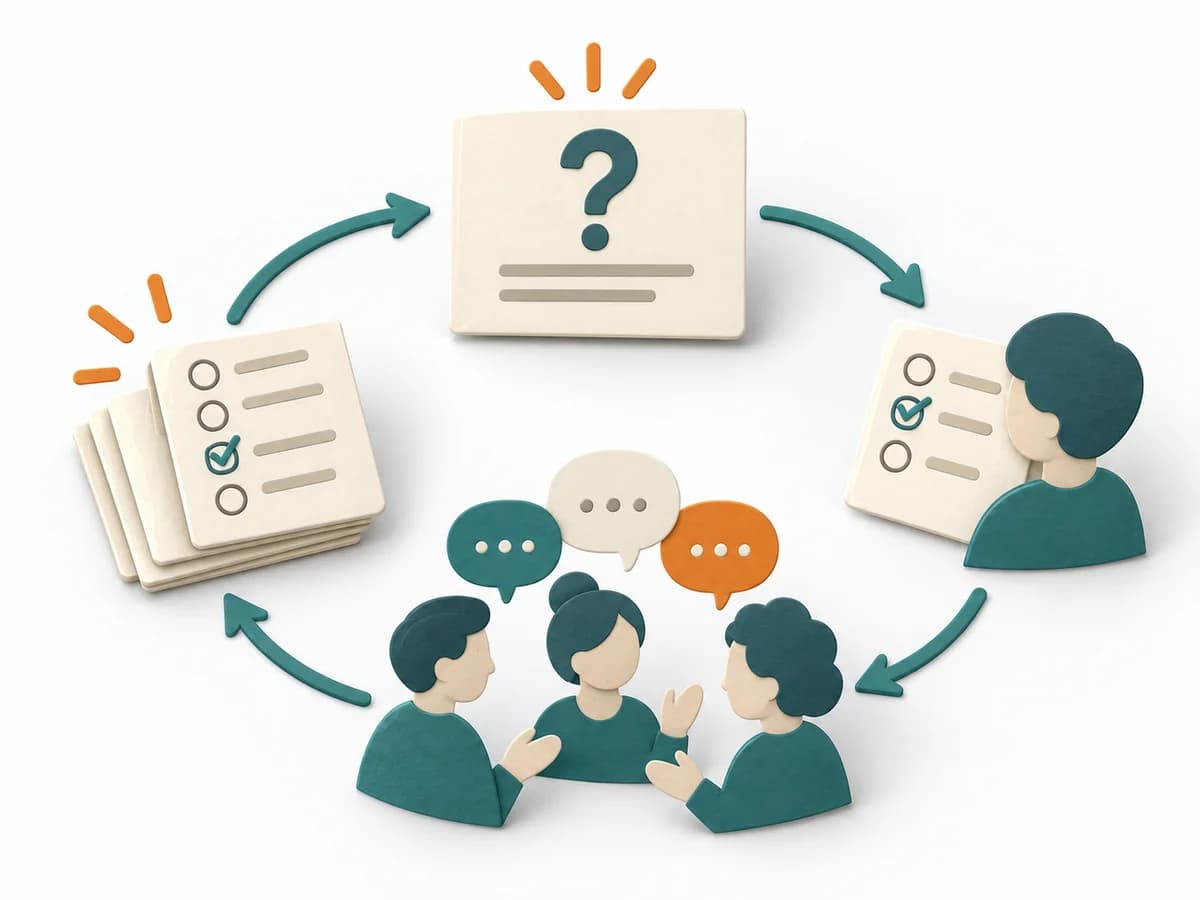 Knowledge Modeling Peer Instruction |  Innovation SCAMPER |  Facilitation 1-2-4-All |  Innovation Brainstorming |
|---|---|---|---|---|
Purposedifferent | Peer Instruction uses group thinking to clarify difficult terms or concepts faster. The method combines individual reflection with social correction and shared precision. | For an existing solution under pressure to change, the method deliberately opens space for systematic variants. It directs attention to rebuilding, combining, and repurposing rather than only new basic ideas. This produces concrete evolution paths for products, offerings, or workflows. | When many people in a group too rarely get to speak, 1-2-4-All distributes thinking time more fairly. The format builds participation step by step and makes quiet or still-unformed thoughts usable faster. | When a team faces an open question with many obvious directions, the method first creates breadth instead of premature commitment. It separates idea flow from evaluation and makes lines of thought visible, creating a pool for selection and further development. |
Complexitydifferent | Medium | Low | Low | Low |
Timedifferent | 10-20 min je Frage | 30-60 min | 10-20 min | 30-60 min |
Participantsdifferent | 6-50 | 2-10 | 4-100+ | 4-12 |
Formatsame | Workshop | Workshop | Workshop | Workshop |
Outputdifferent | Concept Questions, Vote Results, Learning Notes | SCAMPER Idea List, Concept Shortlist, Variation Notes | Idea List, Shared Insights, Emergent Themes | Idea pool, Theme clusters, Shortlist |
Tagsno overlap | LearningDialogueFacilitation | BrainstormingIdeationCreativityReframingInnovation | FacilitationInclusionIdeation | BrainstormingIdeationCreativityWorkshopDivergence |