View methods side by side.
Choose up to four methods. Add them using the search and share the comparison by copying its link.
| Criterion |  Knowledge Modeling PARA Method |  Engineering Failure Scenario Analysis | 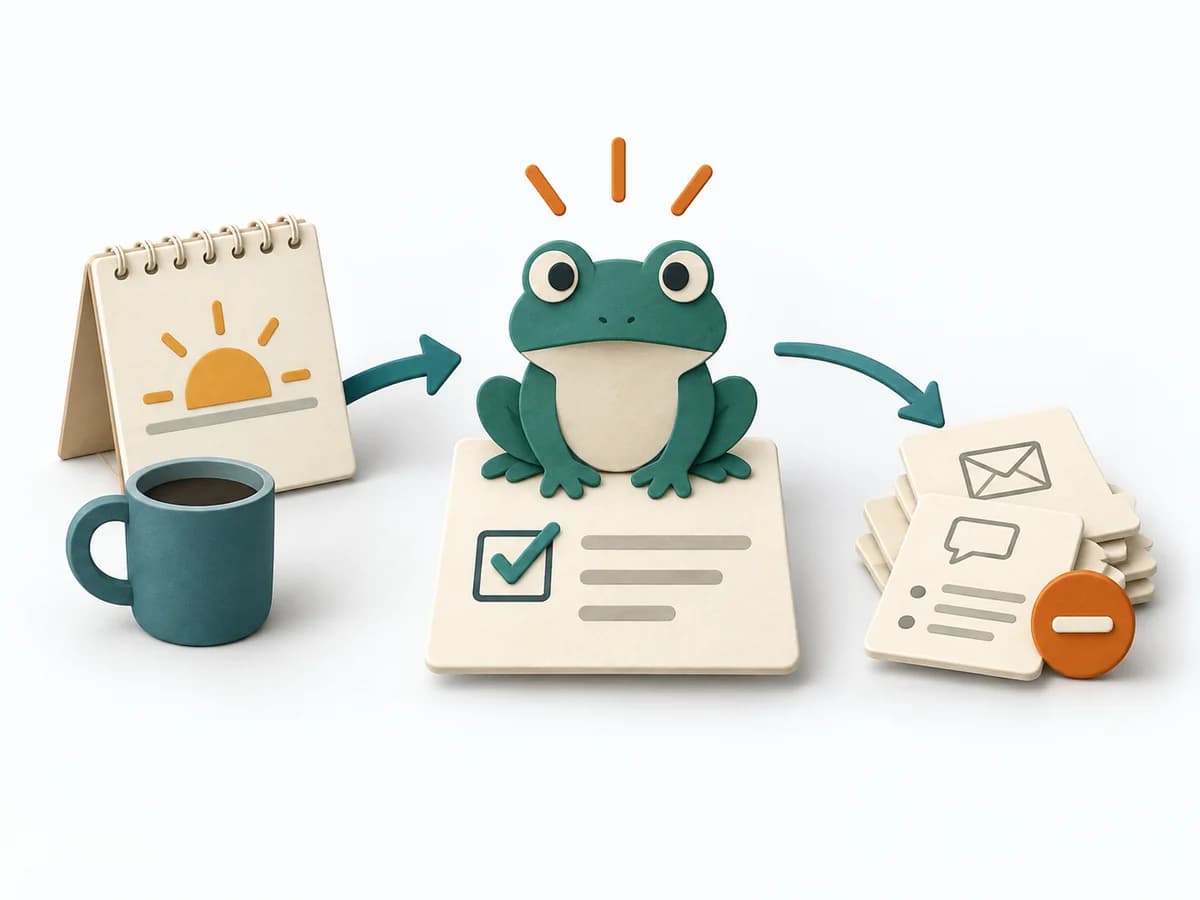 Operations Eat the Frog |  Operations Pomodoro Technique |
|---|---|---|---|---|
Purposedifferent | The PARA Method organizes knowledge into Projects, Areas, Resources, and Archives. It creates order when digital notes, files, and tasks no longer cleanly fit current work. | In critical processes, it is not enough to plan only for the normal case. Failure Scenario Analysis looks at the path into failure and shows which failures, chains, and control gaps cause the most damage. | The method protects energy and attention for the task that creates the largest progress and is often postponed. | For easily distracted solo work, the method sets clear time boundaries for concentrated work. It protects attention when large tasks would otherwise fall apart into small avoidance moves. |
Complexitydifferent | Medium | Medium | Low | Low |
Timedifferent | 1-3 h Setup, laufend | 1-3 h | 15-90 min daily | 25 min Zyklen |
Participantsdifferent | 1 | 3-8 | 1 | 1 |
Formatdifferent | Async | Workshop | Async | Async |
Outputdifferent | PARA Structure, Project Notes, Knowledge Archive | Failure Scenarios, Risk Notes, Control Gaps, Test and Response Actions | Priority Task, Completion Note, Daily Focus | Focus Sessions, Task Progress, Interruption Notes |
Tagsno overlap | KnowledgeProductivityOrganization | FailureResilienceRisk | PrioritizationProductivityFocusExecution | FocusTime managementProductivityExecution |