View methods side by side.
Choose up to four methods. Add them using the search and share the comparison by copying its link.
Selected:PARA MethodFailure Scenario Analysis8D Problem SolvingATAM (Architecture Tradeoff Analysis Method)
| Criterion |  Knowledge Modeling PARA Method | 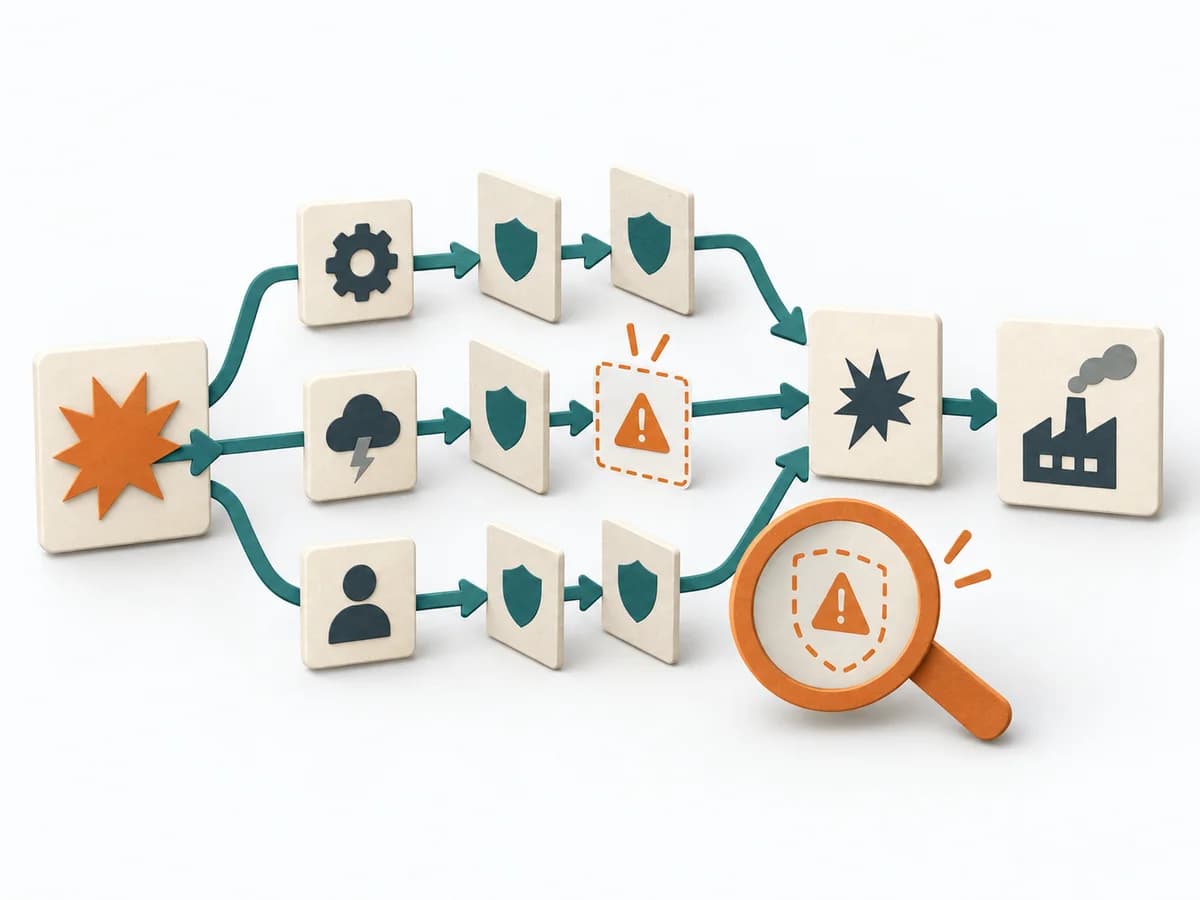 Engineering Failure Scenario Analysis |  Operations 8D Problem Solving |  Architecture ATAM (Architecture Tradeoff Analysis Method) |
|---|---|---|---|---|
Purposedifferent | The PARA Method organizes knowledge into Projects, Areas, Resources, and Archives. It creates order when digital notes, files, and tasks no longer cleanly fit current work. | In critical processes, it is not enough to plan only for the normal case. Failure Scenario Analysis looks at the path into failure and shows which failures, chains, and control gaps cause the most damage. | For an acute quality or delivery problem, the method structures immediate protection and root cause work together. It keeps the situation stable while the actual cause is investigated cleanly. | ATAM helps teams weigh architecture decisions when quality goals compete. The team considers business goals, stakeholder expectations, and technical decisions together. The evaluation shows which risks need further investigation. |
Complexitydifferent | Medium | Medium | High | High |
Timedifferent | 1-3 h Setup, laufend | 1-3 h | 1-6 Wochen | Several meetings plus preparation and analysis; total effort depends on scope |
Participantsdifferent | 1 | 3-8 | 4-10 | Evaluation team, architects, and relevant stakeholders |
Formatdifferent | Async | Workshop | Workshop + async | Workshop + async |
Outputdifferent | PARA Structure, Project Notes, Knowledge Archive | Failure Scenarios, Risk Notes, Control Gaps, Test and Response Actions | 8D Report, Containment Plan, Root Cause Evidence, Corrective Action Plan | Prioritized quality scenarios in a utility tree, Architecture risks with reasoning and assumptions, Sensitivity and trade-off points, Findings report with open investigations |
Tagsno overlap | KnowledgeProductivityOrganization | FailureResilienceRisk | QualityProblem solvingRoot cause | ArchitectureQualityRiskTradeoffsStakeholders |