View methods side by side.
Choose up to four methods. Add them using the search and share the comparison by copying its link.
| Criterion |  Knowledge Modeling PARA Method |  Operations Bottleneck Analysis | 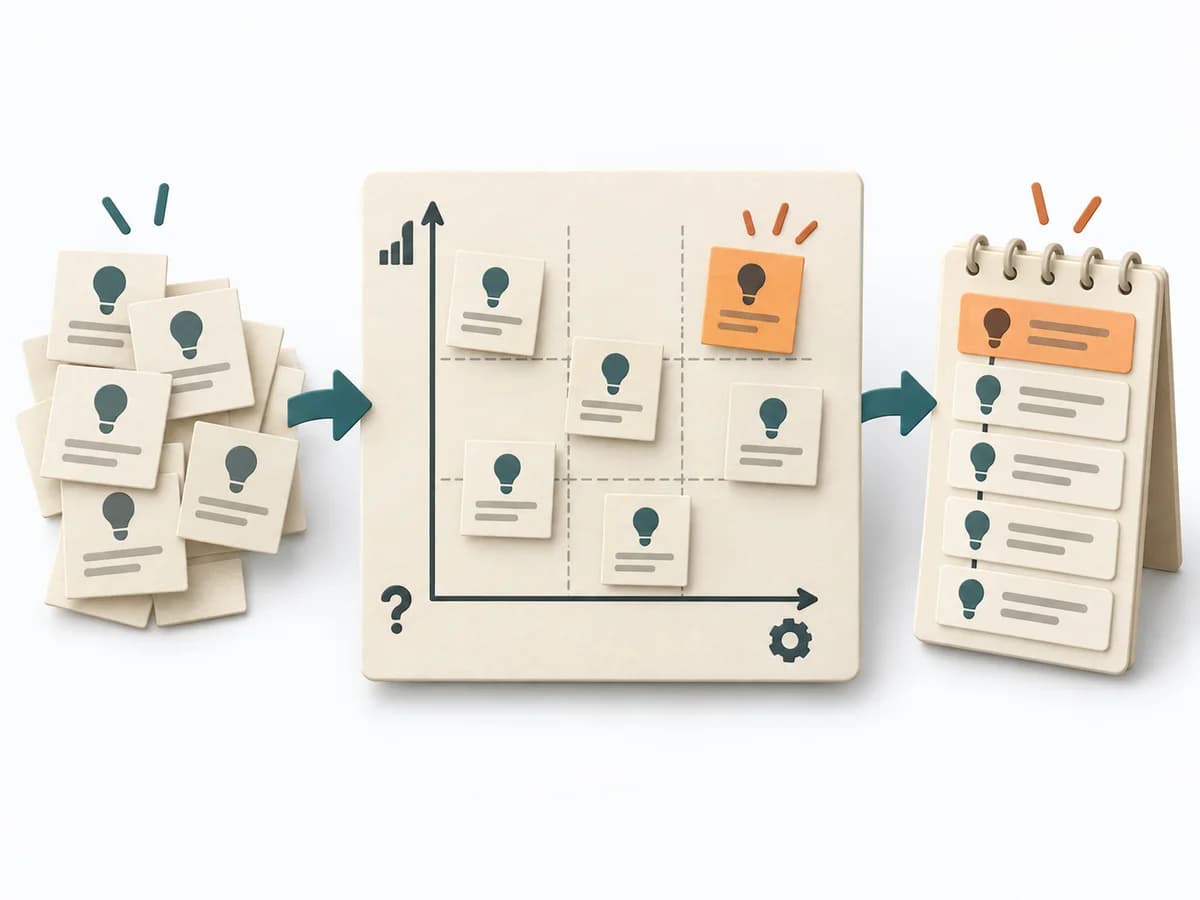 Product Discovery Hypothesis Prioritization Canvas | 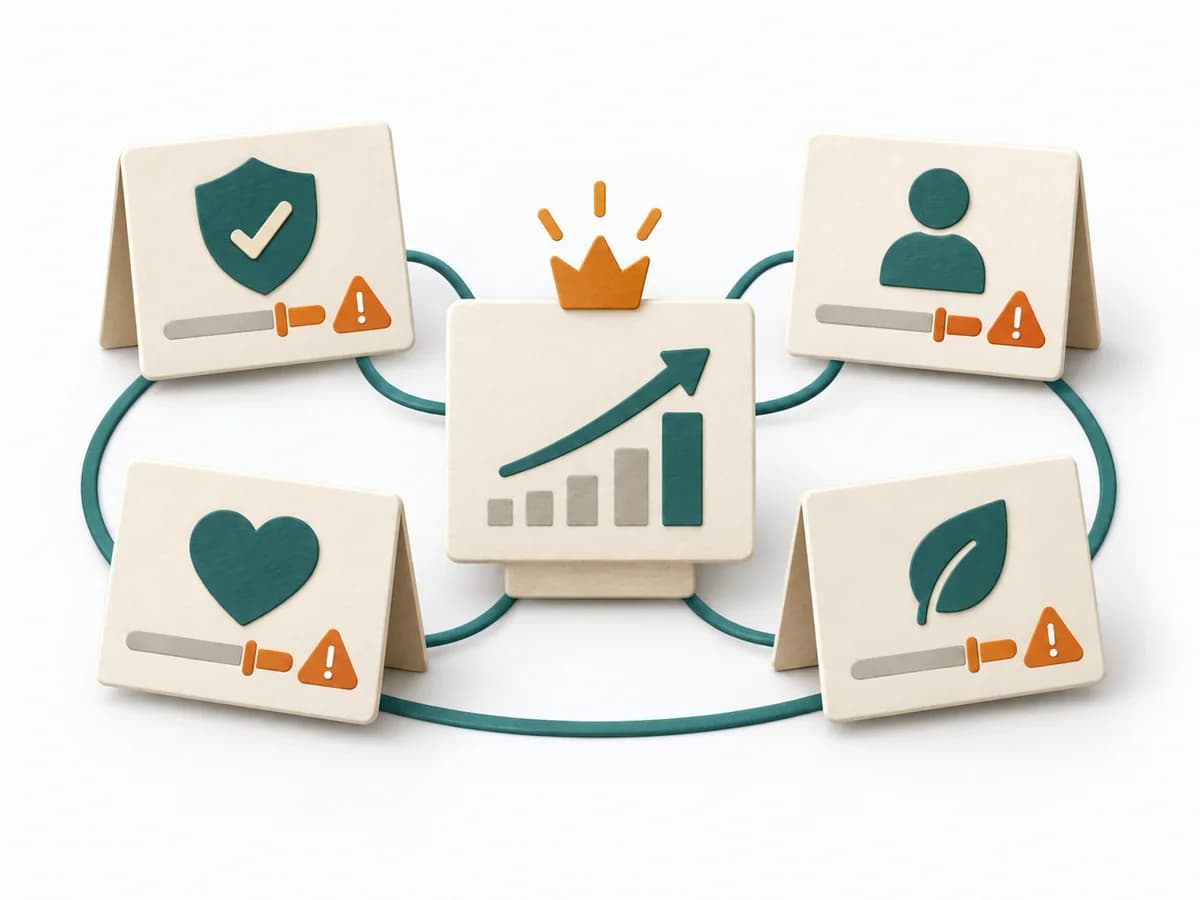 Product Strategy Counter Metrics |
|---|---|---|---|---|
Purposedifferent | The PARA Method organizes knowledge into Projects, Areas, Resources, and Archives. It creates order when digital notes, files, and tasks no longer cleanly fit current work. | For a flow that backs up at one point, the method looks for the capacity limit with the greatest leverage. It explains why extra effort elsewhere barely improves throughput. | When many hypotheses compete for attention, it brings order to their learning sequence and importance. It separates problem, assumption, solution, and evidence. The result is captured as a prioritization canvas and a hypothesis backlog. | When a headline metric could mask side effects, it adds guardrail signals against unwanted outcomes. It connects customer value, product logic, and decision priorities. The result is captured as a counter-metric list and guardrail definitions. |
Complexitydifferent | Medium | Medium | Medium | Low |
Timedifferent | 1-3 h Setup, laufend | 1-3 h | 60-90 min | 30-60 min |
Participantsdifferent | 1 | 3-8 | 3-8 | 2-6 |
Formatdifferent | Async | Workshop + async | Workshop | Workshop + async |
Outputdifferent | PARA Structure, Project Notes, Knowledge Archive | Bottleneck Map, Flow Metrics, Improvement Options, Follow-up Measures | Prioritization Canvas, Hypothesis Backlog | Counter Metric List, Guardrail Definitions |
Tagsno overlap | KnowledgeProductivityOrganization | FlowMeasurementConstraints | ExperimentsPrioritizationDiscoveryHypothesis | MetricsMeasurementStrategyExperiments |