View methods side by side.
Choose up to four methods. Add them using the search and share the comparison by copying its link.
| Criterion |  Knowledge Modeling PARA Method | 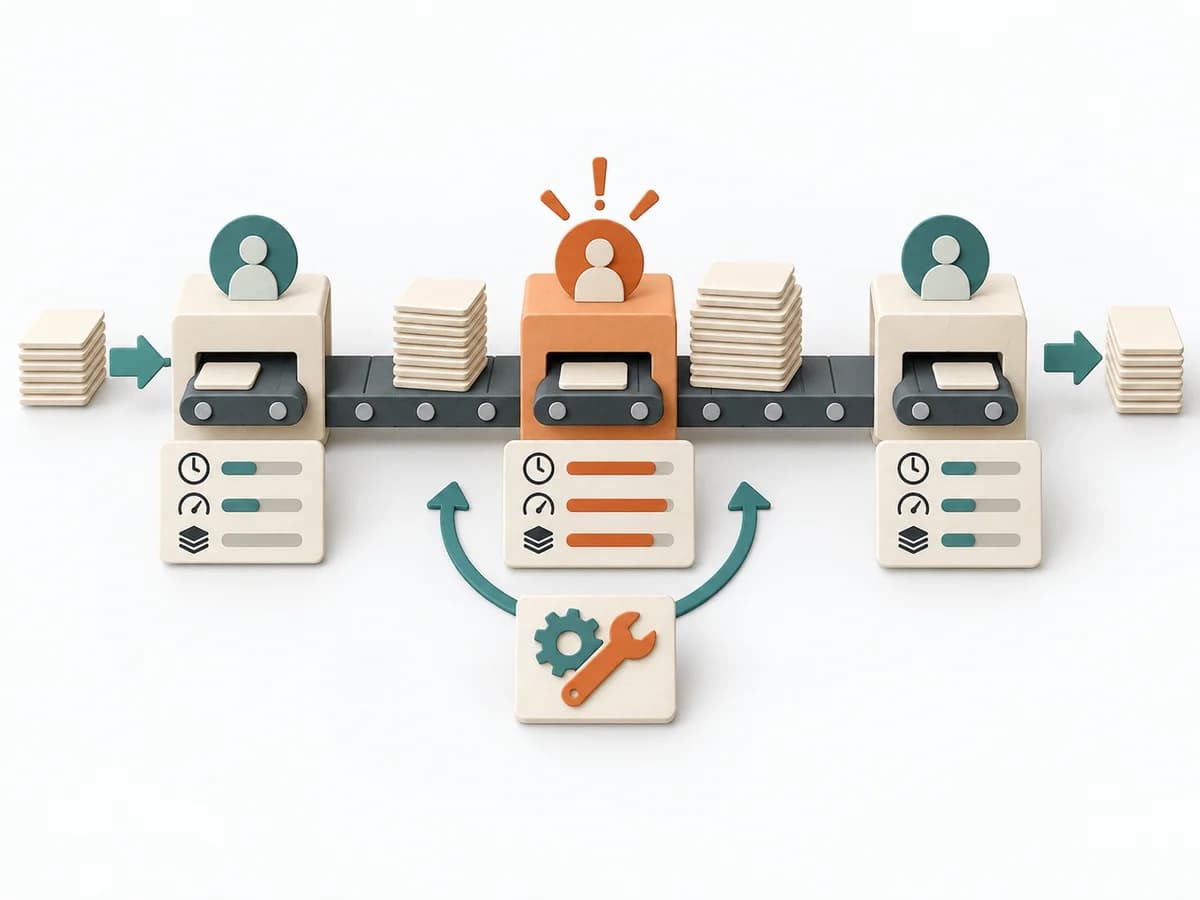 Operations Bottleneck Analysis |  Decision Making Force Field Analysis |  Product Strategy Counter Metrics |
|---|---|---|---|---|
Purposedifferent | The PARA Method organizes knowledge into Projects, Areas, Resources, and Archives. It creates order when digital notes, files, and tasks no longer cleanly fit current work. | For a flow that backs up at one point, the method looks for the capacity limit with the greatest leverage. It explains why extra effort elsewhere barely improves throughput. | In change initiatives, supporting and restraining forces sit at the table at the same time. Force Field Analysis makes these tensions explicit and shows where change can be pushed forward by strengthening or relieving. | When a headline metric could mask side effects, it adds guardrail signals against unwanted outcomes. It connects customer value, product logic, and decision priorities. The result is captured as a counter-metric list and guardrail definitions. |
Complexitydifferent | Medium | Medium | Low | Low |
Timedifferent | 1-3 h Setup, laufend | 1-3 h | 45-90 min | 30-60 min |
Participantsdifferent | 1 | 3-8 | 3-12 | 2-6 |
Formatdifferent | Async | Workshop + async | Workshop | Workshop + async |
Outputdifferent | PARA Structure, Project Notes, Knowledge Archive | Bottleneck Map, Flow Metrics, Improvement Options, Follow-up Measures | Force Field Map, Change Levers, Risk Notes | Counter Metric List, Guardrail Definitions |
Tagsno overlap | KnowledgeProductivityOrganization | FlowMeasurementConstraints | ChangeDecisionStrategy | MetricsMeasurementStrategyExperiments |