View methods side by side.
Choose up to four methods. Add them using the search and share the comparison by copying its link.
| Criterion |  Product Discovery Outcome-Driven Innovation | 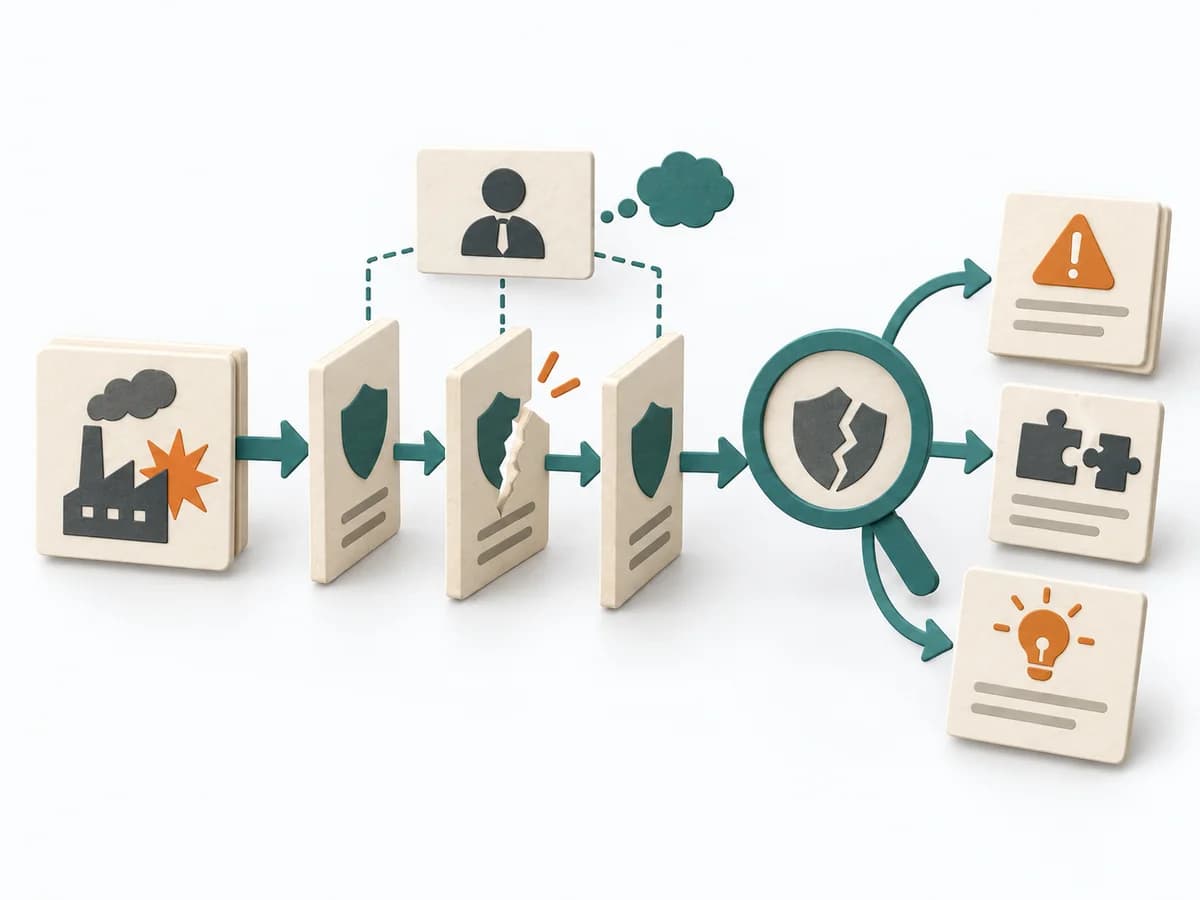 Operations MORT Analysis |  Operations Fishbone Diagram |  Operations Root Cause Analysis |
|---|---|---|---|---|
Purposedifferent | Outcome-Driven Innovation clarifies customer problems, solution opportunities, and evidence. It separates jobs, desired outcomes, importance, satisfaction, and opportunity, and captures results as desired outcome statements, an opportunity landscape, and segments by underserved needs. | For a safety-relevant event or a system with high protection requirements, the method examines where controls failed. It exposes both technical and organizational gaps. | When a problem has several possible contributing factors, the method sorts causes by cause areas. It prevents an initial hunch from blocking the view of other plausible drivers. | When a problem keeps recurring and the cause stays unclear, the method exposes the underlying mechanism. It separates symptom, guess, and robust explanation from one another. |
Complexitydifferent | High | High | Low | Medium |
Timedifferent | Mehrere Wochen | Mehrere Tage bis Wochen | 30-60 min | 1-4 h |
Participantsdifferent | 2-6 researchers plus sample | 2-6 | 2-8 | 3-8 |
Formatdifferent | Workshop + async | Workshop + async | Workshop | Workshop + async |
Outputdifferent | Desired outcome statements, Opportunity landscape, Segmentation by underserved needs, Innovation hypotheses | MORT Worksheets, Findings per Branch, Corrective Actions, Systemic Recommendations | Fishbone Diagram, Cause Categories, Investigation Backlog | Problem Statement, Cause Hypotheses, Confirmed Causes, Action Plan |
Tagsno overlap | OutcomesInnovationResearchQuantitative | Root causeSafetySystemicIncident | Root causeQualityOperations | Root causeProblem solvingQualityIncident |