View methods side by side.
Choose up to four methods. Add them using the search and share the comparison by copying its link.
| Criterion | 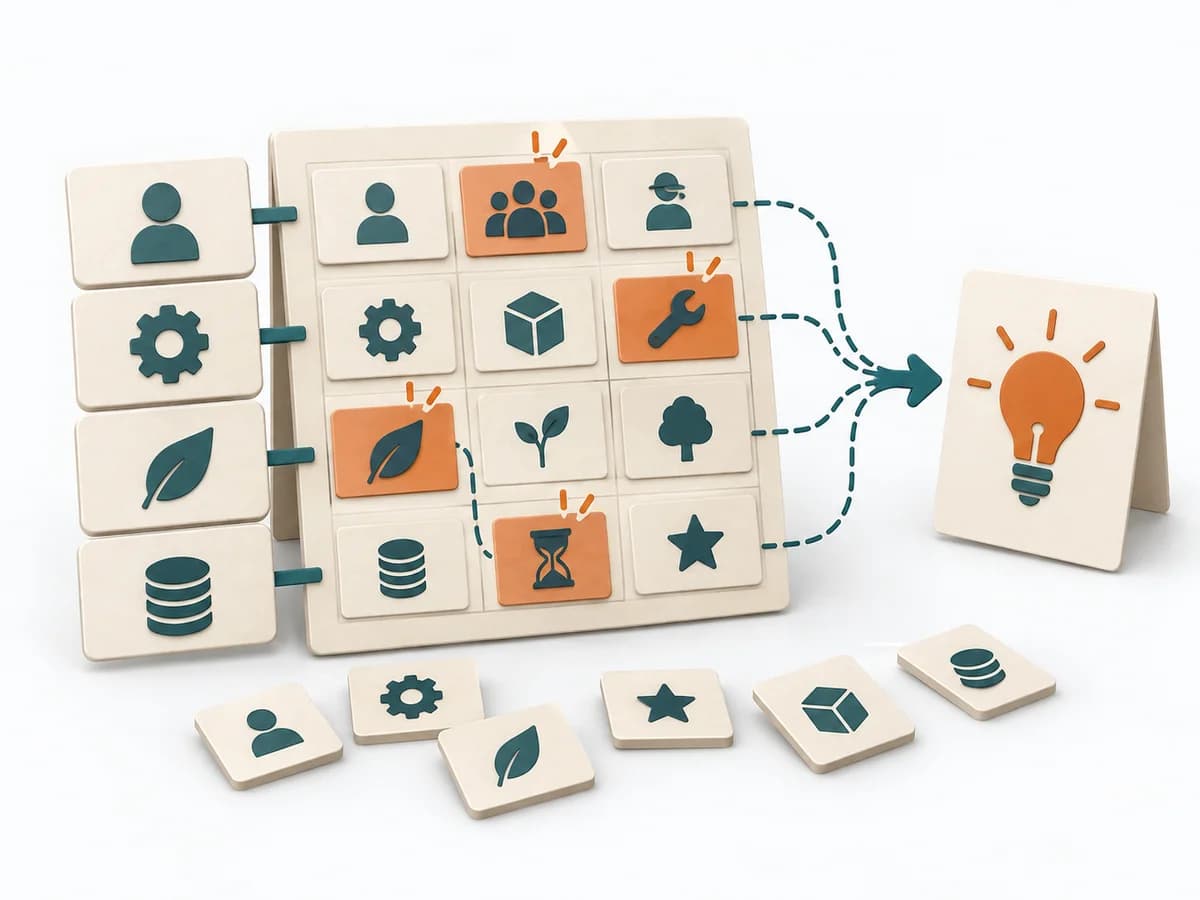 Innovation Morphological Analysis |  Product Discovery Outcome-Driven Innovation | 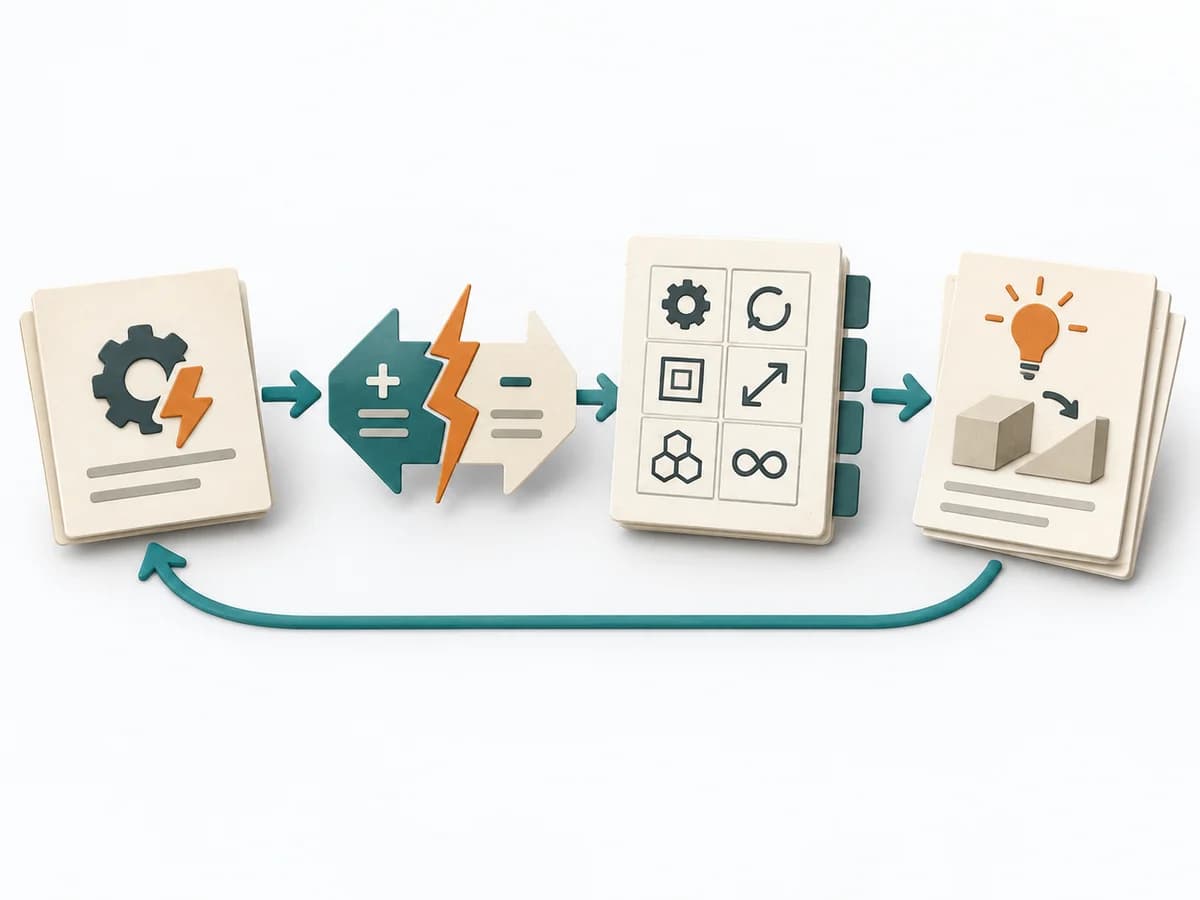 Innovation TRIZ |  Innovation Design Thinking |
|---|---|---|---|---|
Purposedifferent | For a search for solutions with many degrees of freedom, a grid emerges for systematic combinations. The method separates features, variants, and exclusion criteria, so the space gets explored deliberately. | Outcome-Driven Innovation clarifies customer problems, solution opportunities, and evidence. It separates jobs, desired outcomes, importance, satisfaction, and opportunity, and captures results as desired outcome statements, an opportunity landscape, and segments by underserved needs. | For technical contradictions or trade-offs, the method looks for solutions that resolve opposing requirements at the same time. It translates limits into an explicit picture of conflict that becomes workable. This produces not just compromises but more elegant principles. | For complex user problems with an uncertain cause, the method connects observation, interpretation, and experiment into a learning cycle. It keeps the focus on real needs and avoids premature solution language. This produces robust decisions for product and service. |
Complexitydifferent | Medium | High | High | High |
Timedifferent | 1-3 h | Mehrere Wochen | 1-4 h | 1 Tag bis mehrere Wochen |
Participantsdifferent | 2-8 | 2-6 researchers plus sample | 2-8 | 4-10 |
Formatdifferent | Workshop + async | Workshop + async | Workshop + async | Workshop |
Outputdifferent | Morphological Box, Concept Combinations, Idea Shortlist | Desired outcome statements, Opportunity landscape, Segmentation by underserved needs, Innovation hypotheses | Contradiction Statement, Inventive Principles, Solution Concepts | Problem Statement, Prototype, Test Learnings |
Tags1 shared | IdeationInnovationCreativity | OutcomesInnovationResearchQuantitative | InnovationProblem solvingContradictionsCreativity | InnovationPrototypeResearch |