View methods side by side.
Choose up to four methods. Add them using the search and share the comparison by copying its link.
| Criterion |  Innovation Morphological Analysis |  Operations Fishbone Diagram | 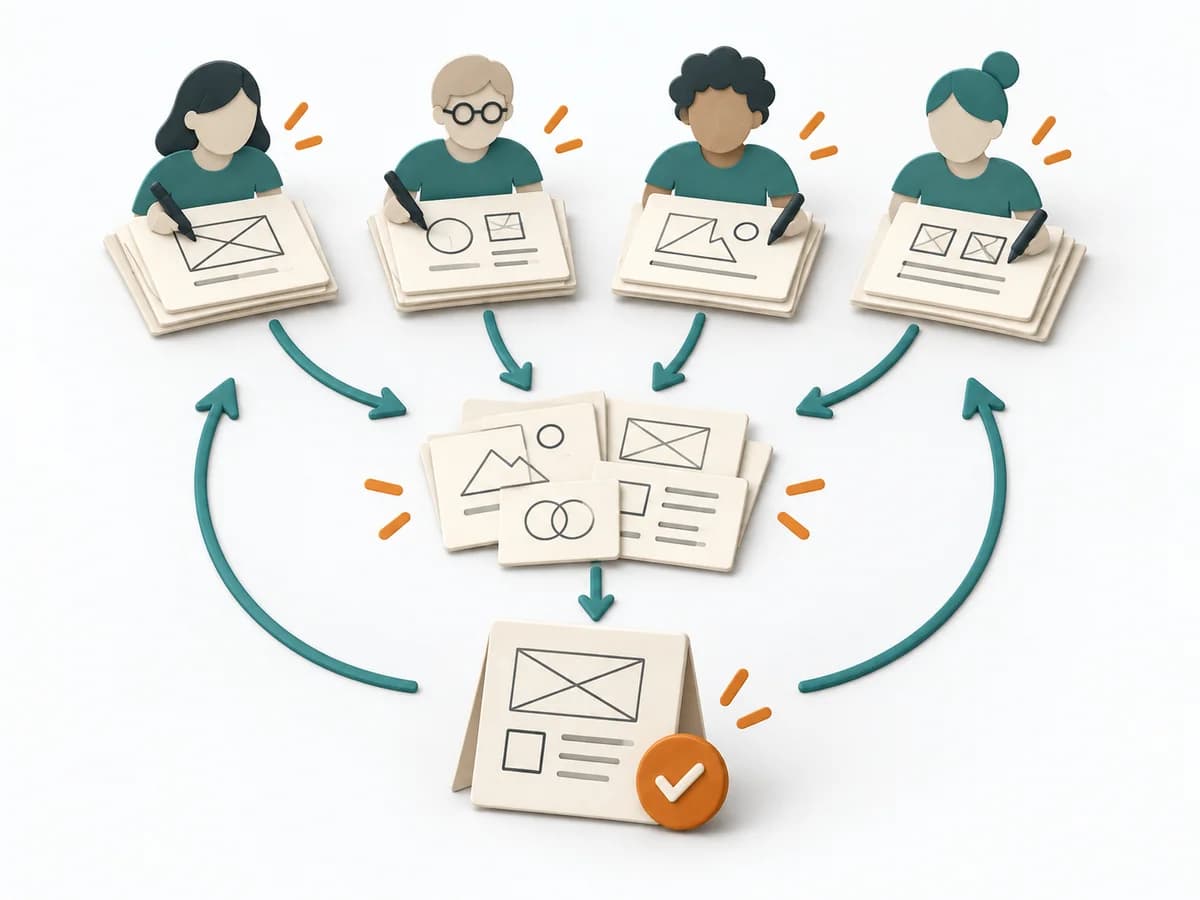 Innovation Design Charrette |  Innovation SCAMPER |
|---|---|---|---|---|
Purposedifferent | For a search for solutions with many degrees of freedom, a grid emerges for systematic combinations. The method separates features, variants, and exclusion criteria, so the space gets explored deliberately. | When a problem has several possible contributing factors, the method sorts causes by cause areas. It prevents an initial hunch from blocking the view of other plausible drivers. | In a tightly timed design process with many participants, the method pools several lines of thinking in a short time. It brings parallel design energy without letting the discussion tip into endless coordination. This quickly produces solid directions for architecture or space. | For an existing solution under pressure to change, the method deliberately opens space for systematic variants. It directs attention to rebuilding, combining, and repurposing rather than only new basic ideas. This produces concrete evolution paths for products, offerings, or workflows. |
Complexitydifferent | Medium | Low | Medium | Low |
Timedifferent | 1-3 h | 30-60 min | Halber Tag bis mehrere Tage | 30-60 min |
Participantsdifferent | 2-8 | 2-8 | 10-50 | 2-10 |
Formatdifferent | Workshop + async | Workshop | Workshop | Workshop |
Outputdifferent | Morphological Box, Concept Combinations, Idea Shortlist | Fishbone Diagram, Cause Categories, Investigation Backlog | Sketches and Concepts, Consolidated Solution Sketch, Prioritized Direction | SCAMPER Idea List, Concept Shortlist, Variation Notes |
Tagsno overlap | IdeationInnovationCreativity | Root causeQualityOperations | BrainstormingWorkshopCollaborationIdeation | BrainstormingIdeationCreativityReframingInnovation |