View methods side by side.
Choose up to four methods. Add them using the search and share the comparison by copying its link.
Selected:LASR (Lightweight Approach for Software Reviews)Reverse BrainstormingBrainstormingDesign Charrette
| Criterion |  Architecture LASR (Lightweight Approach for Software Reviews) |  Innovation Reverse Brainstorming |  Innovation Brainstorming | 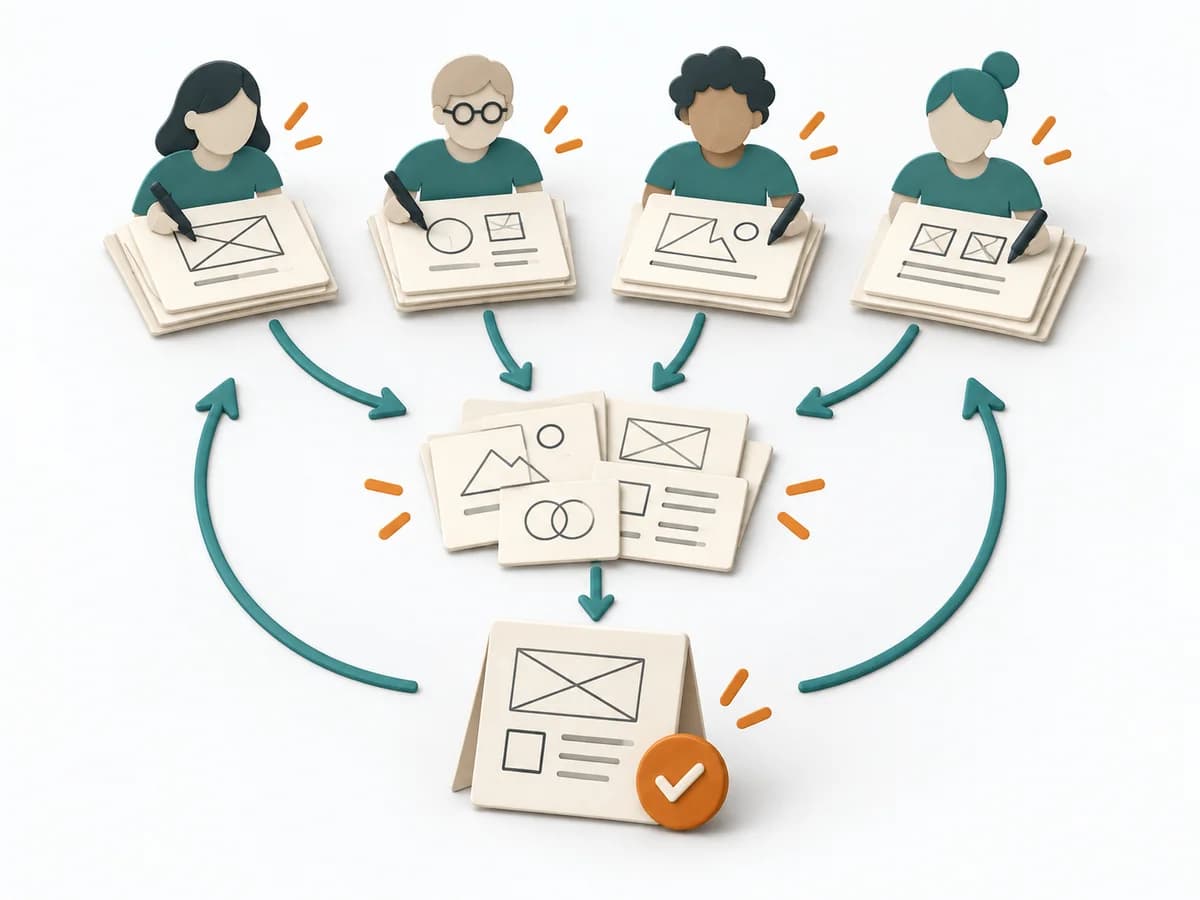 Innovation Design Charrette |
|---|---|---|---|---|
Purposedifferent | LASR helps development teams identify where their software falls short of important quality goals and which improvements to consider. A small group with existing system knowledge can make an initial assessment and investigate open questions in more detail. | For persistent errors or blockages, the method shifts the view to the opposite of the desired effect. It exposes the mechanics of failure and makes hidden causes easier to grasp. This makes improvement more concrete and the problem clearer. | When a team faces an open question with many obvious directions, the method first creates breadth instead of premature commitment. It separates idea flow from evaluation and makes lines of thought visible, creating a pool for selection and further development. | In a tightly timed design process with many participants, the method pools several lines of thinking in a short time. It brings parallel design energy without letting the discussion tip into endless coordination. This quickly produces solid directions for architecture or space. |
Complexitydifferent | Medium | Low | Low | Medium |
Timedifferent | 3–4 h for initial assessment; preparation and deeper analysis additional | 30-60 min | 30-60 min | Halber Tag bis mehrere Tage |
Participantsdifferent | 1 or a small team; particularly suitable for 3–4 people | 3-12 | 4-12 | 10-50 |
Formatdifferent | Workshop + async | Workshop | Workshop | Workshop |
Outputdifferent | Lean Mission Statement describing the software’s purpose, Prioritized quality goals and evaluation criteria, Risks and estimated gaps against quality goals, More closely examined findings and open checks | Reverse Ideas, Risk Themes, Solution Ideas | Idea pool, Theme clusters, Shortlist | Sketches and Concepts, Consolidated Solution Sketch, Prioritized Direction |
Tagsno overlap | ArchitectureQualityRiskAssessmentLean | BrainstormingIdeationCreativityRisk | BrainstormingIdeationCreativityWorkshopDivergence | BrainstormingWorkshopCollaborationIdeation |