View methods side by side.
Choose up to four methods. Add them using the search and share the comparison by copying its link.
| Criterion |  Innovation How Might We |  Engineering Failure Scenario Analysis |  Innovation Reverse Brainstorming | 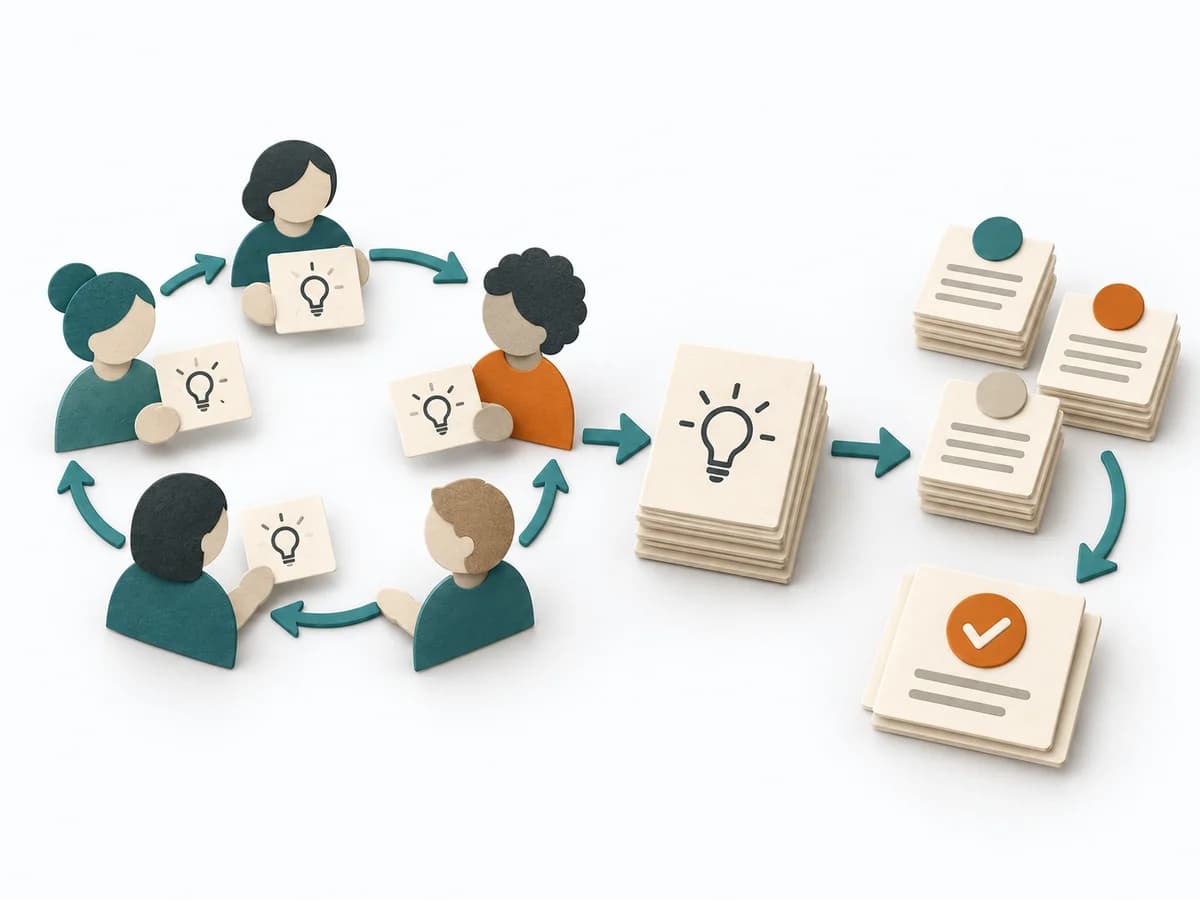 Innovation Round Robin Brainstorming |
|---|---|---|---|---|
Purposedifferent | With a stuck problem carrying many implicit assumptions, the method translates observations into open, workable questions. It sharpens the problem frame without pre-thinking the solution, turning frustration or fuzziness into a search space with clear direction. | In critical processes, it is not enough to plan only for the normal case. Failure Scenario Analysis looks at the path into failure and shows which failures, chains, and control gaps cause the most damage. | For persistent errors or blockages, the method shifts the view to the opposite of the desired effect. It exposes the mechanics of failure and makes hidden causes easier to grasp. This makes improvement more concrete and the problem clearer. | With unevenly distributed speaking time, the method brings every person into the contribution one after another. It prevents early voices from setting the direction while still producing a shared idea space. This makes participation plannable and the team's diversity visible. |
Complexitydifferent | Low | Medium | Low | Low |
Timedifferent | 30–45 min | 1-3 h | 30-60 min | 20-45 min |
Participantsdifferent | 1-10 | 3-8 | 3-12 | 4-10 |
Formatdifferent | Workshop + async | Workshop | Workshop | Workshop |
Outputdifferent | HMW Questions, Challenge Framing, Idea Prompts | Failure Scenarios, Risk Notes, Control Gaps, Test and Response Actions | Reverse Ideas, Risk Themes, Solution Ideas | Idea List, Cluster, Shortlist |
Tagsno overlap | FramingOpportunityIdeationQuestions | FailureResilienceRisk | BrainstormingIdeationCreativityRisk | BrainstormingIdeationFacilitationInclusionCreativity |