View methods side by side.
Choose up to four methods. Add them using the search and share the comparison by copying its link.
| Criterion |  Growth Hooked Model | 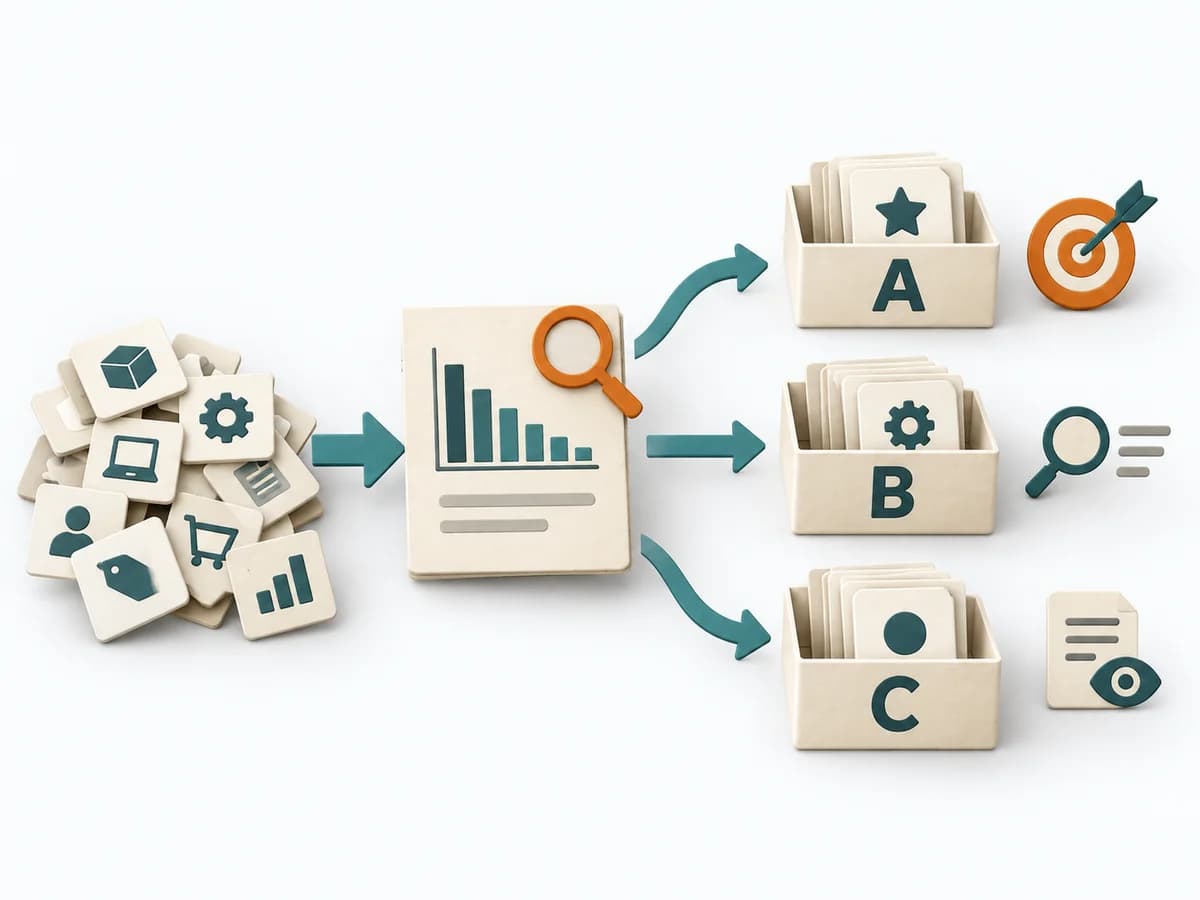 Operations ABC Analysis |  Operations Fishbone Diagram |  Decision Making Pareto Analysis |
|---|---|---|---|---|
Purposedifferent | The Hooked Model helps clarify engagement loops, user behavior, and experiments. It makes repeat behavior measurable and captures the result as a hooked loop, trigger map, and reward design. | With many similar objects of differing economic significance, the method prioritizes effort by effect. It separates what needs regular steering from what rarely needs attention. | When a problem has several possible contributing factors, the method sorts causes by cause areas. It prevents an initial hunch from blocking the view of other plausible drivers. | In many problem situations, effect is distributed unequally across many causes. A Pareto Analysis separates the few drivers with high leverage from the long remainder and focuses attention on what measurably moves the needle. |
Complexitydifferent | Medium | Low | Low | Low |
Timedifferent | Multiple workshops over several weeks | 30-60 min | 30-60 min | 30-60 min |
Participantsdifferent | 2-8 | 1-5 | 2-8 | 1-6 |
Formatdifferent | Workshop + async | Async | Workshop | Workshop + async |
Outputdifferent | Hooked loop, Trigger map, Reward design, Ethics check | ABC Classification, Focus Rules, Control List | Fishbone Diagram, Cause Categories, Investigation Backlog | Pareto Chart, Top Causes, Focus List |
Tagsno overlap | GrowthBehaviorRetention | PrioritizationOperationsPortfolio | Root causeQualityOperations | PrioritizationQualityFocusRoot cause |