View methods side by side.
Choose up to four methods. Add them using the search and share the comparison by copying its link.
Selected:Failure Scenario AnalysisArchitecture Inception CanvasFailure Mode and Effects AnalysisFishbone Diagram
| Criterion | 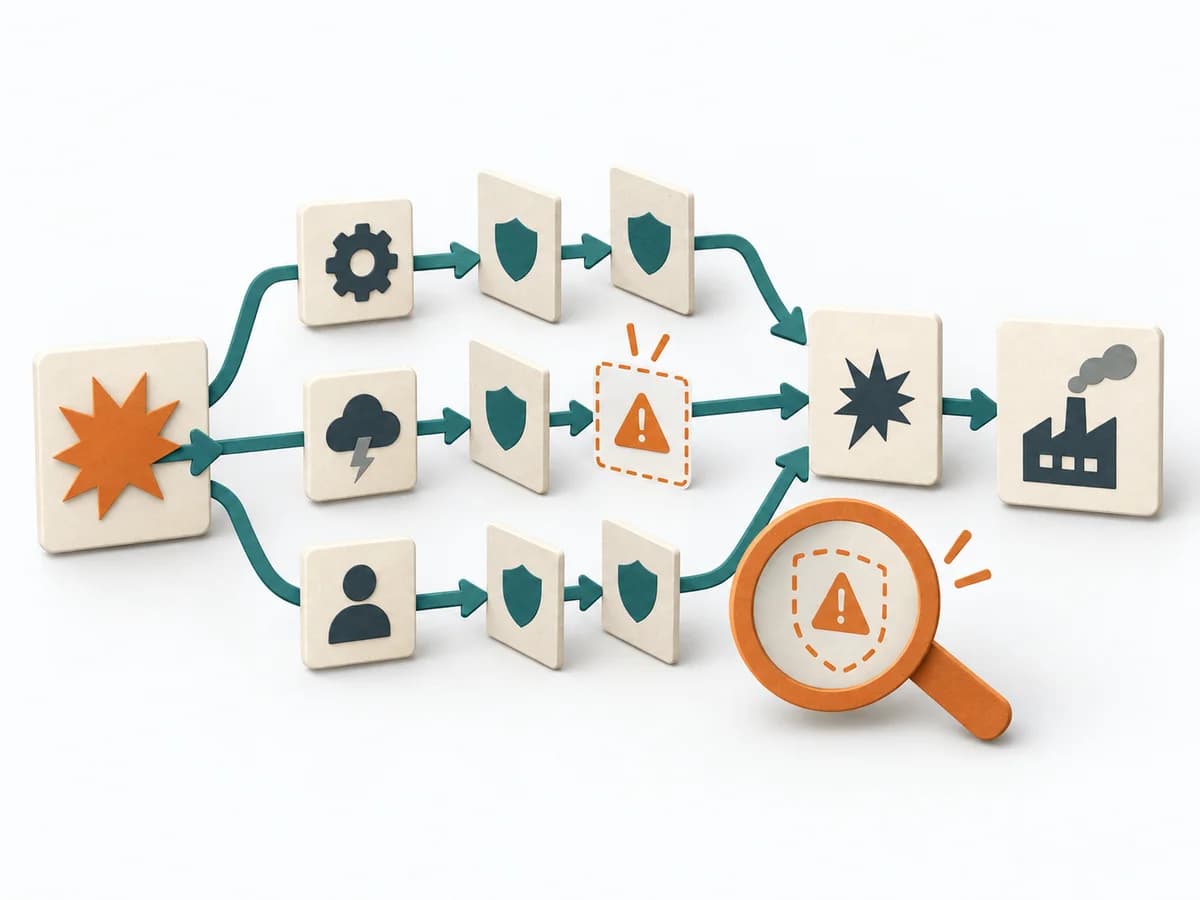 Engineering Failure Scenario Analysis |  Architecture Architecture Inception Canvas |  Operations Failure Mode and Effects Analysis |  Operations Fishbone Diagram |
|---|---|---|---|---|
Purposedifferent | In critical processes, it is not enough to plan only for the normal case. Failure Scenario Analysis looks at the path into failure and shows which failures, chains, and control gaps cause the most damage. | The Architecture Inception Canvas bundles the first architecture questions into a compact decision picture. It fits when an initiative is still in motion but still needs clear guardrails. | For a process, product, or service with noticeable failure risks, the method assesses possible failure modes in advance. It directs attention to combinations of occurrence, effect, and detectability. | When a problem has several possible contributing factors, the method sorts causes by cause areas. It prevents an initial hunch from blocking the view of other plausible drivers. |
Complexitydifferent | Medium | Low | High | Low |
Timedifferent | 1-3 h | 1-2 h | 2-6 h | 30-60 min |
Participantsdifferent | 3-8 | 3-8 | 3-10 | 2-8 |
Formatsame | Workshop | Workshop | Workshop | Workshop |
Outputdifferent | Failure Scenarios, Risk Notes, Control Gaps, Test and Response Actions | Inception Canvas, Risks, Goal List, Open Questions | FMEA Table, Risk Priority, Mitigation Actions | Fishbone Diagram, Cause Categories, Investigation Backlog |
Tagsno overlap | FailureResilienceRisk | AlignmentArchitectureCanvas | RiskQualityOperationsRoot cause | Root causeQualityOperations |