View methods side by side.
Choose up to four methods. Add them using the search and share the comparison by copying its link.
| Criterion | 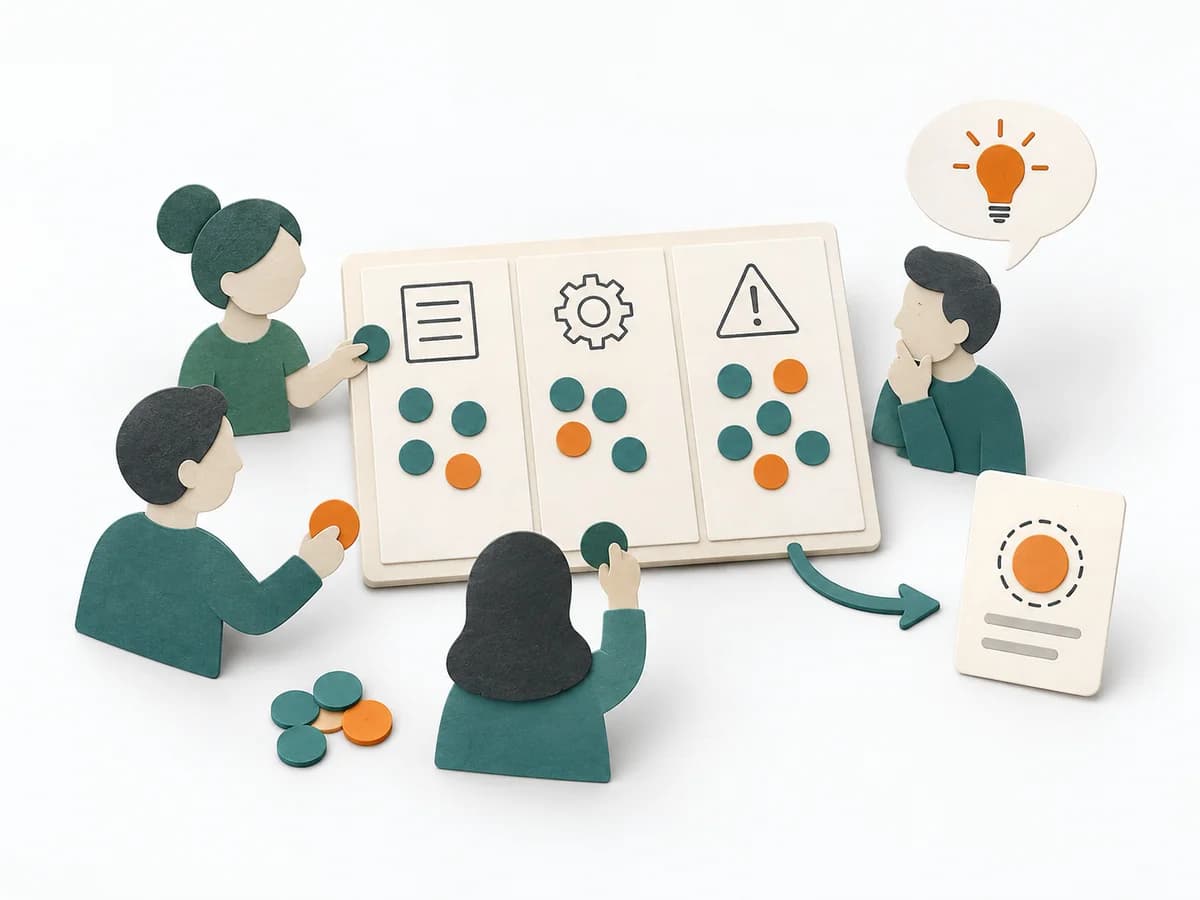 Facilitation Dot Estimation |  Operations Failure Mode and Effects Analysis | 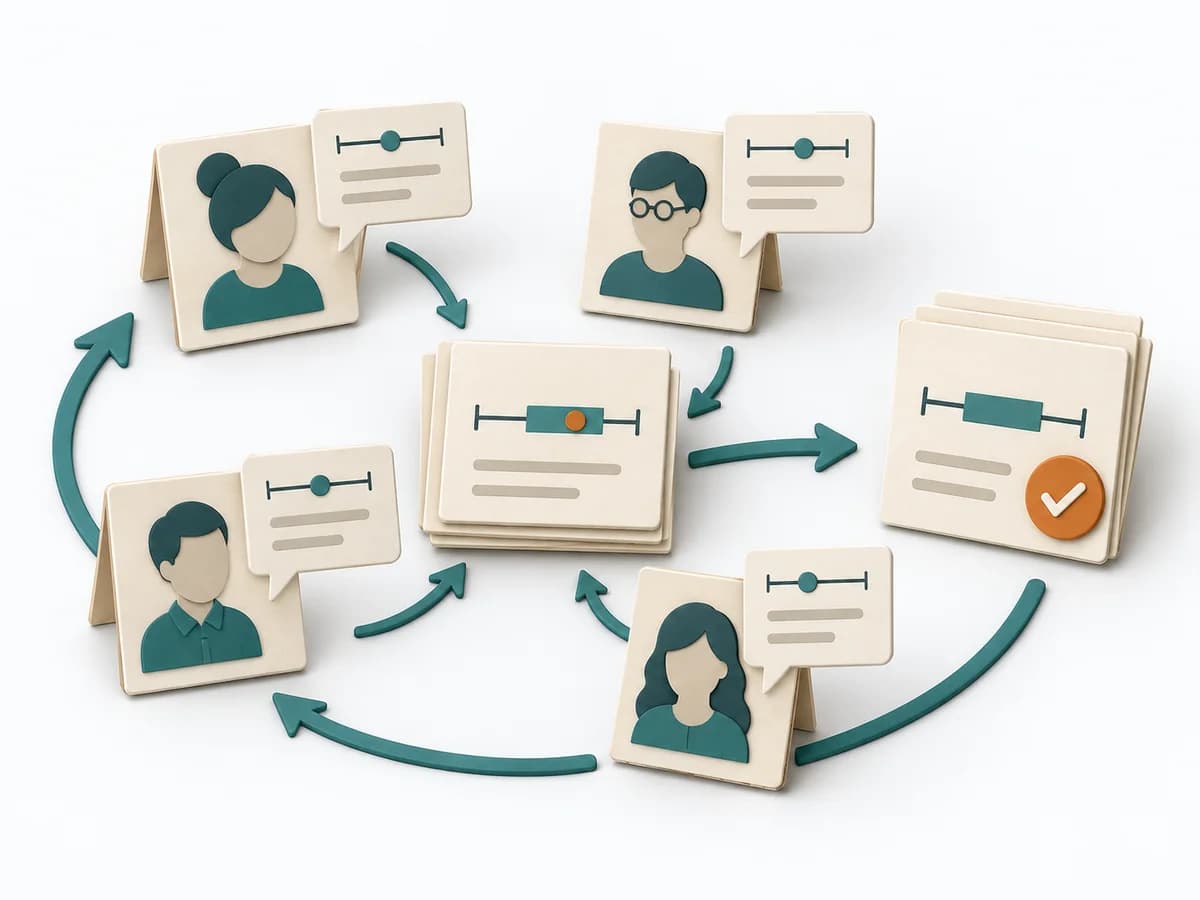 Decision Making Delphi Method |  Operations Fishbone Diagram |
|---|---|---|---|---|
Purposedifferent | When size or effort can only be estimated roughly, Dot Estimation condenses the group's experience into a quick range. It turns individual contributions into a visible selection. The result is captured as an Effort Heatmap, Risk Signals, and Discussion Targets. | For a process, product, or service with noticeable failure risks, the method assesses possible failure modes in advance. It directs attention to combinations of occurrence, effect, and detectability. | When knowledge is distributed and direct dominance should be avoided, groups quickly fall under the sway of their opinion leaders. The Delphi Method gathers assessments iteratively and gradually brings expert judgments closer together. | When a problem has several possible contributing factors, the method sorts causes by cause areas. It prevents an initial hunch from blocking the view of other plausible drivers. |
Complexitydifferent | Low | High | High | Low |
Timedifferent | 5-20 min | 2-6 h | 1-4 Wochen | 30-60 min |
Participantsdifferent | 3-20 | 3-10 | 6-30 Experten | 2-8 |
Formatdifferent | Workshop | Workshop | Async | Workshop |
Outputdifferent | Effort Heatmap, Risk Signals, Discussion Targets | FMEA Table, Risk Priority, Mitigation Actions | Expert Forecast, Consensus Range, Assumption Notes | Fishbone Diagram, Cause Categories, Investigation Backlog |
Tagsno overlap | EstimationEffortRisk | RiskQualityOperationsRoot cause | ForecastingExpertsDecisionStrategy | Root causeQualityOperations |