View methods side by side.
Choose up to four methods. Add them using the search and share the comparison by copying its link.
| Criterion | 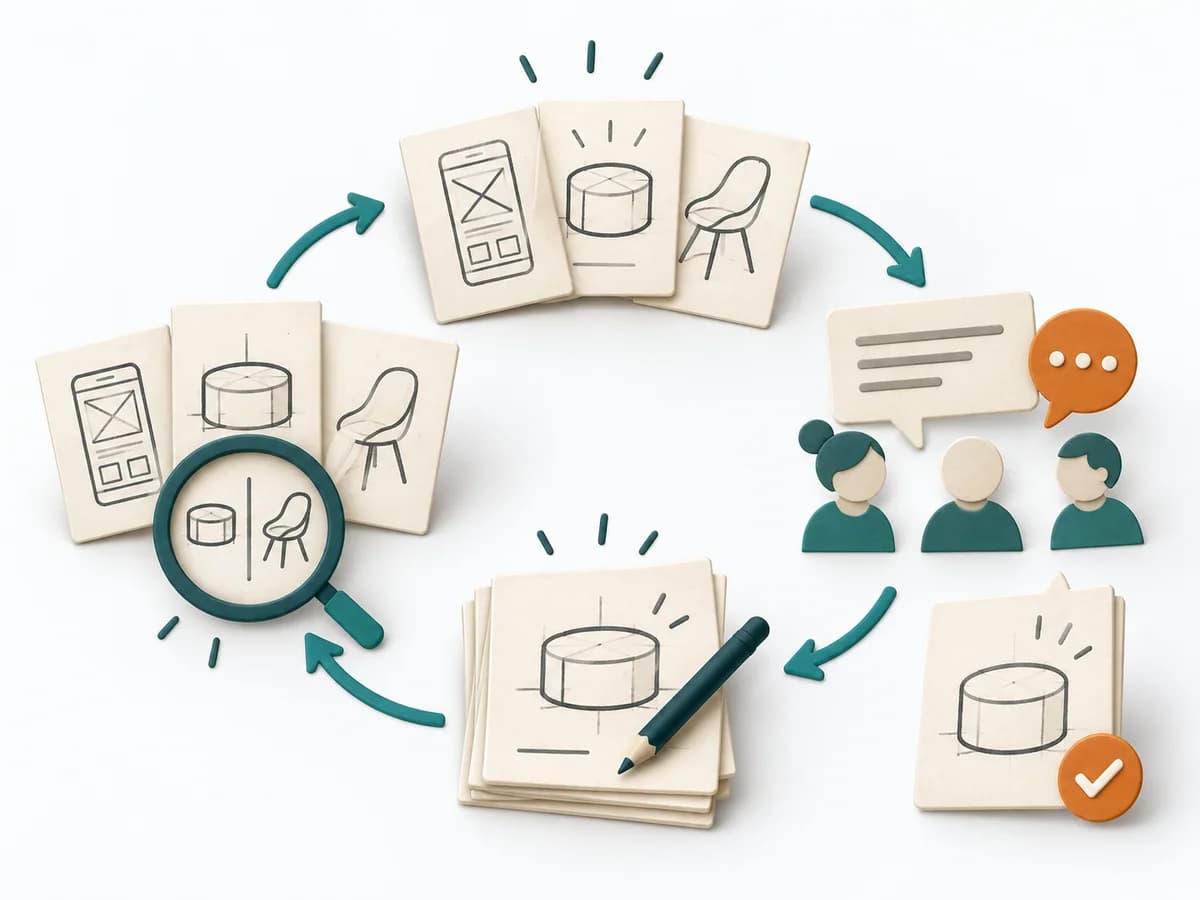 UX Design Design Studio | 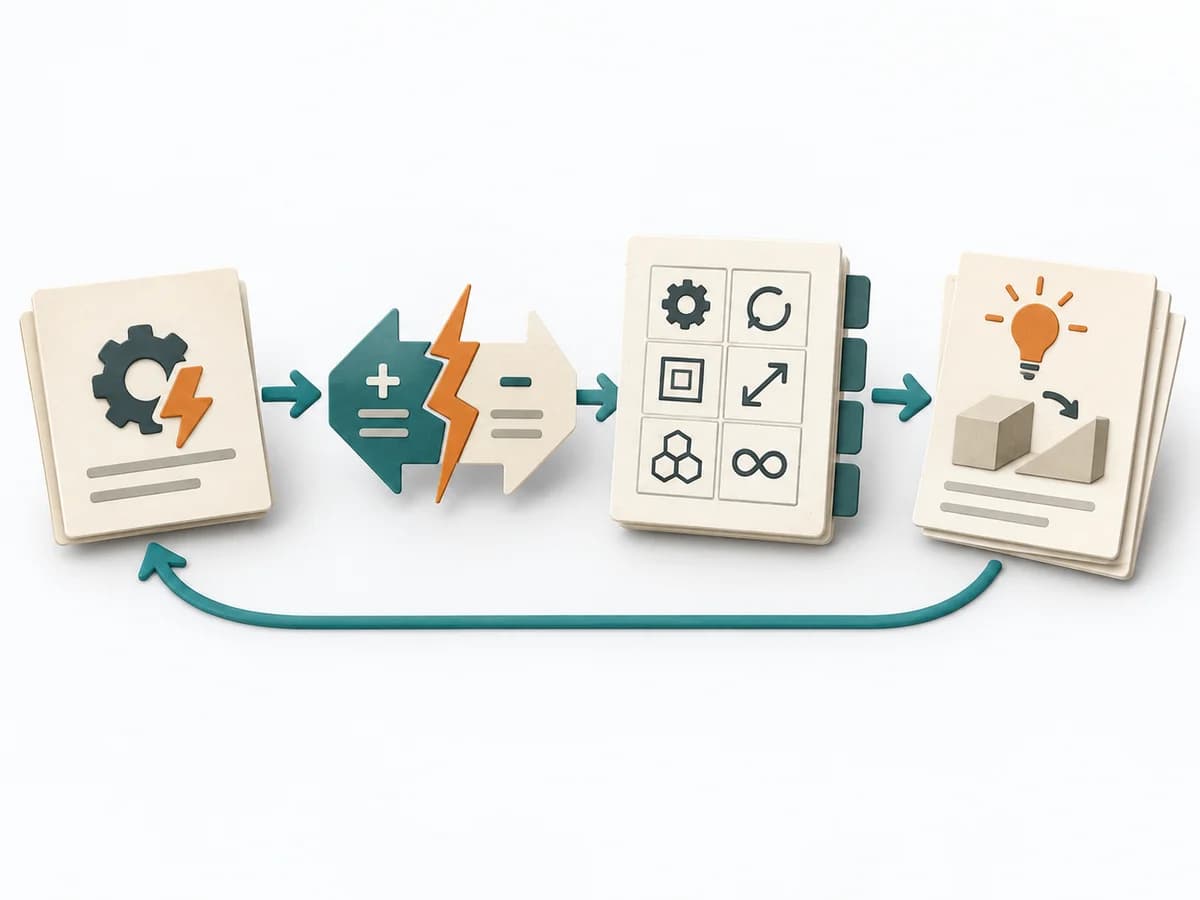 Innovation TRIZ |  Innovation Morphological Analysis |  Innovation SCAMPER |
|---|---|---|---|---|
Purposedifferent | When several designs need to be quickly put in relation to each other, it makes ideas visible and comparable. It encourages early variants instead of long upfront debates. | For technical contradictions or trade-offs, the method looks for solutions that resolve opposing requirements at the same time. It translates limits into an explicit picture of conflict that becomes workable. This produces not just compromises but more elegant principles. | For a search for solutions with many degrees of freedom, a grid emerges for systematic combinations. The method separates features, variants, and exclusion criteria, so the space gets explored deliberately. | For an existing solution under pressure to change, the method deliberately opens space for systematic variants. It directs attention to rebuilding, combining, and repurposing rather than only new basic ideas. This produces concrete evolution paths for products, offerings, or workflows. |
Complexitydifferent | Medium | High | Medium | Low |
Timedifferent | 1-3 h | 1-4 h | 1-3 h | 30-60 min |
Participantsdifferent | 3-8 | 2-8 | 2-8 | 2-10 |
Formatdifferent | Workshop | Workshop + async | Workshop + async | Workshop |
Outputdifferent | Sketches, Concept Directions, Design Decisions | Contradiction Statement, Inventive Principles, Solution Concepts | Morphological Box, Concept Combinations, Idea Shortlist | SCAMPER Idea List, Concept Shortlist, Variation Notes |
Tagsno overlap | SketchingCollaborationIdeation | InnovationProblem solvingContradictionsCreativity | IdeationInnovationCreativity | BrainstormingIdeationCreativityReframingInnovation |