View methods side by side.
Choose up to four methods. Add them using the search and share the comparison by copying its link.
| Criterion |  Decision Making DACI |  Growth Pirate Metrics AARRR | 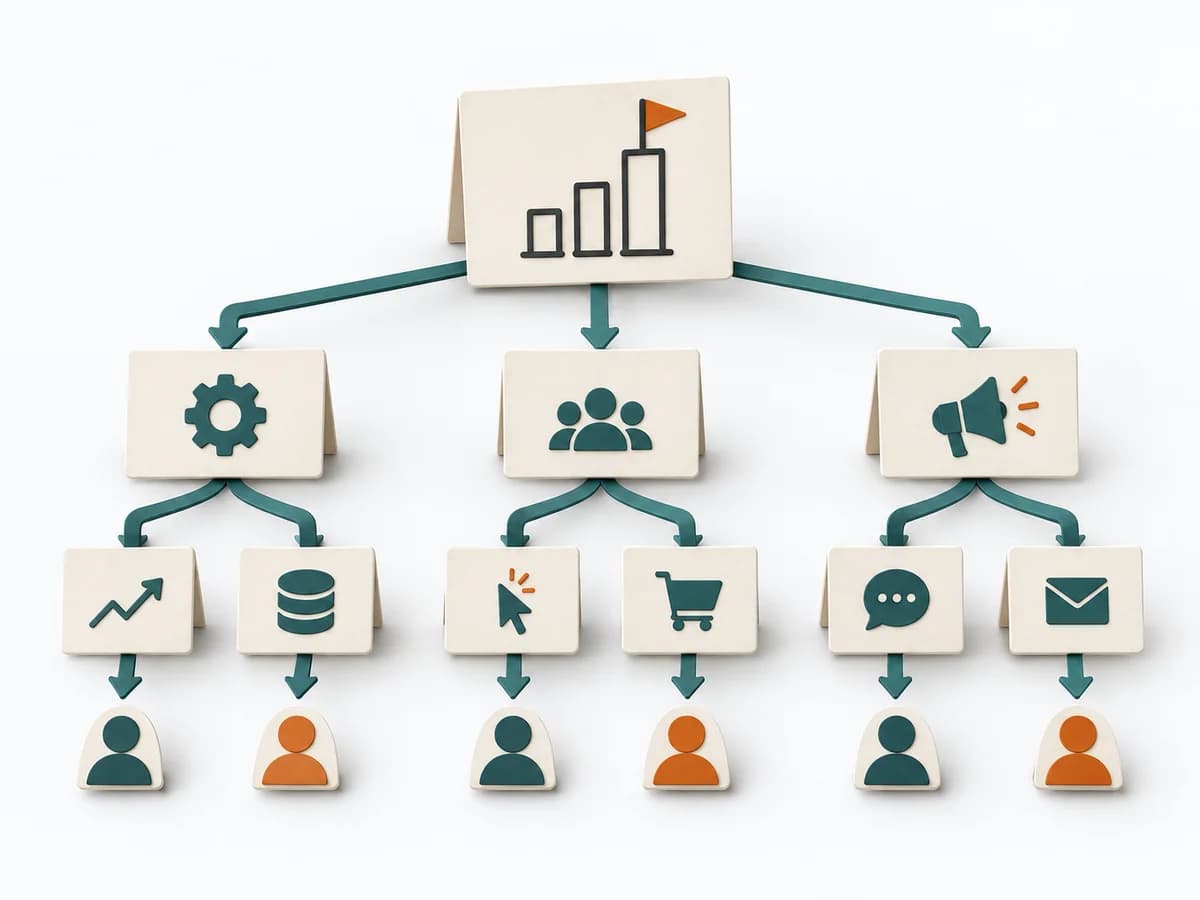 Product Strategy KPI Tree |  Decision Making Decision Rights Mapping |
|---|---|---|---|---|
Purposedifferent | In cross-functional decisions, responsibilities quickly blur between approval, influence, and execution. DACI arranges these roles so decision pressure, contribution, and information stay cleanly separated. | For products with complex usage paths, overall growth alone is too coarse to reveal bottlenecks. Pirate Metrics breaks the relationship with the product into consecutive stages and shows where the funnel actually leaks. | When metrics across the organization drift apart, it arranges drivers and effects under one shared logic. It connects customer value, product logic, and decision priorities. The result is captured as a KPI tree and owner list. | In organizations with many stakeholders, it often blurs who actually decides and who is merely consulted. It separates options, evaluation criteria, and open risks. The result is captured as a Decision Rights matrix and an agreement. |
Complexitydifferent | Low | Medium | Medium | Medium |
Timedifferent | 30-60 min | 1-2 h Setup, laufend | 90-180 min initial, dann laufend | 90-180 min |
Participantsdifferent | 2-10 | 2-8 | 3-8 | 4-12 |
Formatdifferent | Workshop + async | Workshop + async | Workshop + async | Workshop |
Outputdifferent | DACI Matrix, Decision Owner, Decision Log | AARRR funnel, Metric baseline, Experiment backlog | KPI Tree, Owner List | Decision Rights Matrix, Agreement |
Tagsno overlap | DecisionRolesGovernanceAlignment | GrowthMetricsExperiments | MetricsStrategyAlignmentMeasurement | DecisionGovernanceAlignmentResponsibility |