View methods side by side.
Choose up to four methods. Add them using the search and share the comparison by copying its link.
| Criterion | 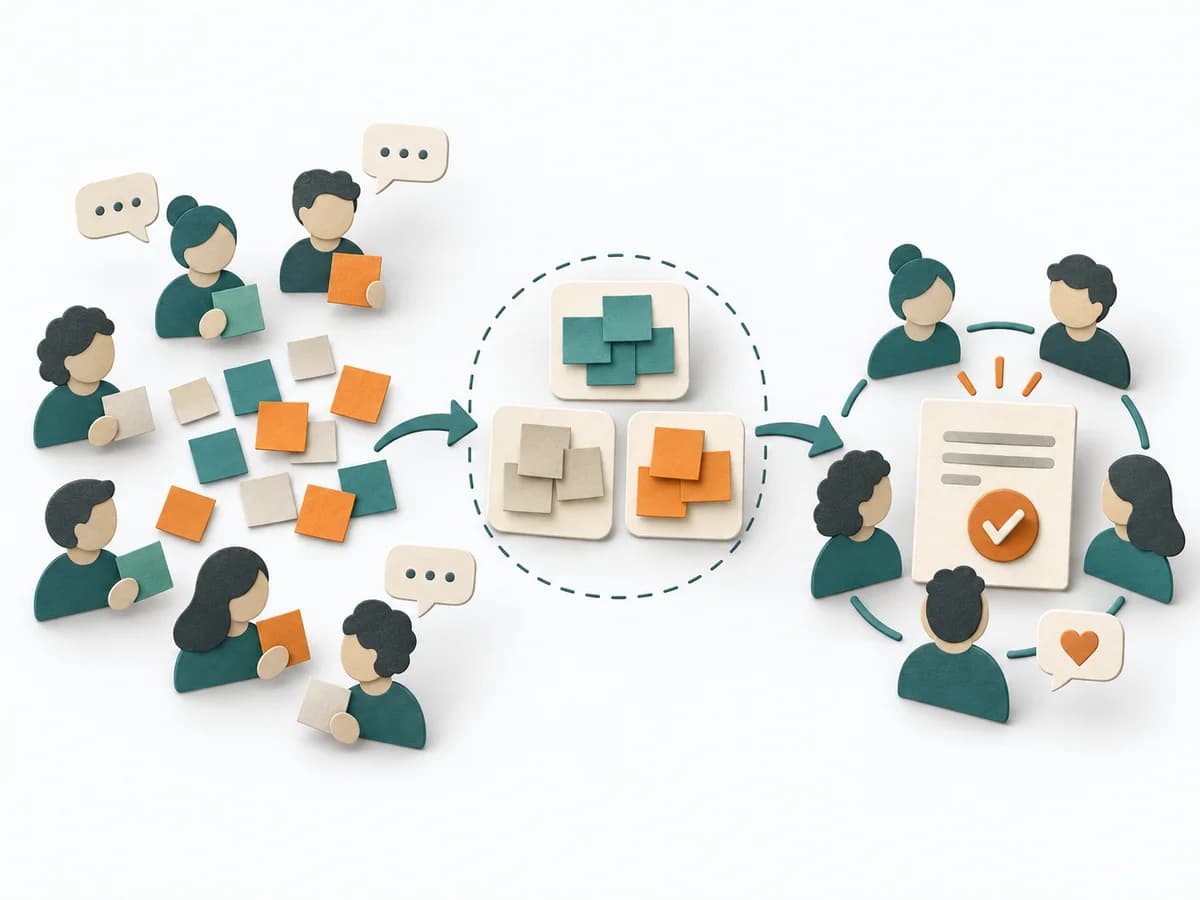 Facilitation Consensus Workshop | 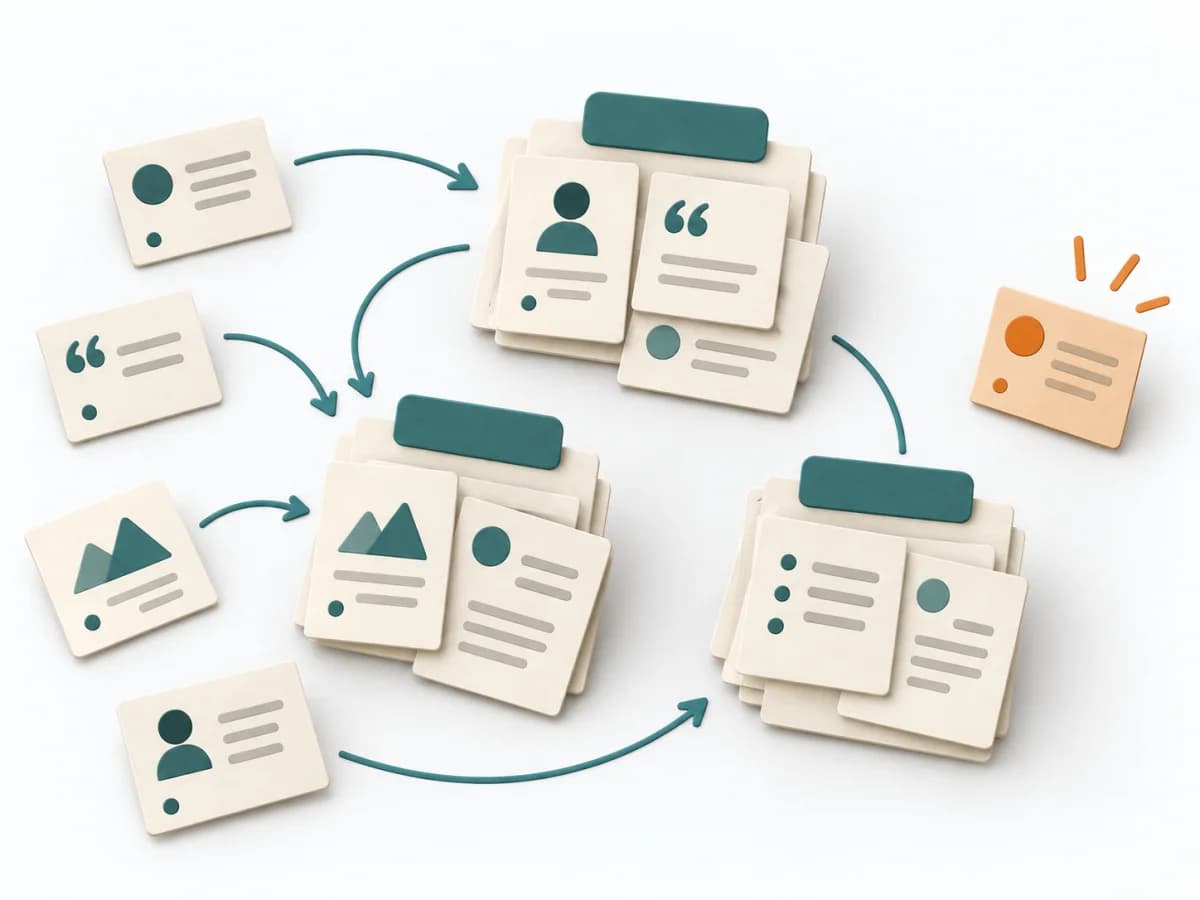 UX Research Affinity Diagramming |  Facilitation Six Thinking Hats |  UX Research Empathy Mapping |
|---|---|---|---|---|
Purposedifferent | When a group needs a solid decision without outvoting individual factions, a Consensus Workshop creates a negotiable common ground. It makes agreement, reservations, and open tensions discussable at the same time. | When research notes, feedback, or observations sit unconnected side by side, affinity diagramming sorts the raw material into solid themes. Many individual points turn into patterns that make decisions and opportunities clearer. | When a topic gets stuck too quickly in the same thinking mode, Six Thinking Hats deliberately separates the perspectives. This means facts, risks, creativity, and emotional signals get worked through one after another instead of mixed together. | When a lot is assumed about a target group but little is seen jointly, empathy mapping makes knowledge and gaps directly comparable. The picture also shows which assumptions hold up and where evidence is missing. |
Complexitydifferent | Medium | Low | Medium | Low |
Timedifferent | 1-3 h | 45–90 min | 45-90 min | 30–60 min |
Participantsdifferent | 5-30 | 3-10 | 4-12 | 4-8 |
Formatsame | Workshop | Workshop | Workshop | Workshop |
Outputdifferent | Consensus Clusters, Theme Titles, Priority Areas | Theme clusters, Insight statements, Opportunity areas | Perspective Notes, Decision Inputs, Action Items | Empathy Map, Assumptions List, Research Gaps |
Tagsno overlap | FacilitationConsensusWorkshopAlignment | SynthesisQualitativeRoot cause | FacilitationOptionsDecision | SynthesisQualitativeWorkshop |