View methods side by side.
Choose up to four methods. Add them using the search and share the comparison by copying its link.
| Criterion | 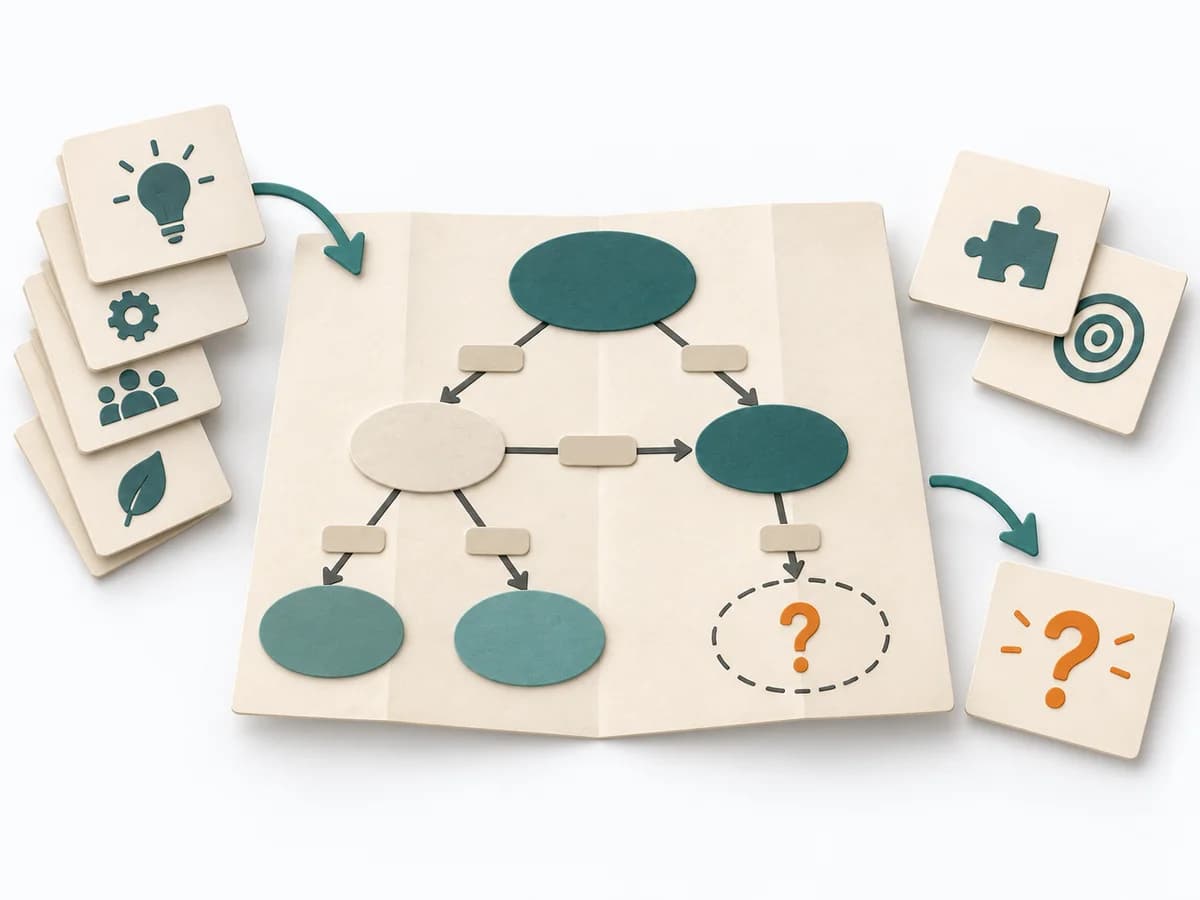 Knowledge Modeling Concept Mapping | 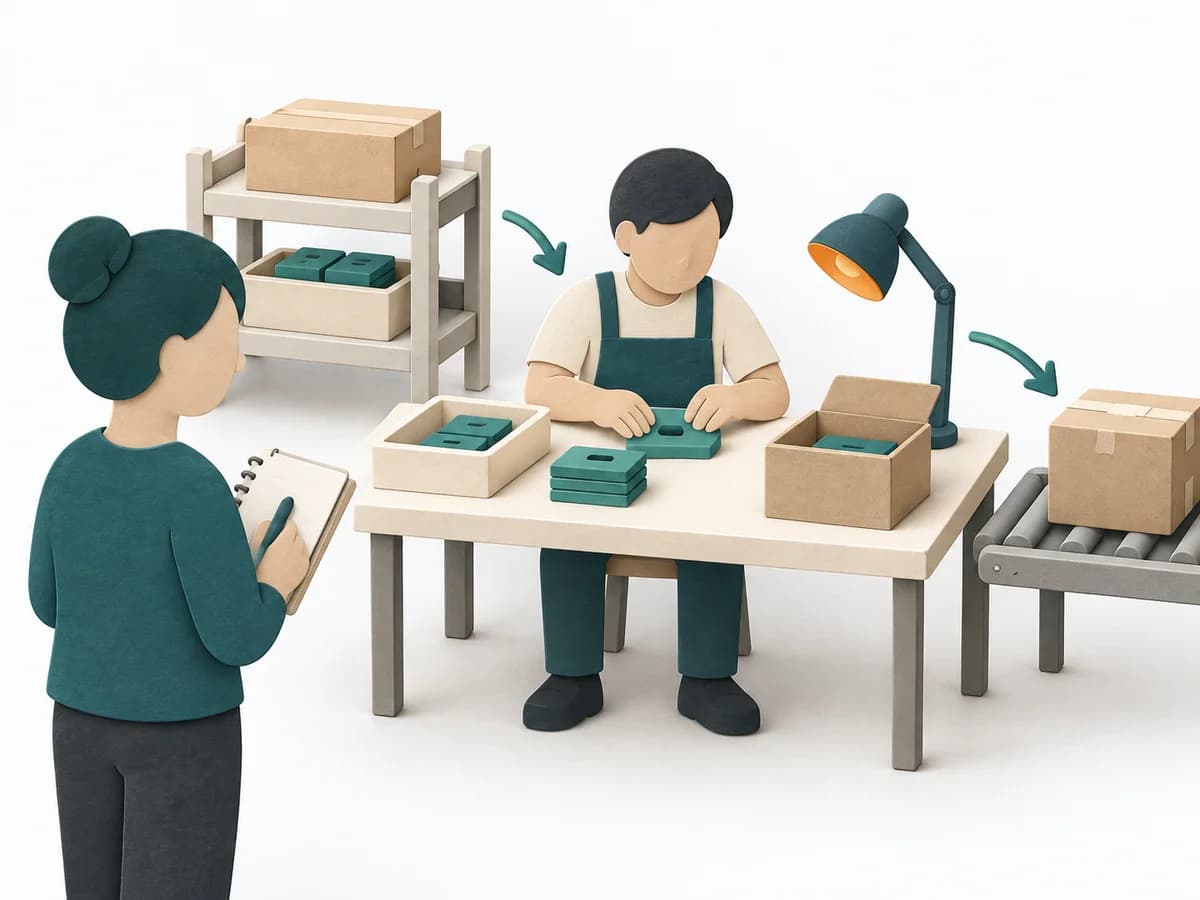 Operations Gemba Walk | 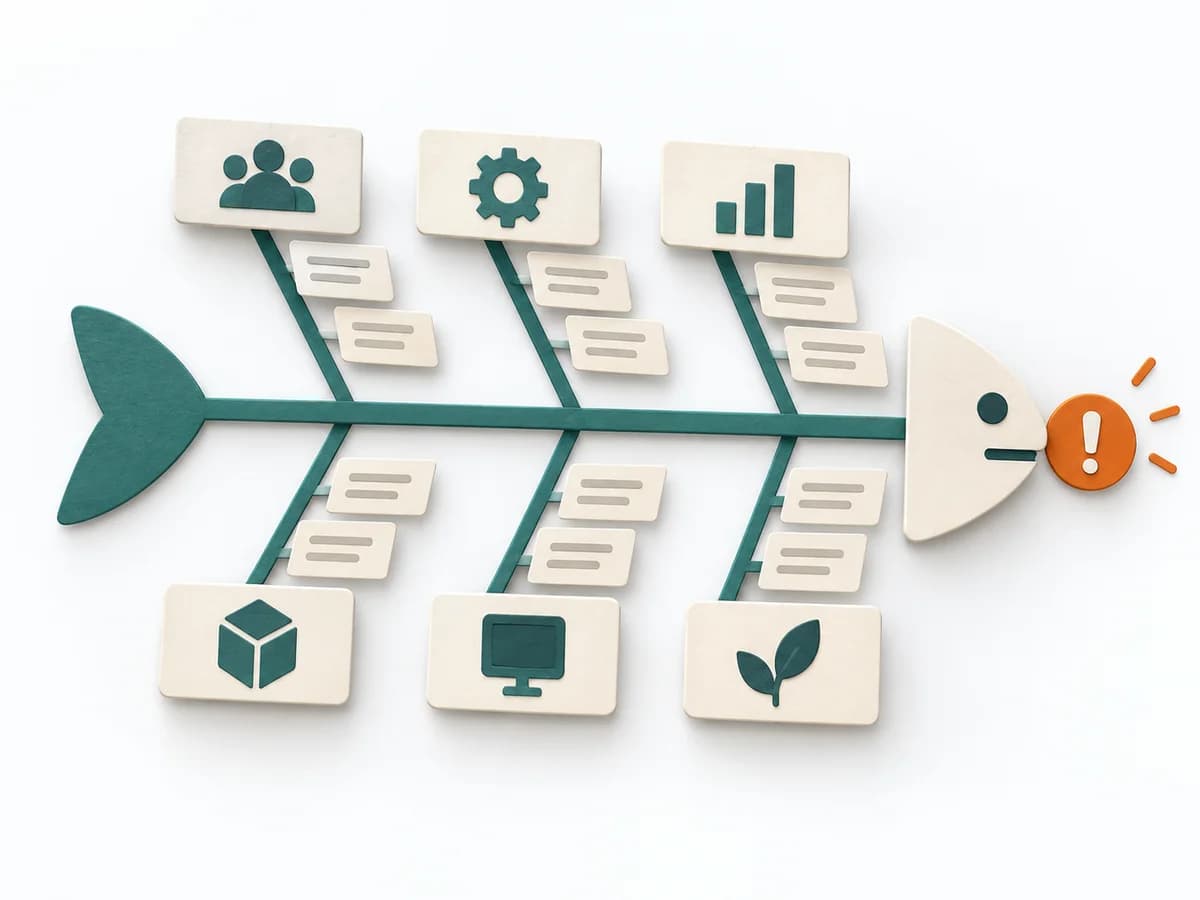 Operations Fishbone Diagram | 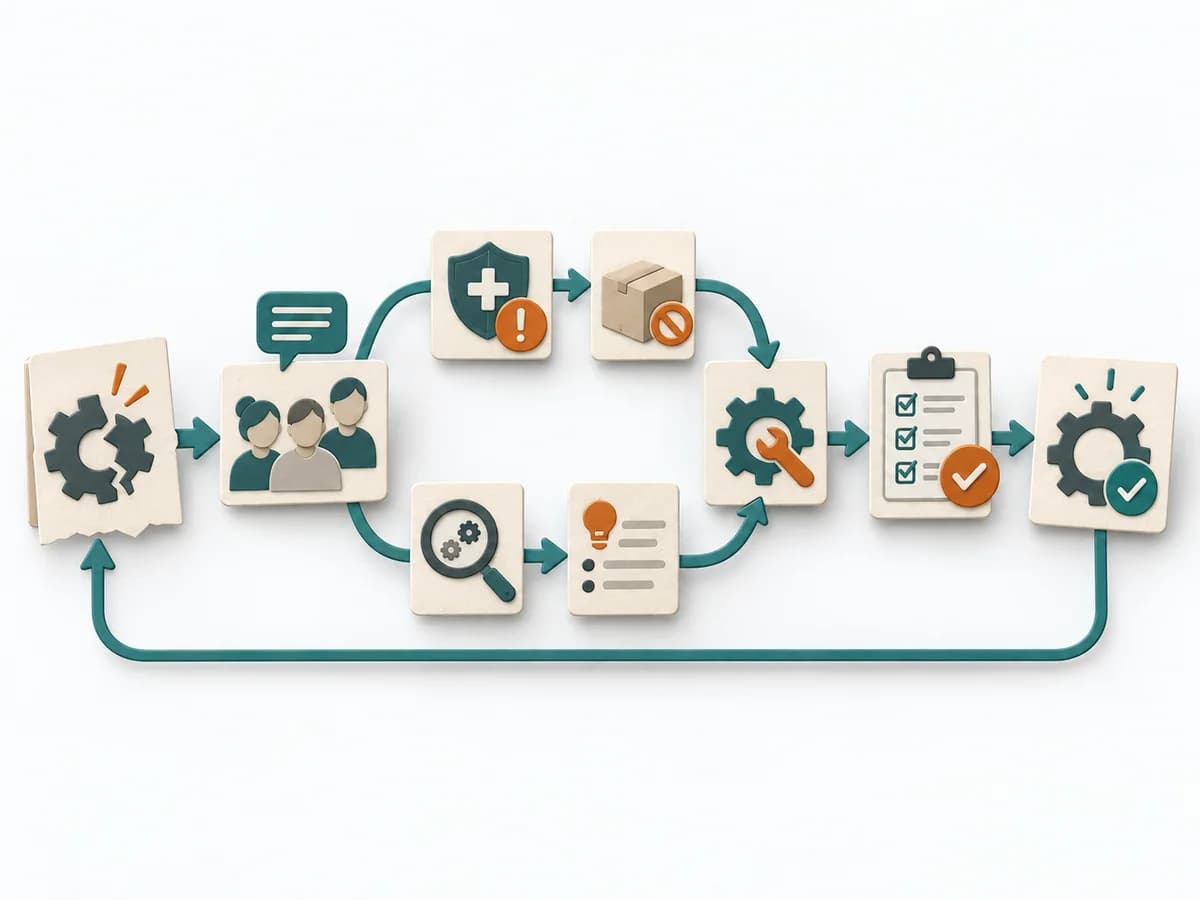 Operations 8D Problem Solving |
|---|---|---|---|---|
Purposedifferent | Concept Mapping arranges terms and relationships in a network that makes subject-matter connections tangible. It fits when a topic needs to be understood structurally rather than linearly. | When there is uncertainty about the real course of a process, the method brings observation to the place where work happens. It combines perception, follow-up questions, and process knowledge so decisions rest on actual workflows instead of assumptions. | When a problem has several possible contributing factors, the method sorts causes by cause areas. It prevents an initial hunch from blocking the view of other plausible drivers. | For an acute quality or delivery problem, the method structures immediate protection and root cause work together. It keeps the situation stable while the actual cause is investigated cleanly. |
Complexitydifferent | Medium | Low | Low | High |
Timedifferent | 1-2 h | 30-120 min | 30-60 min | 1-6 Wochen |
Participantsdifferent | 1-8 | 2-6 | 2-8 | 4-10 |
Formatdifferent | Workshop + async | Workshop | Workshop | Workshop + async |
Outputdifferent | Concept Map, Relationship Labels, Knowledge Gaps | Observation Notes, Improvement Ideas | Fishbone Diagram, Cause Categories, Investigation Backlog | 8D Report, Containment Plan, Root Cause Evidence, Corrective Action Plan |
Tagsno overlap | KnowledgeConceptsMappingSensemaking | LeanObservationProcessOperations | Root causeQualityOperations | QualityProblem solvingRoot cause |