View methods side by side.
Choose up to four methods. Add them using the search and share the comparison by copying its link.
Selected:ChatOpsARID (Active Reviews for Intermediate Designs)Causal Loop DiagramStock and Flow Diagram
| Criterion |  DevOps ChatOps |  Architecture ARID (Active Reviews for Intermediate Designs) | 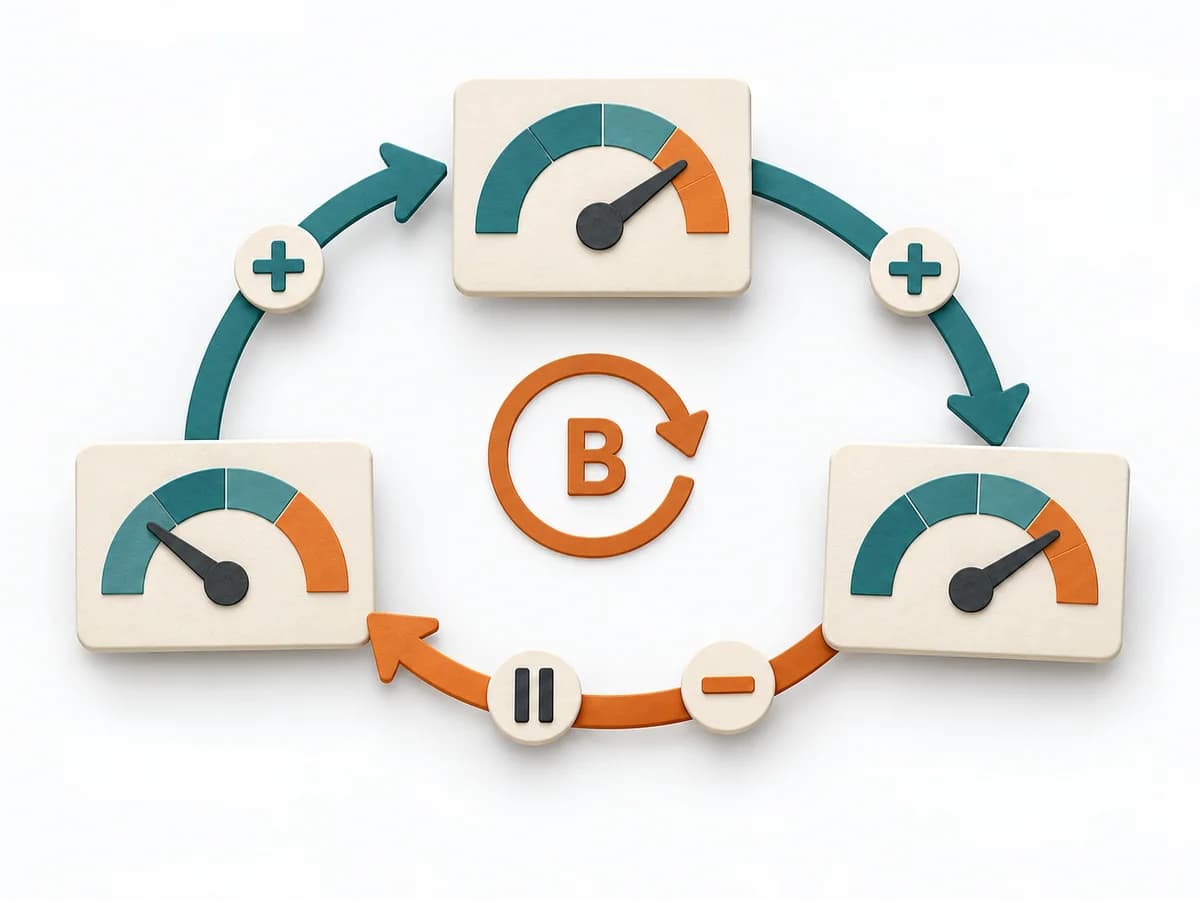 Systems Thinking Causal Loop Diagram |  Systems Thinking Stock and Flow Diagram |
|---|---|---|---|---|
Purposedifferent | For operational work in a distributed team, the method links communication with direct system control. It records decisions right where the signal, the context, and the execution come together. | ARID examines how well developers can work with a technical design. It focuses on a part of the system that can still be revised, between the architecture overview and the detailed specification. | A Causal Loop Diagram makes feedback, reinforcement, and balance in a system legible. It uncovers side effects and self-reinforcement that stay hidden in linear explanations. | A Stock and Flow Diagram shows how stocks, inflows, and outflows shape a system over time. It is especially suited when growth, delays, or capacity limits determine the dynamics. |
Complexitydifferent | Medium | Medium | Medium | High |
Timedifferent | Ongoing | 2–4 h review as a planning range; preparation and evaluation additional | 1-3 h | 2-6 h |
Participantsdifferent | 2-20 | Designers, developers as users, and facilitation | 2-8 | 1-6 |
Formatdifferent | Workshop + async | Workshop + async | Workshop | Workshop + async |
Outputdifferent | Chat Transcript, Action Log, Automations | Prioritized development tasks, Jointly produced code or pseudocode, Observed difficulties and open design questions, Proposed design revisions | Causal Loop Diagram, Feedback Notes, Leverage Points | Stock and Flow Model, Dynamics Notes, Simulation Hypotheses |
Tagsno overlap | CollaborationEngineeringIncident | ArchitectureEngineeringFeedbackValidationTasks | FeedbackSystems thinkingCausalityDynamics | DynamicsSimulationFeedbackSystems thinking |