View methods side by side.
Choose up to four methods. Add them using the search and share the comparison by copying its link.
| Criterion |  Systems Thinking CATWOE Analysis |  Facilitation Power Interest Grid |  Innovation Brainstorming | 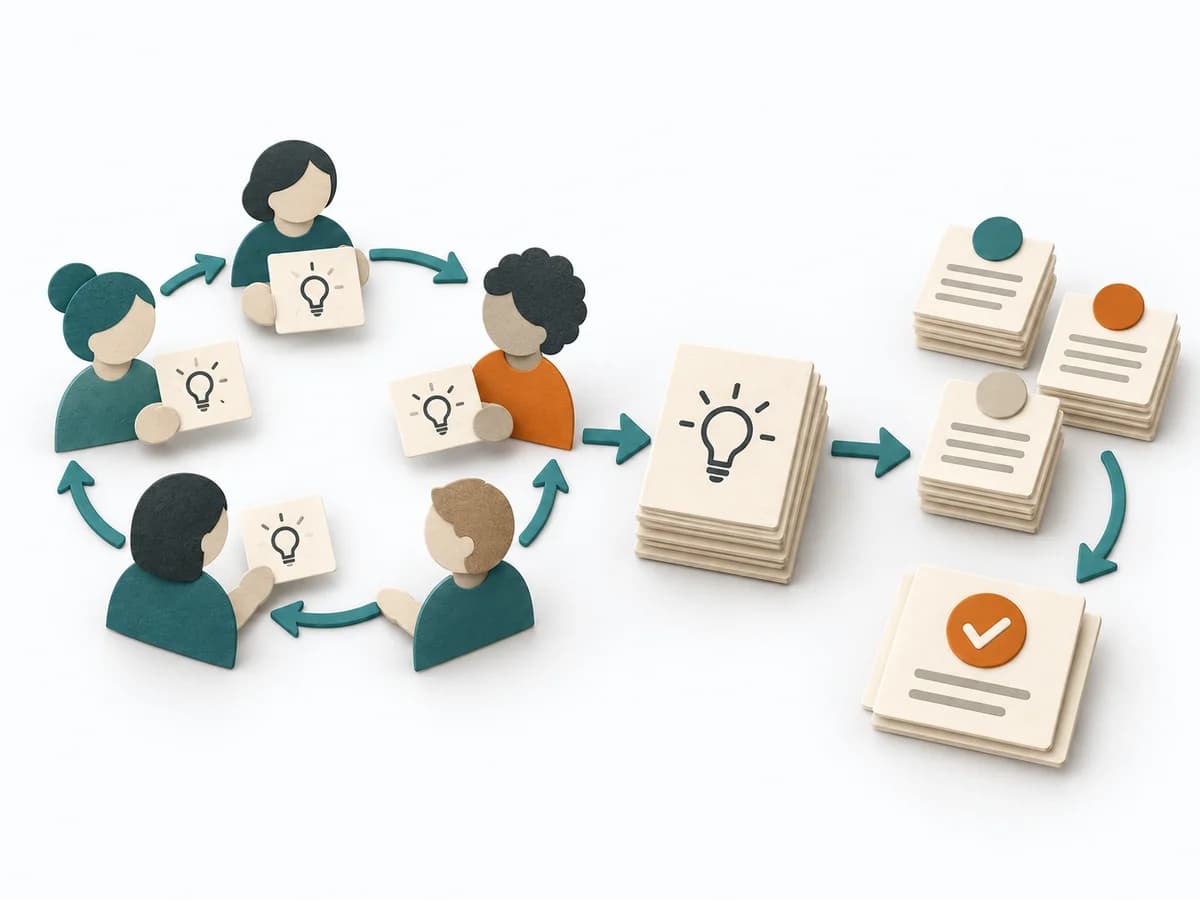 Innovation Round Robin Brainstorming |
|---|---|---|---|---|
Purposedifferent | CATWOE structures a problem from six viewpoints and prevents too narrow a view of the situation. Different experiences of the system become comparably discussable this way. | When many stakeholders compete for attention at once, the Power Interest Grid sorts them by influence and stake. It turns individual contributions into a visible selection. The result is captured as a Power Interest Grid and a stakeholder-specific strategy. | When a team faces an open question with many obvious directions, the method first creates breadth instead of premature commitment. It separates idea flow from evaluation and makes lines of thought visible, creating a pool for selection and further development. | With unevenly distributed speaking time, the method brings every person into the contribution one after another. It prevents early voices from setting the direction while still producing a shared idea space. This makes participation plannable and the team's diversity visible. |
Complexitydifferent | Medium | Low | Low | Low |
Timedifferent | 45-90 min | 30-60 min | 30-60 min | 20-45 min |
Participantsdifferent | 3-8 | 2-8 | 4-12 | 4-10 |
Formatdifferent | Workshop + async | Workshop | Workshop | Workshop |
Outputdifferent | CATWOE Canvas, Root Definition, Stakeholder Perspectives, Constraints | Power Interest Grid, Strategy per Stakeholder | Idea pool, Theme clusters, Shortlist | Idea List, Cluster, Shortlist |
Tagsno overlap | Systems thinkingFramingStakeholders | StakeholdersFacilitationAlignmentPlanning | BrainstormingIdeationCreativityWorkshopDivergence | BrainstormingIdeationFacilitationInclusionCreativity |