View methods side by side.
Choose up to four methods. Add them using the search and share the comparison by copying its link.
| Criterion |  UX Research Card Sorting | 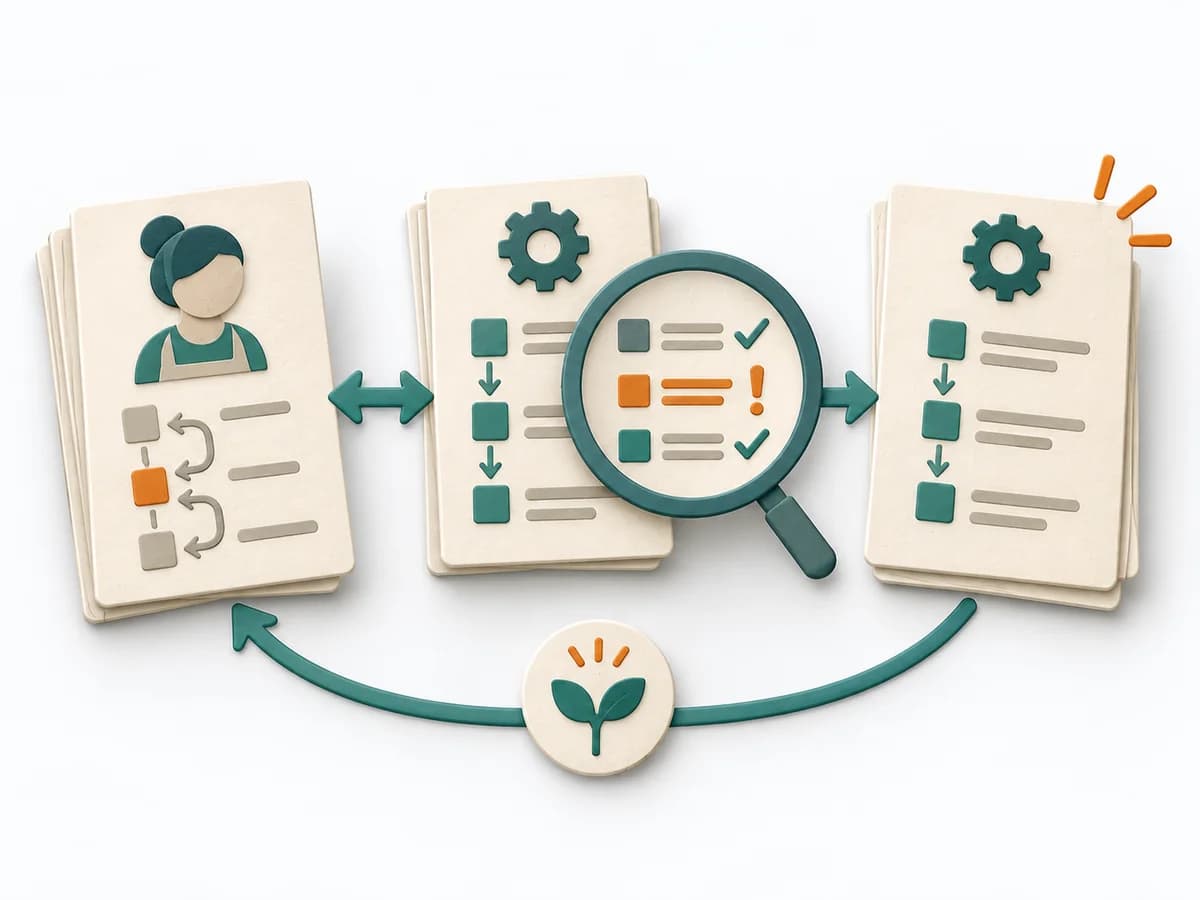 Operations Standard Work Analysis | 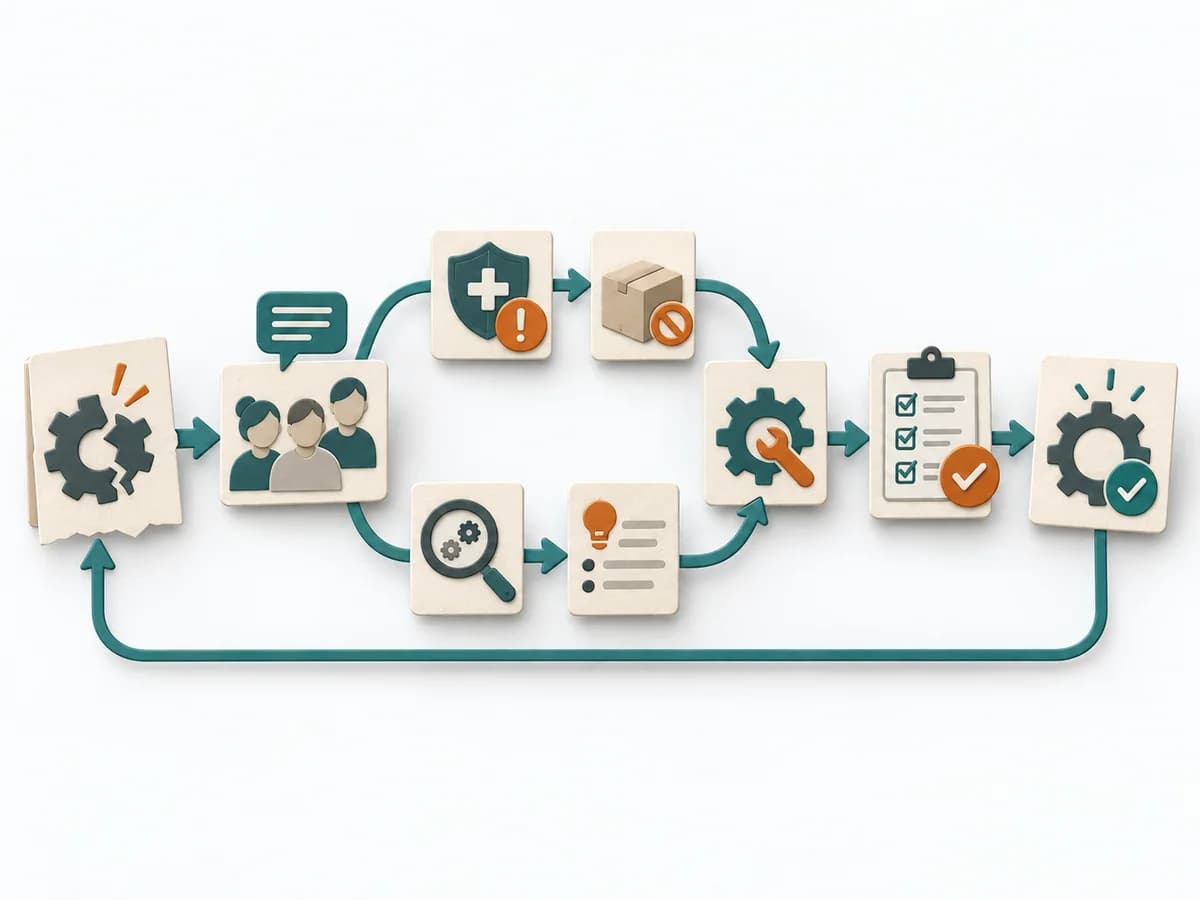 Operations 8D Problem Solving |  Operations Failure Mode and Effects Analysis |
|---|---|---|---|---|
Purposedifferent | When content only makes sense internally and users can't find the structure again, card sorting exposes their mental order. Terms, groups, and naming are then aligned with the target group's expectations. | When the same task is done differently depending on the person, the method exposes the reliable core. It creates comparability without unnecessarily choking off needed latitude. | For an acute quality or delivery problem, the method structures immediate protection and root cause work together. It keeps the situation stable while the actual cause is investigated cleanly. | For a process, product, or service with noticeable failure risks, the method assesses possible failure modes in advance. It directs attention to combinations of occurrence, effect, and detectability. |
Complexitydifferent | Low | Medium | High | High |
Timedifferent | 20-45 min | 1-3 h | 1-6 Wochen | 2-6 h |
Participantsdifferent | Based on research question | 2-6 | 4-10 | 3-10 |
Formatdifferent | Workshop + async | Workshop | Workshop + async | Workshop |
Outputdifferent | Content groups, Label set, IA hypotheses | Standard Work Sheet, Deviation List, Improved Standard, Training Needs | 8D Report, Containment Plan, Root Cause Evidence, Corrective Action Plan | FMEA Table, Risk Priority, Mitigation Actions |
Tagsno overlap | Information architectureNavigationStructure | LeanProcessQuality | QualityProblem solvingRoot cause | RiskQualityOperationsRoot cause |