View methods side by side.
Choose up to four methods. Add them using the search and share the comparison by copying its link.
| Criterion |  UX Research Card Sorting | 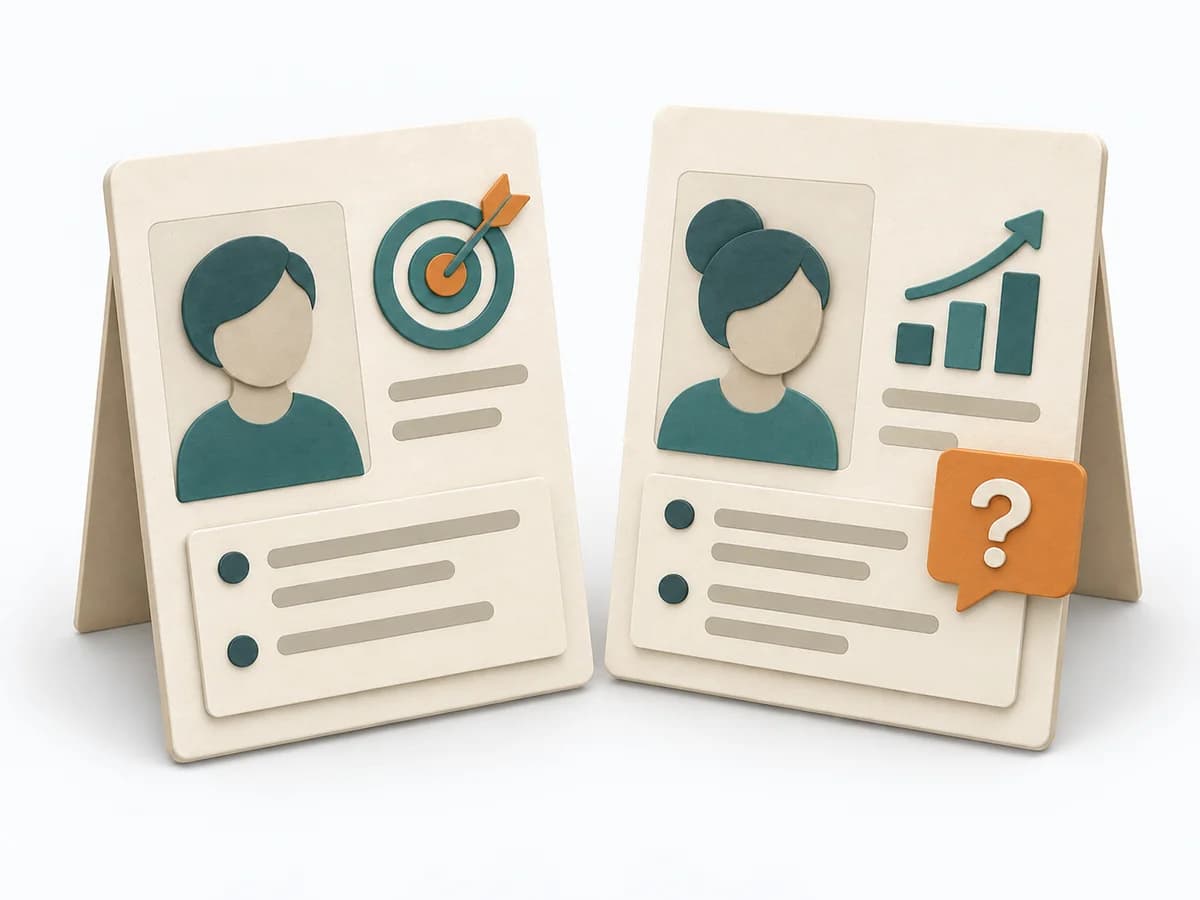 UX Research Personas |  UX Research Empathy Mapping |  Innovation Brainstorming |
|---|---|---|---|---|
Purposedifferent | When content only makes sense internally and users can't find the structure again, card sorting exposes their mental order. Terms, groups, and naming are then aligned with the target group's expectations. | When target groups stay too vague and teams talk about the same people differently, personas create a shared, solid picture of usage. Condensed profiles make needs, contexts, and differences tangible enough for decisions. | When a lot is assumed about a target group but little is seen jointly, empathy mapping makes knowledge and gaps directly comparable. The picture also shows which assumptions hold up and where evidence is missing. | When a team faces an open question with many obvious directions, the method first creates breadth instead of premature commitment. It separates idea flow from evaluation and makes lines of thought visible, creating a pool for selection and further development. |
Complexitydifferent | Low | Medium | Low | Low |
Timedifferent | 20-45 min | 1-3 Tage | 30–60 min | 30-60 min |
Participantsdifferent | Based on research question | Internes Team | 4-8 | 4-12 |
Formatdifferent | Workshop + async | Workshop + async | Workshop | Workshop |
Outputdifferent | Content groups, Label set, IA hypotheses | Persona Profiles, Needs Summary, Scenario Notes | Empathy Map, Assumptions List, Research Gaps | Idea pool, Theme clusters, Shortlist |
Tagsno overlap | Information architectureNavigationStructure | ResearchCustomerSynthesis | SynthesisQualitativeWorkshop | BrainstormingIdeationCreativityWorkshopDivergence |