View methods side by side.
Choose up to four methods. Add them using the search and share the comparison by copying its link.
| Criterion |  UX Research Card Sorting | 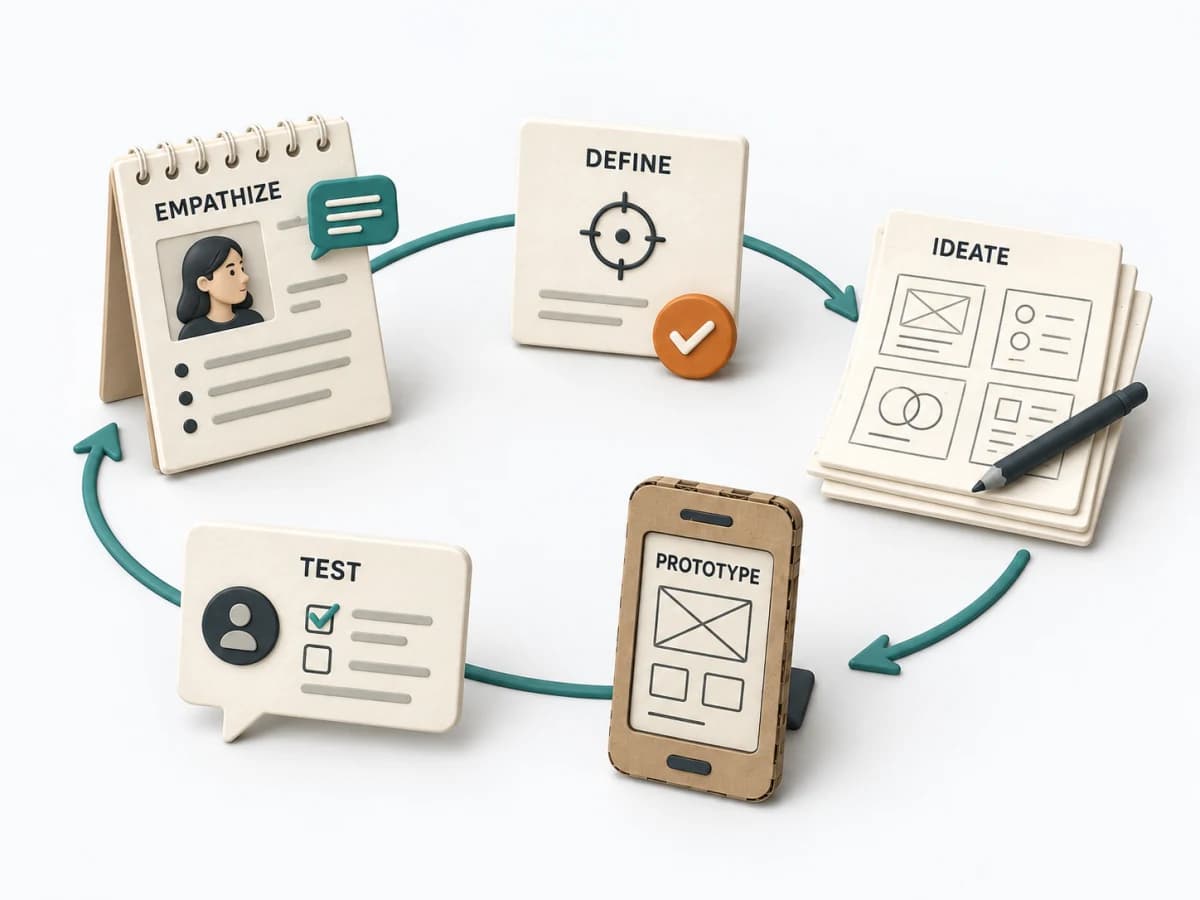 Innovation Design Thinking | 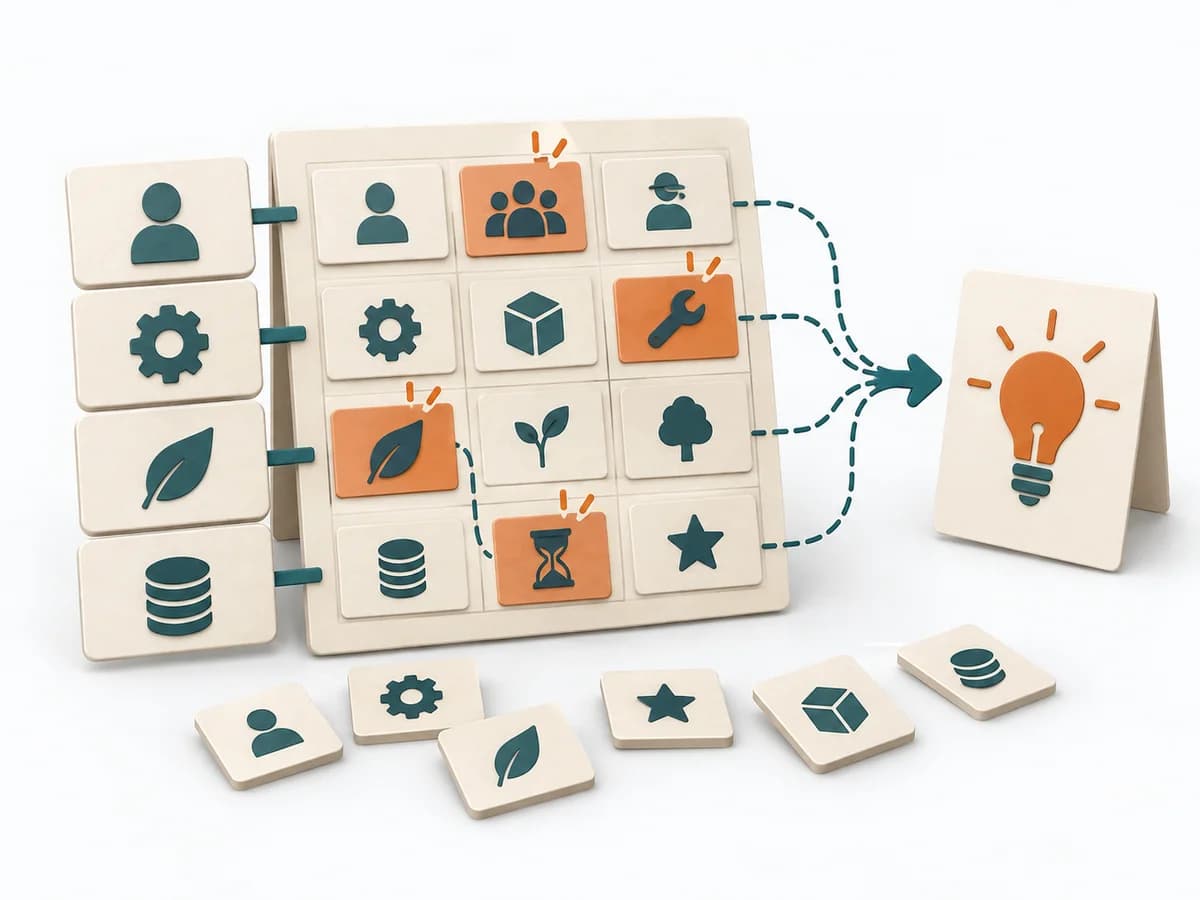 Innovation Morphological Analysis |  Innovation SCAMPER |
|---|---|---|---|---|
Purposedifferent | When content only makes sense internally and users can't find the structure again, card sorting exposes their mental order. Terms, groups, and naming are then aligned with the target group's expectations. | For complex user problems with an uncertain cause, the method connects observation, interpretation, and experiment into a learning cycle. It keeps the focus on real needs and avoids premature solution language. This produces robust decisions for product and service. | For a search for solutions with many degrees of freedom, a grid emerges for systematic combinations. The method separates features, variants, and exclusion criteria, so the space gets explored deliberately. | For an existing solution under pressure to change, the method deliberately opens space for systematic variants. It directs attention to rebuilding, combining, and repurposing rather than only new basic ideas. This produces concrete evolution paths for products, offerings, or workflows. |
Complexitydifferent | Low | High | Medium | Low |
Timedifferent | 20-45 min | 1 Tag bis mehrere Wochen | 1-3 h | 30-60 min |
Participantsdifferent | Based on research question | 4-10 | 2-8 | 2-10 |
Formatdifferent | Workshop + async | Workshop | Workshop + async | Workshop |
Outputdifferent | Content groups, Label set, IA hypotheses | Problem Statement, Prototype, Test Learnings | Morphological Box, Concept Combinations, Idea Shortlist | SCAMPER Idea List, Concept Shortlist, Variation Notes |
Tagsno overlap | Information architectureNavigationStructure | InnovationPrototypeResearch | IdeationInnovationCreativity | BrainstormingIdeationCreativityReframingInnovation |