View methods side by side.
Choose up to four methods. Add them using the search and share the comparison by copying its link.
| Criterion | 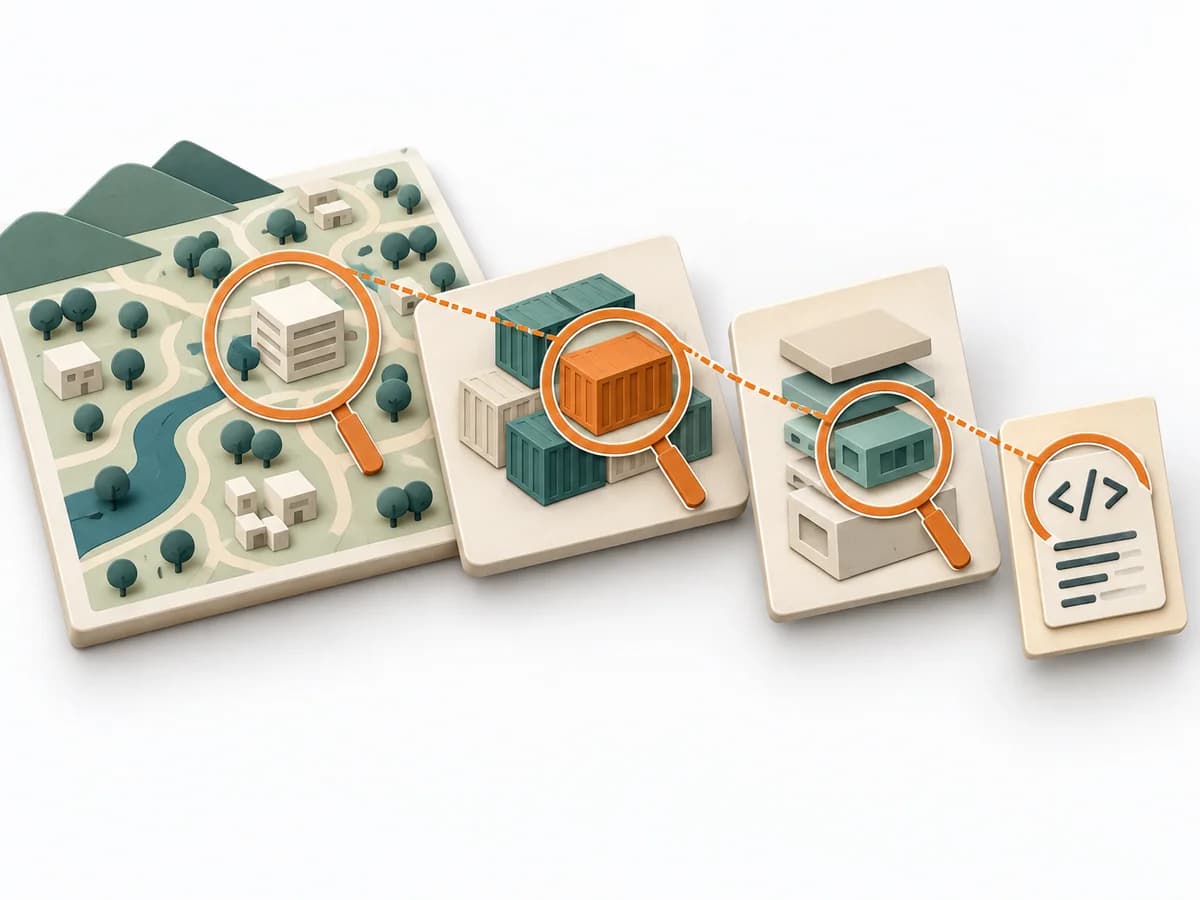 Architecture C4 Model |  UX Research Card Sorting |  Architecture Request for Comments | 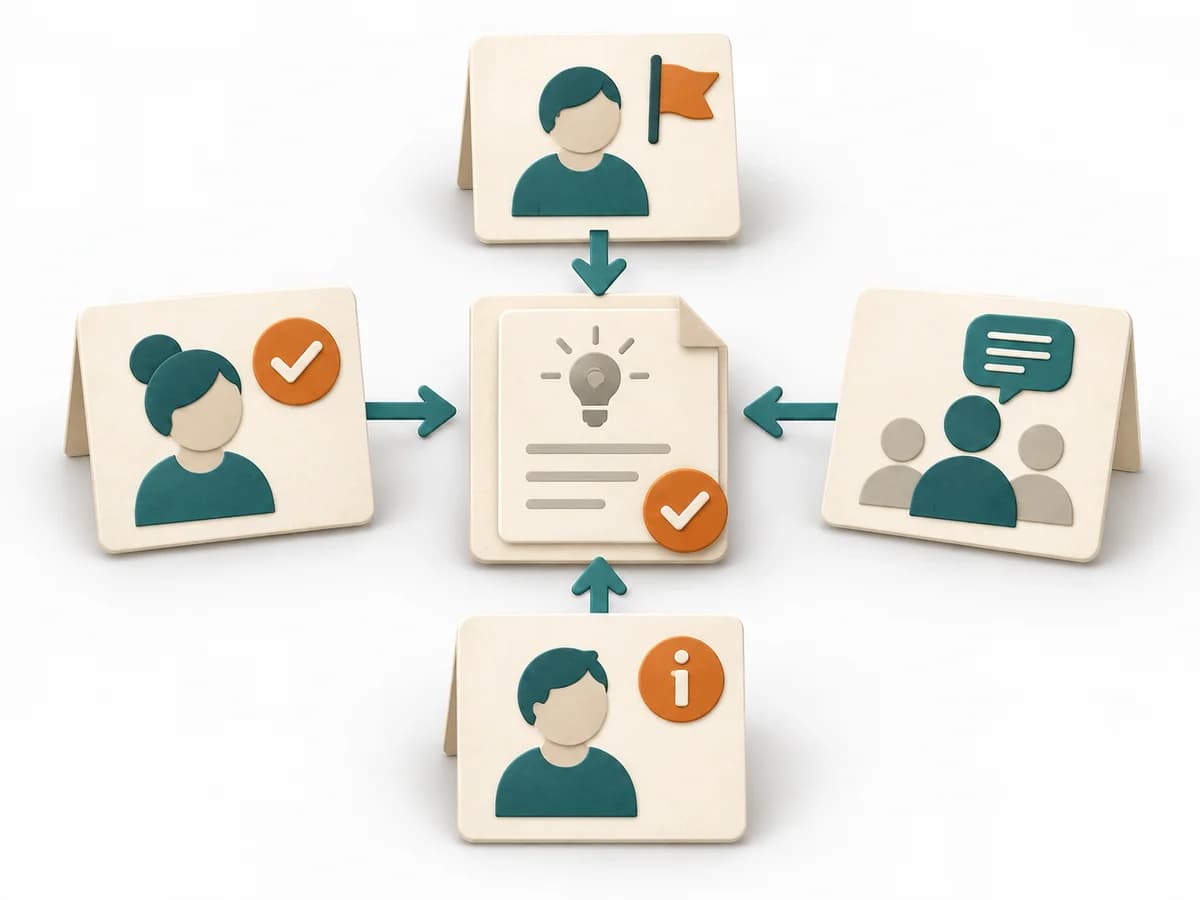 Decision Making DACI |
|---|---|---|---|---|
Purposedifferent | The C4 Model makes a system legible across several resolution levels, from context down to code. It suits situations where different audiences need to understand the same architecture from different altitudes. | When content only makes sense internally and users can't find the structure again, card sorting exposes their mental order. Terms, groups, and naming are then aligned with the target group's expectations. | An RFC clarifies architecture context, options, and consequences. It structures technical context, alternatives, tradeoffs, open questions, and review feedback, and captures the result as an RFC document, reviewer comments, and a decision rationale. | In cross-functional decisions, responsibilities quickly blur between approval, influence, and execution. DACI arranges these roles so decision pressure, contribution, and information stay cleanly separated. |
Complexitydifferent | Low | Low | Medium | Low |
Timedifferent | 1-4 h | 20-45 min | 1-3 Wochen vom Draft bis zur Entscheidung | 30-60 min |
Participantsdifferent | 1-5 | Based on research question | 3-20 Reviewer | 2-10 |
Formatdifferent | Workshop + async | Workshop + async | Async | Workshop + async |
Outputdifferent | Context Diagram, Container Diagram, Component Diagram | Content groups, Label set, IA hypotheses | RFC document, Reviewer comments, Decision rationale, Follow-up ADR or tickets | DACI Matrix, Decision Owner, Decision Log |
Tagsno overlap | ArchitectureCommunicationVisualization | Information architectureNavigationStructure | ArchitectureDecisionAsyncGovernance | DecisionRolesGovernanceAlignment |