View methods side by side.
Choose up to four methods. Add them using the search and share the comparison by copying its link.
| Criterion |  Domain Modeling Bounded Context Canvas | 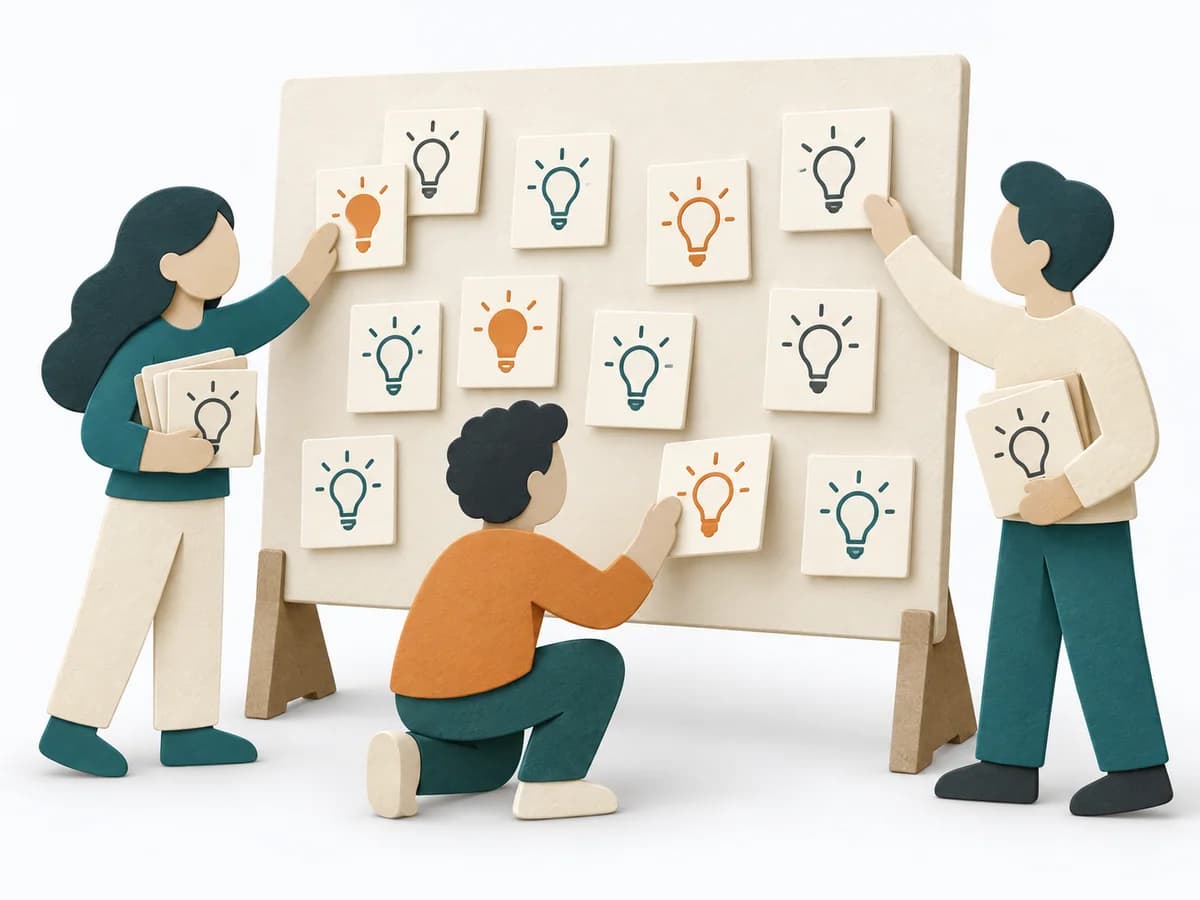 Innovation Brainstorming | 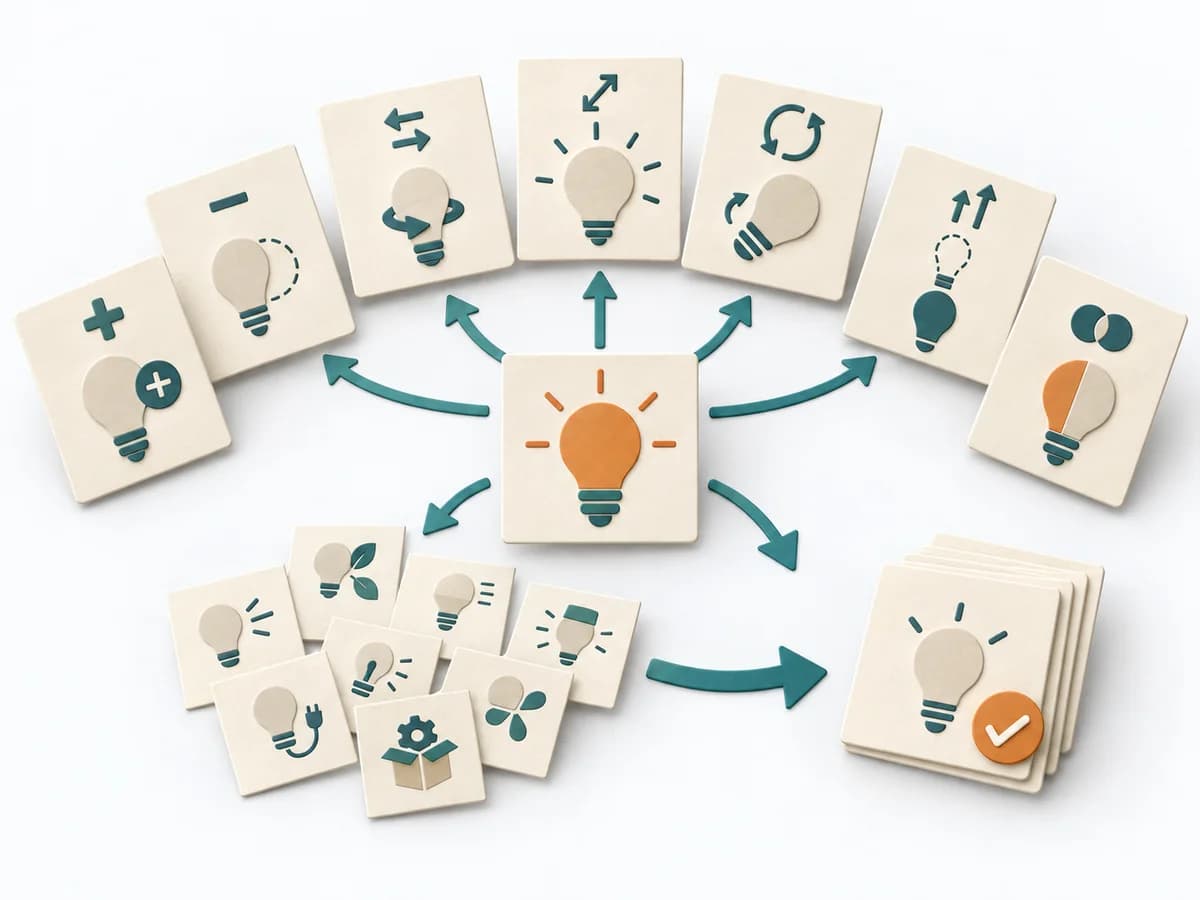 Innovation SCAMPER | 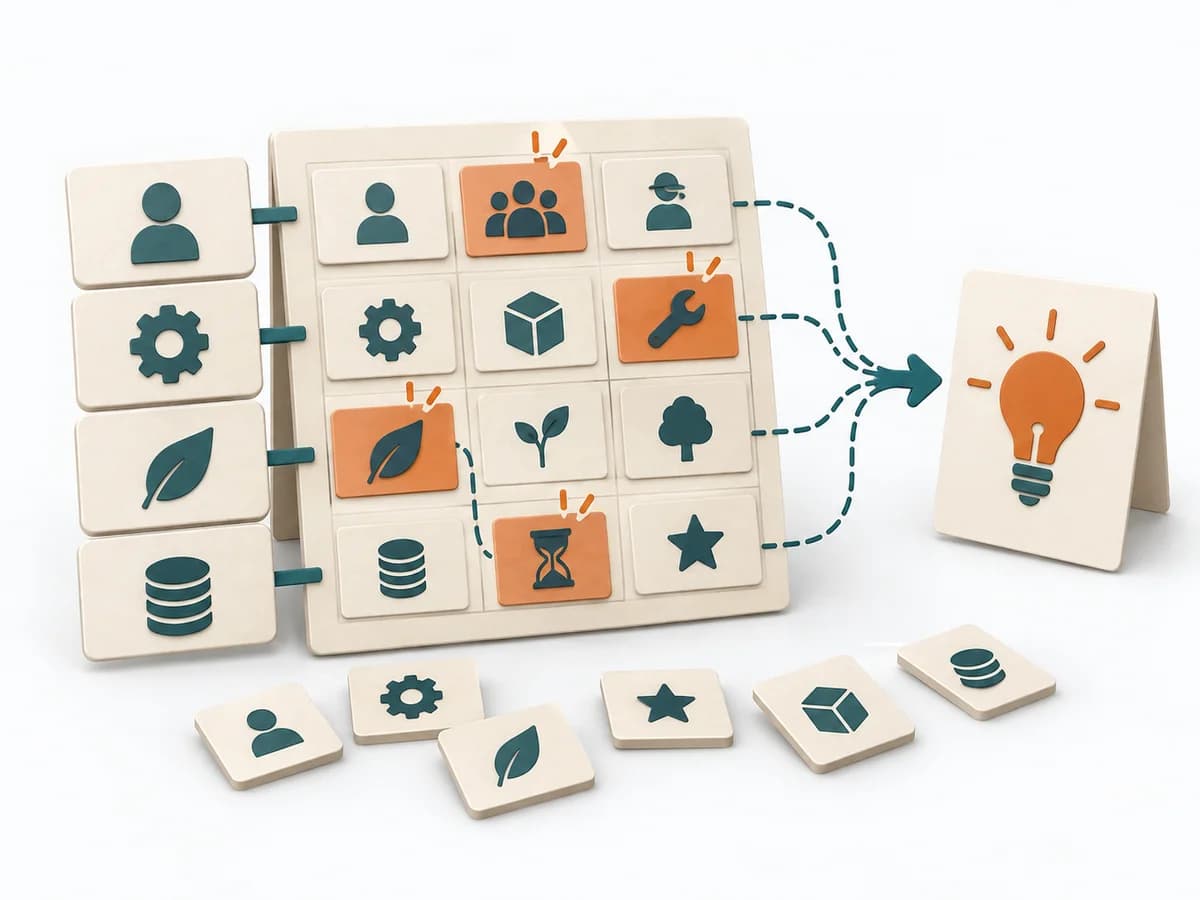 Innovation Morphological Analysis |
|---|---|---|---|---|
Purposedifferent | When a business context is still loosely outlined, it shapes language, responsibility, and integration space. It clarifies what belongs together and where a boundary needs to hold. | When a team faces an open question with many obvious directions, the method first creates breadth instead of premature commitment. It separates idea flow from evaluation and makes lines of thought visible, creating a pool for selection and further development. | For an existing solution under pressure to change, the method deliberately opens space for systematic variants. It directs attention to rebuilding, combining, and repurposing rather than only new basic ideas. This produces concrete evolution paths for products, offerings, or workflows. | For a search for solutions with many degrees of freedom, a grid emerges for systematic combinations. The method separates features, variants, and exclusion criteria, so the space gets explored deliberately. |
Complexitydifferent | Medium | Low | Low | Medium |
Timedifferent | 1-3 h | 30-60 min | 30-60 min | 1-3 h |
Participantsdifferent | 3-8 | 4-12 | 2-10 | 2-8 |
Formatdifferent | Workshop + async | Workshop | Workshop | Workshop + async |
Outputdifferent | Context Canvas, Glossary, Integration Notes | Idea pool, Theme clusters, Shortlist | SCAMPER Idea List, Concept Shortlist, Variation Notes | Morphological Box, Concept Combinations, Idea Shortlist |
Tagsno overlap | Domain-Driven DesignBoundariesModeling | BrainstormingIdeationCreativityWorkshopDivergence | BrainstormingIdeationCreativityReframingInnovation | IdeationInnovationCreativity |