View methods side by side.
Choose up to four methods. Add them using the search and share the comparison by copying its link.
| Criterion | 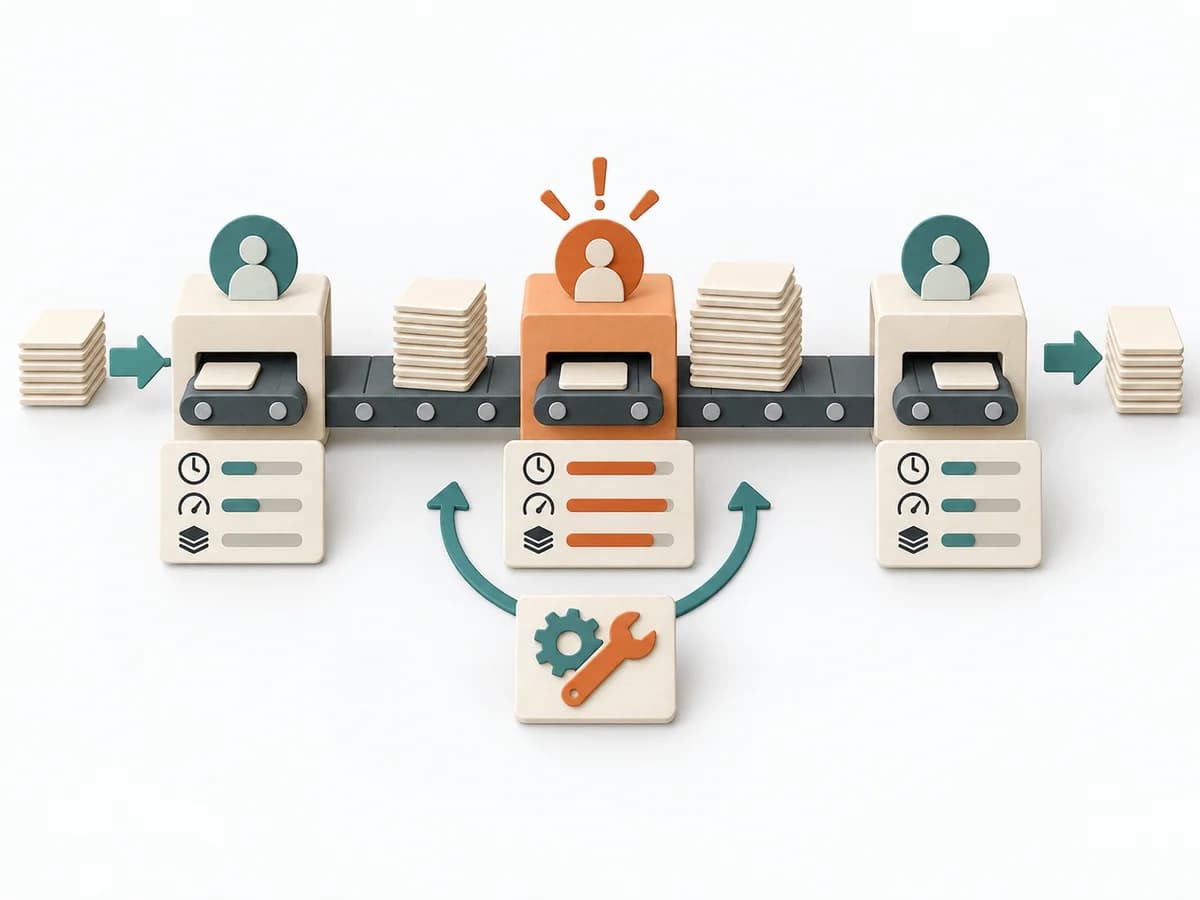 Operations Bottleneck Analysis | 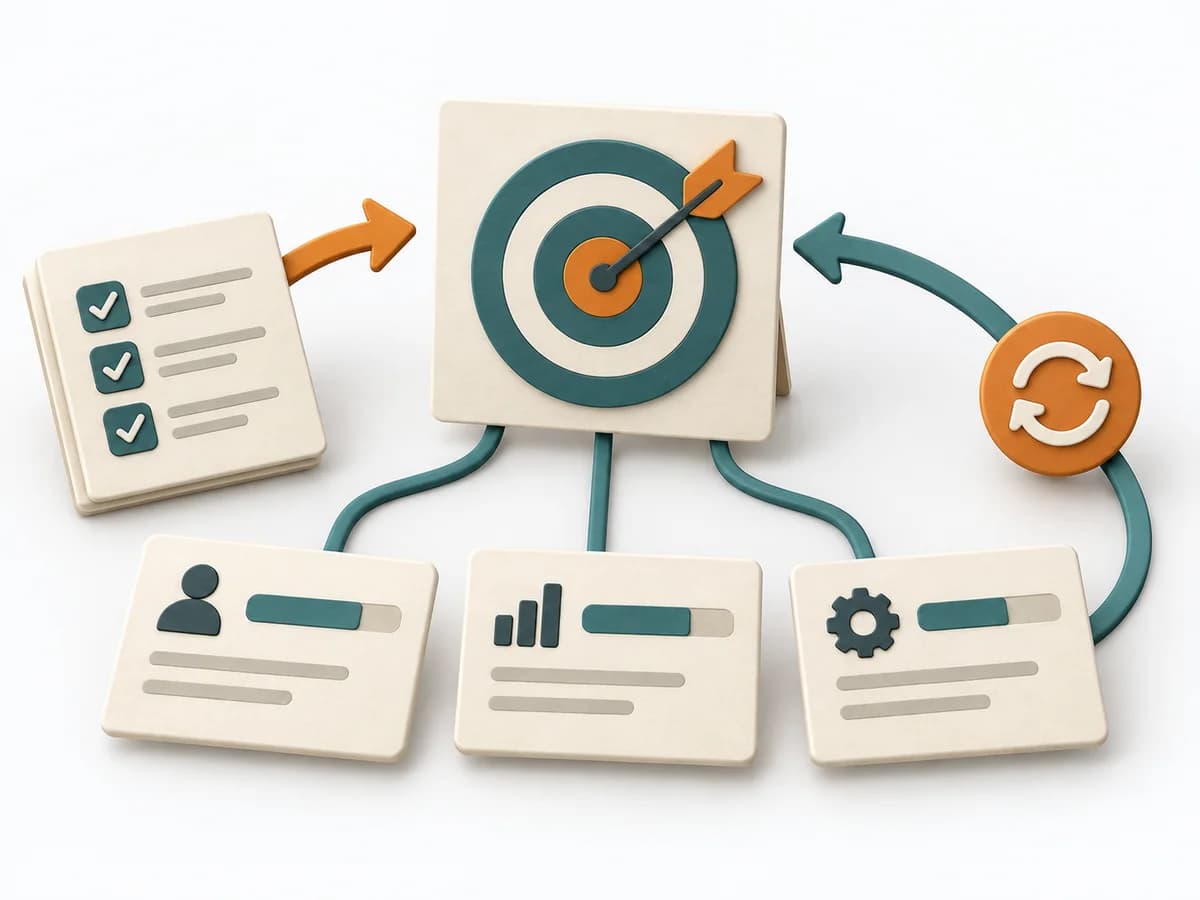 Product Strategy OKRs |  Innovation Design Thinking |  Product Discovery Outcome-Driven Innovation |
|---|---|---|---|---|
Purposedifferent | For a flow that backs up at one point, the method looks for the capacity limit with the greatest leverage. It explains why extra effort elsewhere barely improves throughput. | When strategic direction needs to become measurable, it connects ambition with checkable results. It makes goals connectable to focus and review. | For complex user problems with an uncertain cause, the method connects observation, interpretation, and experiment into a learning cycle. It keeps the focus on real needs and avoids premature solution language. This produces robust decisions for product and service. | Outcome-Driven Innovation clarifies customer problems, solution opportunities, and evidence. It separates jobs, desired outcomes, importance, satisfaction, and opportunity, and captures results as desired outcome statements, an opportunity landscape, and segments by underserved needs. |
Complexitydifferent | Medium | Medium | High | High |
Timedifferent | 1-3 h | 1-2 h Setup | 1 Tag bis mehrere Wochen | Mehrere Wochen |
Participantsdifferent | 3-8 | 2-20 | 4-10 | 2-6 researchers plus sample |
Formatdifferent | Workshop + async | Workshop + async | Workshop | Workshop + async |
Outputdifferent | Bottleneck Map, Flow Metrics, Improvement Options, Follow-up Measures | OKR set, Measurement plan, Review cadence | Problem Statement, Prototype, Test Learnings | Desired outcome statements, Opportunity landscape, Segmentation by underserved needs, Innovation hypotheses |
Tagsno overlap | FlowMeasurementConstraints | GoalsAlignmentOutcomesMeasurement | InnovationPrototypeResearch | OutcomesInnovationResearchQuantitative |