View methods side by side.
Choose up to four methods. Add them using the search and share the comparison by copying its link.
| Criterion |  UX Research Affinity Diagramming | 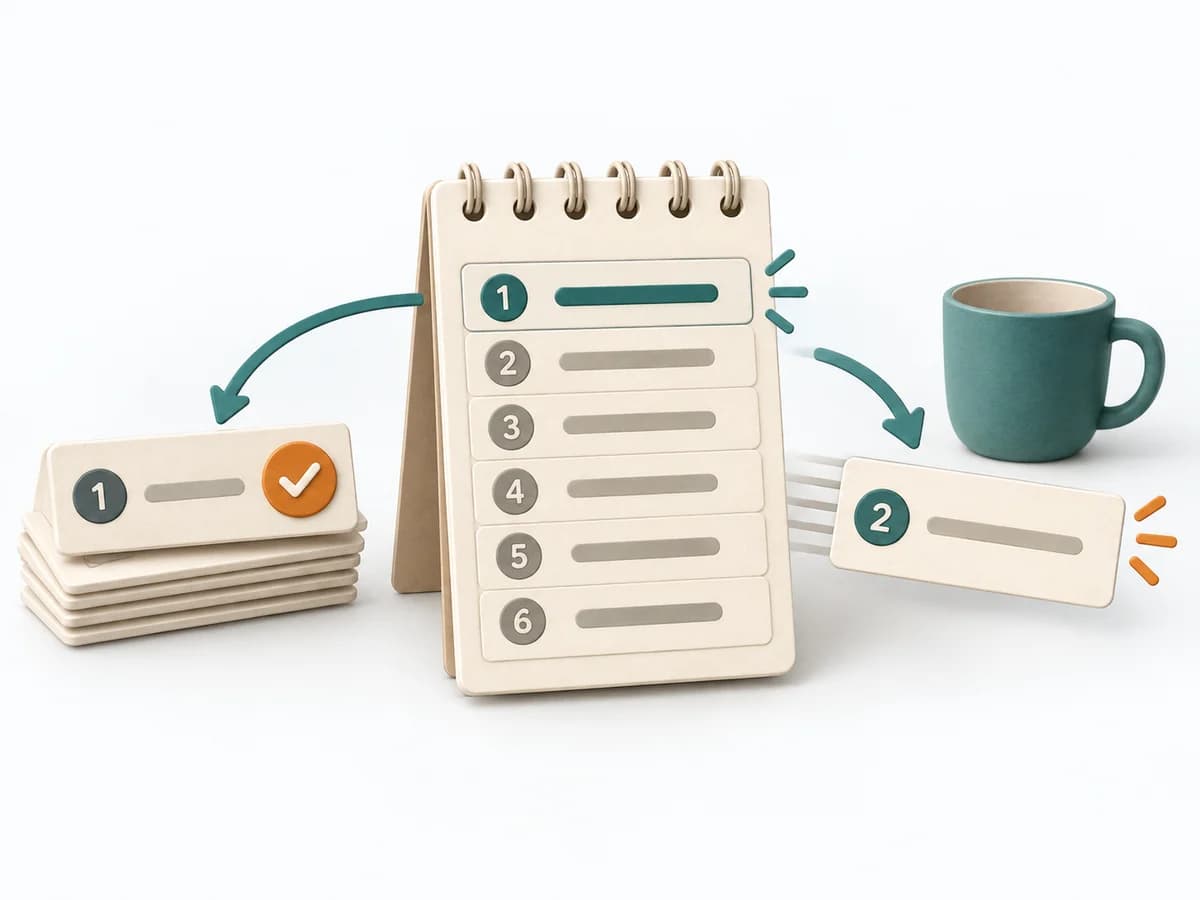 Operations Ivy Lee Method | 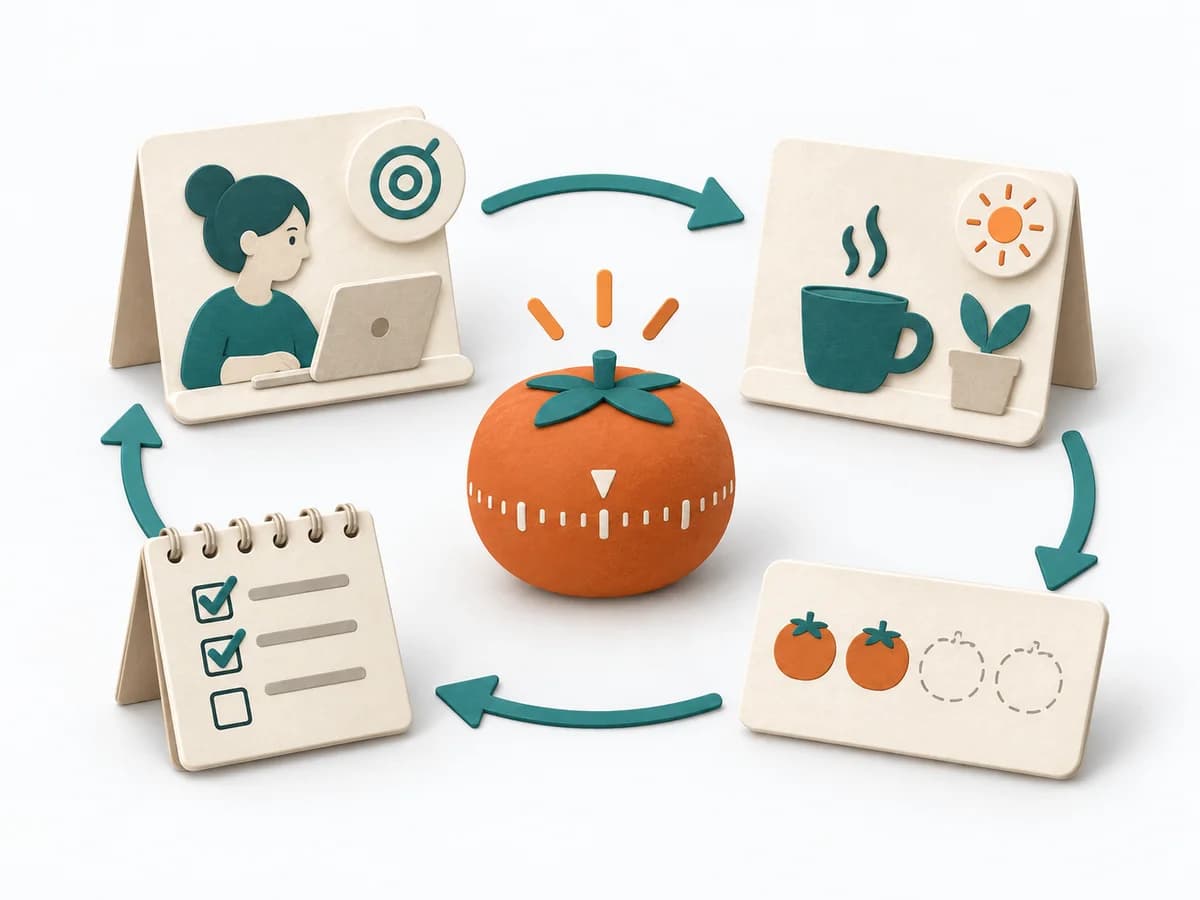 Operations Pomodoro Technique |  Operations ALPEN Method |
|---|---|---|---|---|
Purposedifferent | When research notes, feedback, or observations sit unconnected side by side, affinity diagramming sorts the raw material into solid themes. Many individual points turn into patterns that make decisions and opportunities clearer. | With a restless workday full of too many open items, the method creates radical simplicity. It directs attention to a short sequence instead of a broad, still-open field. | For easily distracted solo work, the method sets clear time boundaries for concentrated work. It protects attention when large tasks would otherwise fall apart into small avoidance moves. | With an overloaded day full of too many tasks, a realistic picture of the day emerges. The method connects estimating, deciding, and buffer thinking so planning fits available energy and time. |
Complexitysame | Low | Low | Low | Low |
Timedifferent | 45–90 min | 5-10 min daily | 25 min Zyklen | 10-20 min daily |
Participantsdifferent | 3-10 | 1 | 1 | 1 |
Formatdifferent | Workshop | Async | Async | Async |
Outputdifferent | Theme clusters, Insight statements, Opportunity areas | Daily Priority List, Completion Notes | Focus Sessions, Task Progress, Interruption Notes | Daily Plan, Time Estimates, Review Notes |
Tagsno overlap | SynthesisQualitativeRoot cause | PrioritizationProductivityExecution | FocusTime managementProductivityExecution | PlanningTime managementProductivityOperations |