View methods side by side.
Choose up to four methods. Add them using the search and share the comparison by copying its link.
| Criterion | 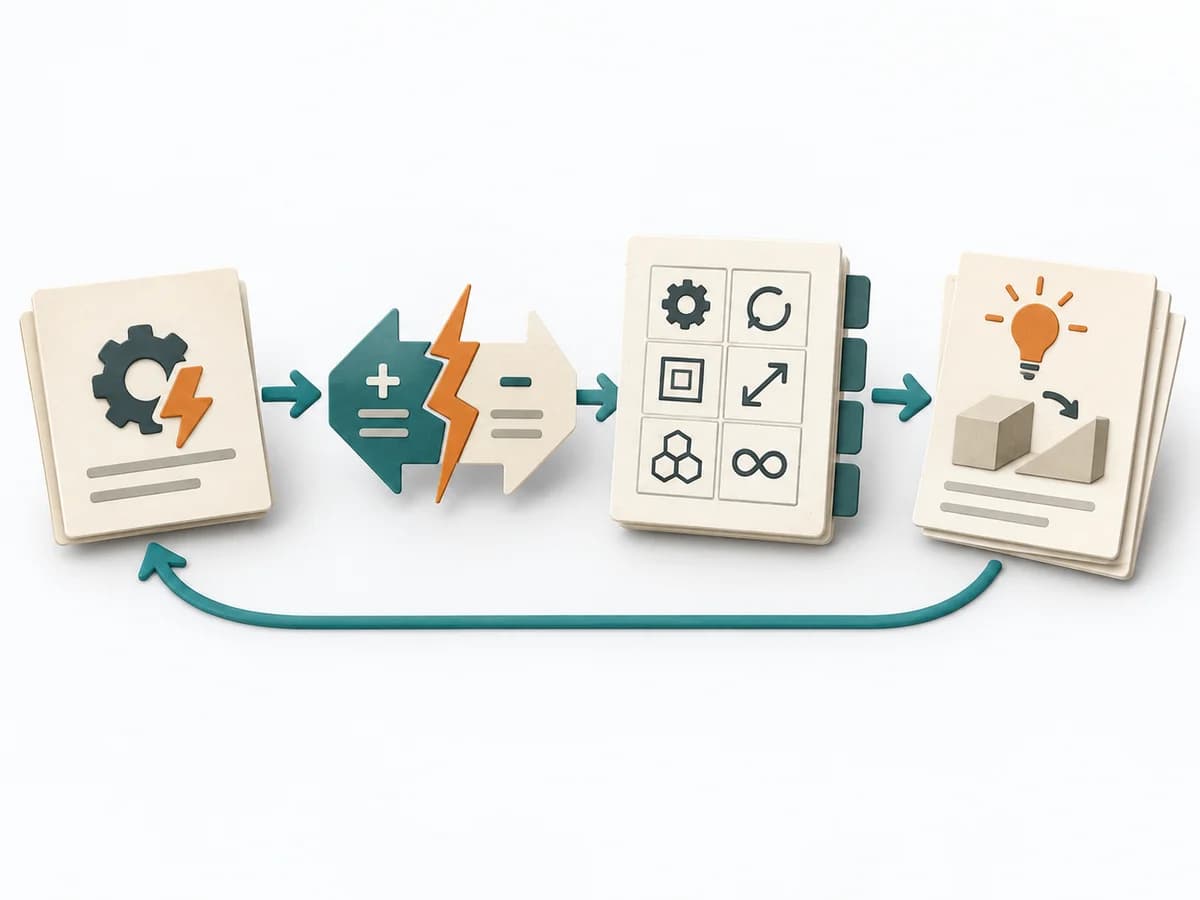 Innovation TRIZ |  Knowledge Modeling IBIS |  Innovation Brainstorming | 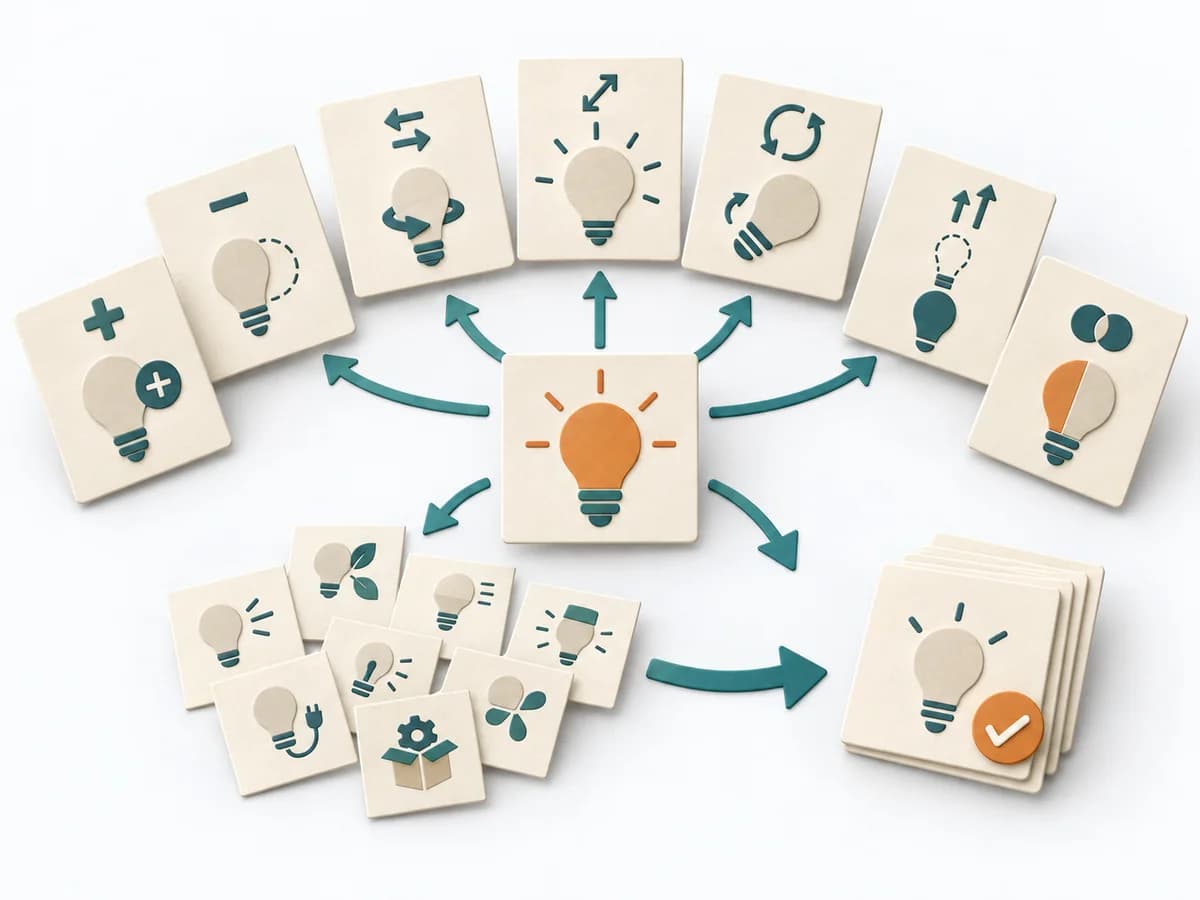 Innovation SCAMPER |
|---|---|---|---|---|
Purposedifferent | For technical contradictions or trade-offs, the method looks for solutions that resolve opposing requirements at the same time. It translates limits into an explicit picture of conflict that becomes workable. This produces not just compromises but more elegant principles. | IBIS structures thinking about complex questions as a sequence of issues, ideas, and arguments. The method keeps discussions open without forcing them into premature consensus. | When a team faces an open question with many obvious directions, the method first creates breadth instead of premature commitment. It separates idea flow from evaluation and makes lines of thought visible, creating a pool for selection and further development. | For an existing solution under pressure to change, the method deliberately opens space for systematic variants. It directs attention to rebuilding, combining, and repurposing rather than only new basic ideas. This produces concrete evolution paths for products, offerings, or workflows. |
Complexitydifferent | High | Medium | Low | Low |
Timedifferent | 1-4 h | 1-3 h | 30-60 min | 30-60 min |
Participantsdifferent | 2-8 | 2-8 | 4-12 | 2-10 |
Formatdifferent | Workshop + async | Workshop + async | Workshop | Workshop |
Outputdifferent | Contradiction Statement, Inventive Principles, Solution Concepts | Issue Map, Positions, Argument Notes | Idea pool, Theme clusters, Shortlist | SCAMPER Idea List, Concept Shortlist, Variation Notes |
Tagsno overlap | InnovationProblem solvingContradictionsCreativity | RationaleKnowledgeDecision | BrainstormingIdeationCreativityWorkshopDivergence | BrainstormingIdeationCreativityReframingInnovation |