View methods side by side.
Choose up to four methods. Add them using the search and share the comparison by copying its link.
| Criterion | 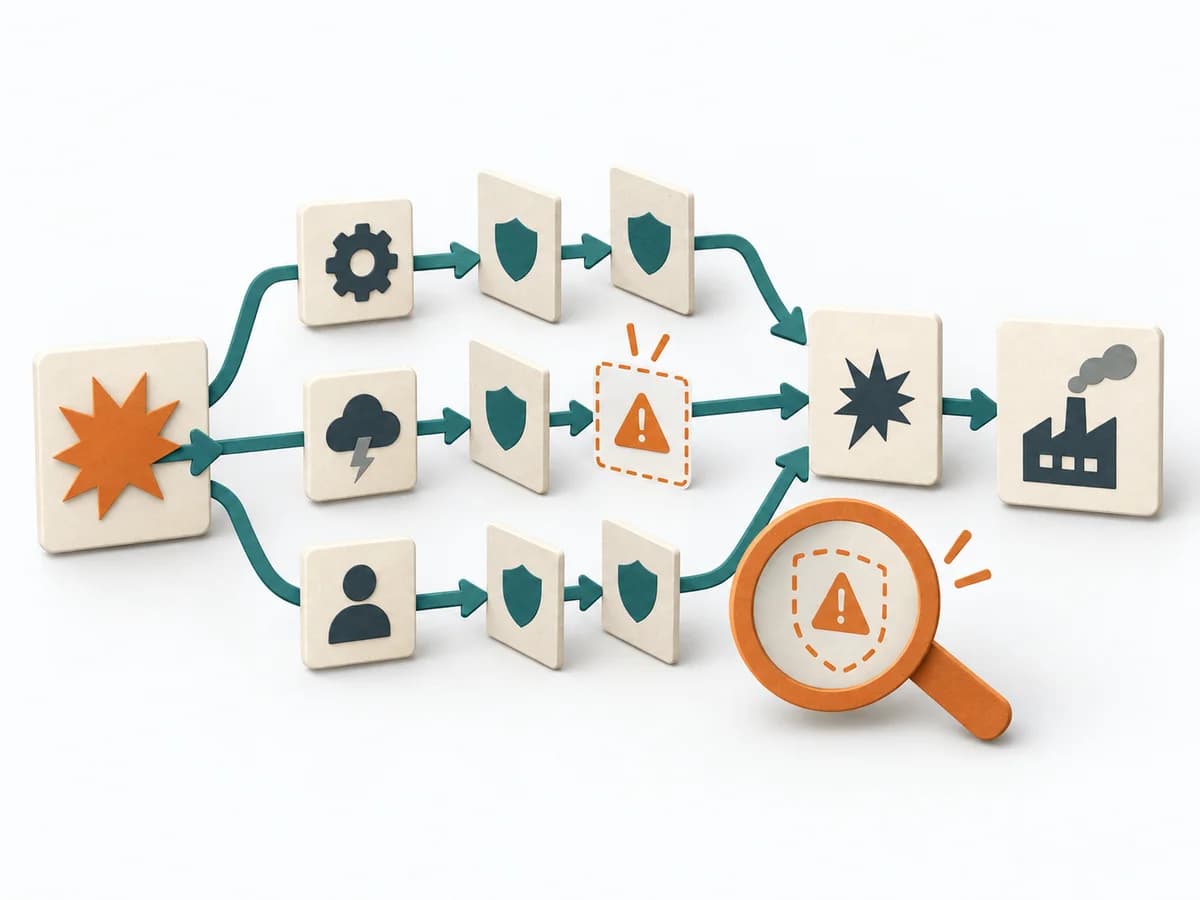 Engineering Failure Scenario Analysis | 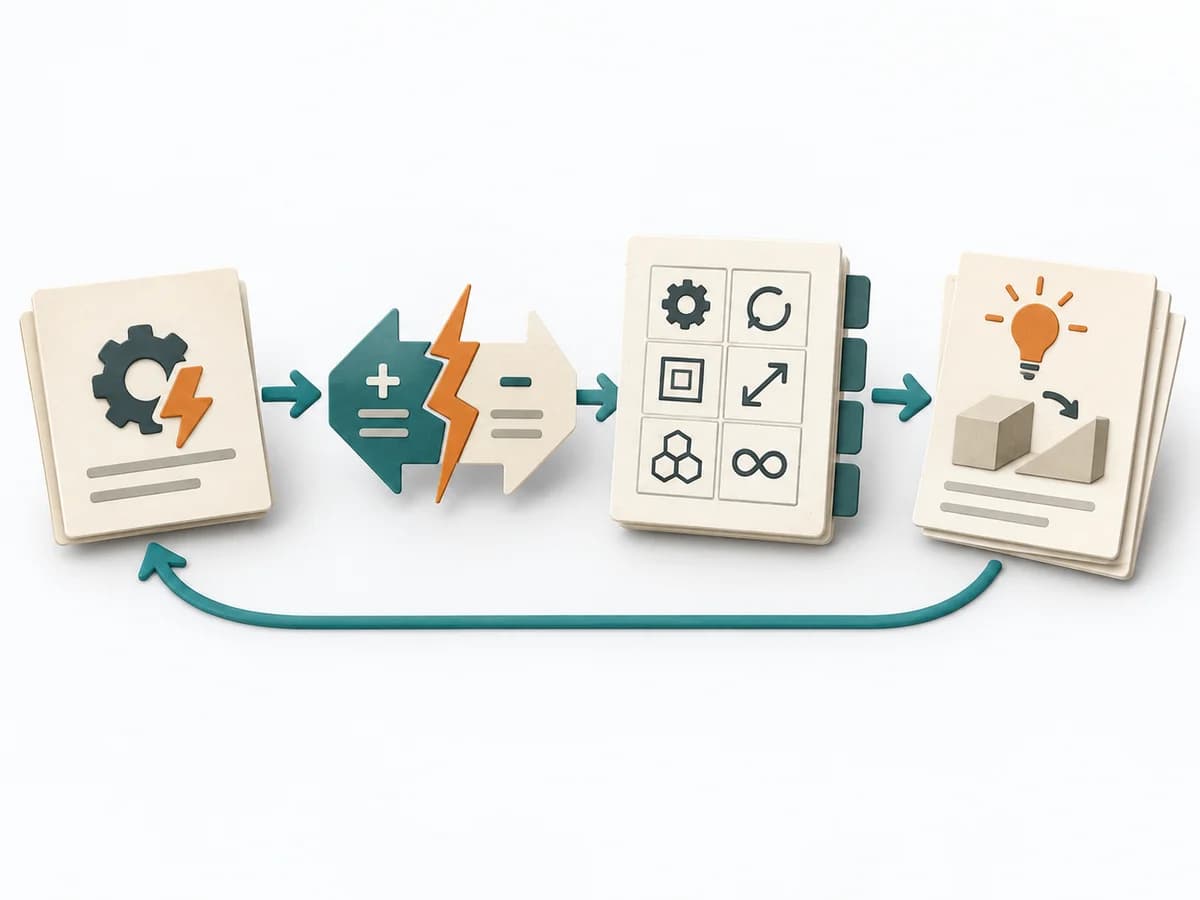 Innovation TRIZ |  Innovation Reverse Brainstorming | 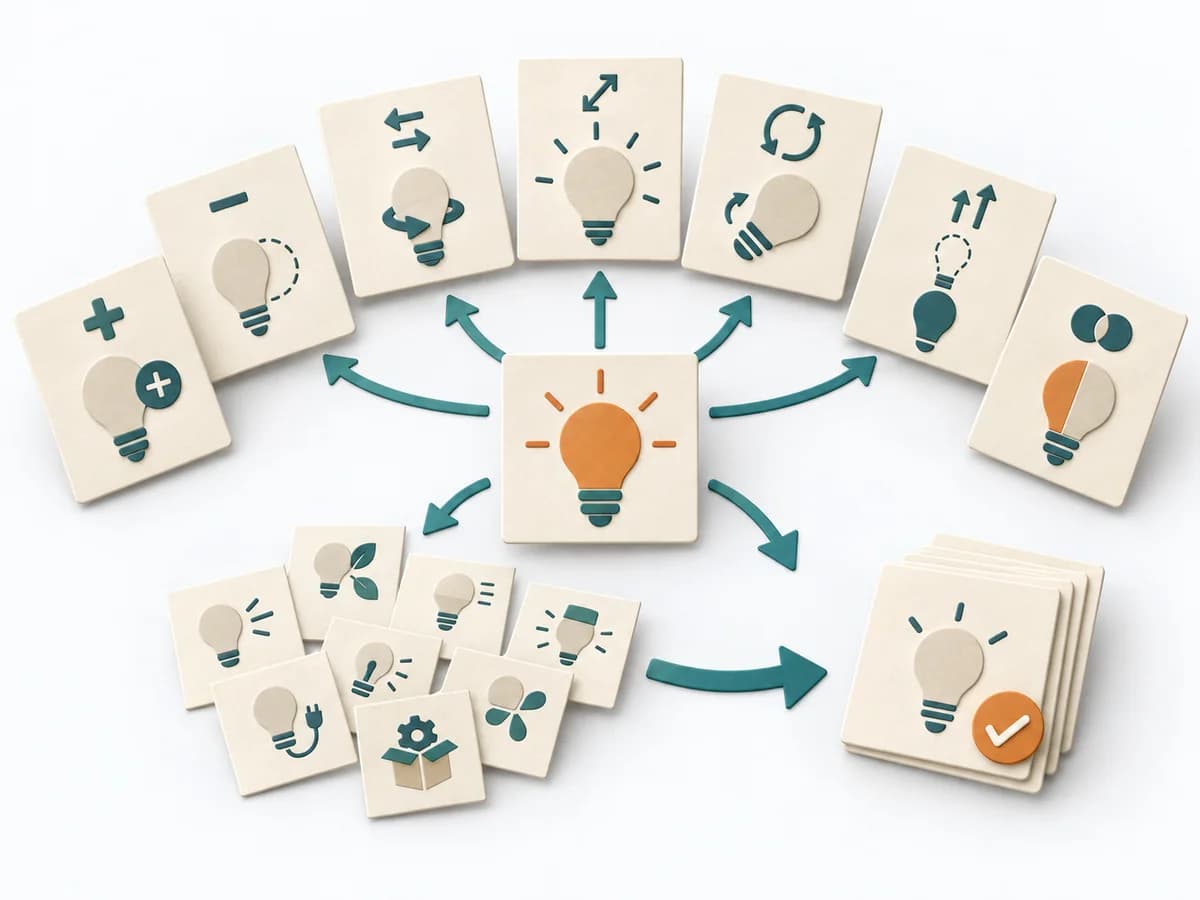 Innovation SCAMPER |
|---|---|---|---|---|
Purposedifferent | In critical processes, it is not enough to plan only for the normal case. Failure Scenario Analysis looks at the path into failure and shows which failures, chains, and control gaps cause the most damage. | For technical contradictions or trade-offs, the method looks for solutions that resolve opposing requirements at the same time. It translates limits into an explicit picture of conflict that becomes workable. This produces not just compromises but more elegant principles. | For persistent errors or blockages, the method shifts the view to the opposite of the desired effect. It exposes the mechanics of failure and makes hidden causes easier to grasp. This makes improvement more concrete and the problem clearer. | For an existing solution under pressure to change, the method deliberately opens space for systematic variants. It directs attention to rebuilding, combining, and repurposing rather than only new basic ideas. This produces concrete evolution paths for products, offerings, or workflows. |
Complexitydifferent | Medium | High | Low | Low |
Timedifferent | 1-3 h | 1-4 h | 30-60 min | 30-60 min |
Participantsdifferent | 3-8 | 2-8 | 3-12 | 2-10 |
Formatdifferent | Workshop | Workshop + async | Workshop | Workshop |
Outputdifferent | Failure Scenarios, Risk Notes, Control Gaps, Test and Response Actions | Contradiction Statement, Inventive Principles, Solution Concepts | Reverse Ideas, Risk Themes, Solution Ideas | SCAMPER Idea List, Concept Shortlist, Variation Notes |
Tagsno overlap | FailureResilienceRisk | InnovationProblem solvingContradictionsCreativity | BrainstormingIdeationCreativityRisk | BrainstormingIdeationCreativityReframingInnovation |